The Leadership Playbook for Navigating the HFC Supply Shock
In the complex world of refrigerant management, a deceptive calm has settled.
On August 21, 2025, EPA Administrator Lee Zeldin stood alongside Vice President J.D. Vance at Alta Refrigeration in Georgia and announced that the EPA has a proposal under OIRA review to reconsider parts of its Technology Transitions (TT) rule.
An international institute, such as the IIAR, has provided expert commentary on these regulatory changes, highlighting industry perspectives and technical considerations.
Framed as a pro-business effort to “increase access” and “fix the mistakes” of the past, EPA’s move promises a reprieve: extended deadlines, sell-through provisions, and targeted carve-outs to prevent stranded inventory and lower near-term costs.
EPA intends to provide more regulatory flexibility and potentially extend compliance timelines as part of this reconsideration.
Source: EPA
However, this can appear to be a market mirage.
The AIM Act’s statutory HFC phasedown continues on an immutable track: national allowances fall from ~60% of baseline now to 30% in 2029 and 15% in 2034–2036.
Nothing in this reconsideration raises that cap. In practice, the proposal stretches “use” under the same shrinking supply ceiling — meaning more legacy HFC systems will stay active precisely as supply tightens.
That is the supply shock leaders must plan for. Natural refrigerants such as ammonia, CO₂, and hydrocarbons are increasingly considered viable alternatives to high-GWP HFCs and are already widely used in the industry.
Source: EPA
Your leadership doctrine for the next 24–36 months rests on two pillars you control:
- Absolute asset visibility via tagging & labeling: a digital twin for every rack, circuit, condensing unit, and cylinder; and
- Proactive leak defense via Automatic Leak Detection (ALD) and no-top-off policies tied to work orders.
Those two moves transform a compliance headache into operational resilience: they reduce losses, stabilize budgets, and make you audit-ready as federal and state rules tighten (e.g., California RMP, Washington ALD with 14-day repairs, New York Part 494 ALD & reporting).
Sources: California Air Resources Board; Washington State Department of Ecology; NY Department of Environmental Conservation.
🚨 Get ahead of refrigerant regulations. Learn how our leak and tagging solutions can help.
Context: What’s Planned vs. What’s Law
What is a RIN, and what is 2060-AW39?
A RIN is a Regulation Identifier Number assigned in the Unified Agenda to track a rulemaking through development, OIRA review, and publication.
The “AW39” suffix is a serial code inside EPA’s air program docketing; it is not a substantive label (e.g., it’s not “Alternative Rule 39”).
Regulatory actions under the Manufacturing Act, such as those tracked by RINs, are central to the EPA’s authority to implement HFC phasedown measures.
Source: Reginfo.gov

What EPA announced on Aug 21, 2025?
EPA publicly signaled a Proposed Rule to reconsider parts of Technology Transitions, emphasizing lowering costs and increasing access to safe, available refrigeration inputs.
EPA finds that reconsideration is necessary to address stakeholder concerns and ensure the rule aligns with statutory requirements.
The reconsideration focuses on certain aspects of the Technology Transitions rule, such as GWP limits and compliance timelines. The OIRA dashboard shows RIN 2060-AW39 “Received 07/30/2025” for EO 12866 review.
After OIRA, EPA publishes the NPRM, opens public comment, and may hold hearings before a final rule.
Source: EPA.gov
What the current Technology Transitions (TT) rule already does
Final TT rule (Oct 5, 2023)
Restricts higher-GWP HFCs in new aerosol/foam and RACHP equipment by sector & date; includes sell-through for factory-completed products; creates reporting/labeling rails.
Technology transitions restrictions under the EPA’s Technology Transitions Program impose phased limitations on the use of high-GWP HFCs in various sectors, supporting the transition to environmentally friendly alternatives.
Source: EPA
Interim Final Rule (Dec 26, 2023)
Grants one more year (to Jan 1, 2026) to install residential/light commercial AC & HP systems using components manufactured/imported before Jan 1, 2025.
Source: EPA
VRF Final (Dec 2024)
Extends installation for new VRF systems to Jan 1, 2027 (and to Jan 1, 2028 where a qualifying permit is issued before Oct 5, 2023).
Source: EPA
📌 EPA’s Technology Transitions Rule plays a key role in guiding the refrigerant transition process, setting compliance deadlines, and influencing the adoption of next-generation refrigerants across the HVACR industry.
The other track: Emissions Reduction & Reclamation (ER&R)
In Oct 2024
EPA finalized ER&R (AIM Act management rule) establishing national leak repair & ALD requirements for certain equipment and mandatory use of reclaimed HFCs for service/repair starting
Jan 1, 2029
Reclaimed product may contain ≤15% virgin by weight. Entities must also comply with recordkeeping and reporting requirements under the AIM Act and ER&R, maintaining documentation and submitting reports related to HFC restrictions and technology transitions.
This is separate from TT and continues regardless of AW39.
Sources: Federal Register & Beveridge & Diamond PC
State overlays that don’t go away
California RMP
Periodic leak inspections or ALD, prompt repair, on-site records.
Source: California Air Resources Board
Washington
ALD program and 14-day leak repair requirement.
Source: Washington State Department of Ecology
New York Part 494
ALD expectations with compliance dates and annual reports, including specific reporting requirements for recordkeeping and timely submission of compliance documentation.
Source: Department of Environmental Conservation
State overlays like these can also impact the distribution chain for refrigerants and HVAC equipment, potentially affecting how products move from manufacturers to end-users during regulatory transitions.
📌 AW39 may adjust “use” rules (sell-through, installation nuances), but the AIM allowance cap still ratchets down, and ER&R + state mandates still push you to detect, repair, and document.
What is a “Sell-Through”?
A sell-through provision is a regulatory allowance that permits manufacturers, distributors, or contractors to sell and install equipment already manufactured (but not necessarily compliant with new standards) for a limited time after the rule’s effective date.
- Without a sell-through → any stock of “old-rule” equipment must be destroyed, exported, or scrapped on the compliance date.
- With a sell-through → existing inventory can still legally enter the market, smoothing transition costs and reducing stranded inventory losses.
The refrigerant transition process is closely tied to the installation date of equipment and whether it was imported prior to key compliance deadlines.
These factors determine what systems can be installed or sold as the industry adapts to new regulatory requirements.
📌 In refrigerant/HFC transition rules (like AW39 reconsideration), sell-through is critical because production/installation deadlines often come before contractors have exhausted their inventory or before the supply of next-gen A2L/A3 equipment has fully stabilized.
Heat Pumps and the AIM Act
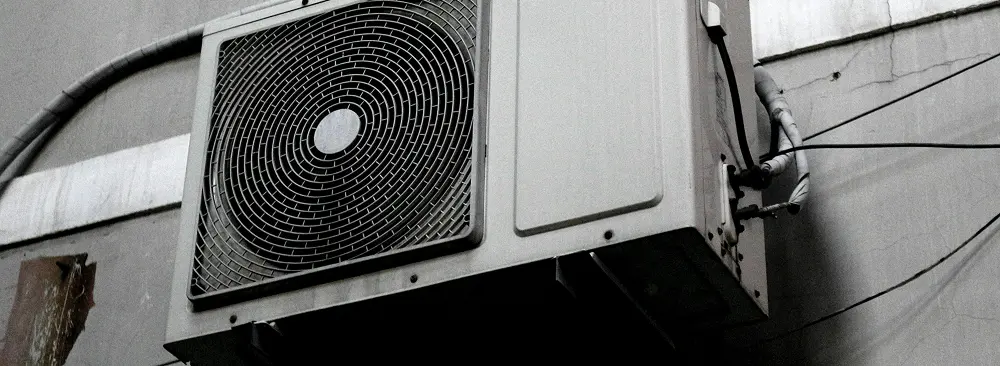
The American Innovation and Manufacturing (AIM) Act is reshaping the landscape for heat pumps and the entire HVACR industry.
Under the AIM Act, the Environmental Protection Agency (EPA) has implemented the final Technology Transitions Rule, which sets a clear path for reducing the use of high global warming potential (GWP) hydrofluorocarbons (HFCs) in air conditioning, heat pump systems, and refrigeration products.
This rule introduces sector-based restrictions that directly impact the design, manufacturing, and installation of heat pumps, requiring a shift toward next-generation technologies with significantly lower environmental impact.
For heat pump systems, the final technology transitions rule means that manufacturers and contractors must accelerate the adoption of refrigerants and components that comply with new GWP limits.
The EPA’s sector-based approach targets specific applications within the HVACR industry, ensuring that both residential and commercial heat pumps transition away from legacy HFCs to more sustainable alternatives.
This not only affects new equipment but also influences the entire supply chain, from system design to installation and servicing.
The technology transitions rule is a catalyst for American innovation, pushing the industry to develop and deploy advanced heat pump technologies that meet both performance and environmental standards.
As the EPA enforces these new requirements, companies that invest early in next-generation systems and low-GWP refrigerants will be better positioned to lead in a rapidly evolving market.
The rule underscores the federal government’s commitment to climate action while creating opportunities for the HVACR industry to deliver cleaner, more efficient air conditioning and heat pump solutions.
Ultimately, the AIM Act and the EPA’s technology transitions rule signal a significant shift for heat pumps and air conditioning systems nationwide.
📌 Industry leaders must stay ahead of sector-based restrictions, embrace new technologies, and align with the EPA’s vision for a sustainable future—turning regulatory compliance into a competitive advantage.
Impacts by Sector
Light Commercial HVAC (e.g., rooftop units, split systems, PTACs)
Leak/Tagging Challenge
Extending legacy stock means more units entering the field that require tagging and leak compliance under the AIM Act, extending the compliance burden (rather than shortening it).
For installation deadlines, systems with an approved building permit prior to the regulatory cutoff date may be eligible for extended installation timelines.
Inventory Buffer
Contractors and OEM distributors can move the remaining R-410A stock instead of eating the loss.
For example, if EPA’s cutoff is Jan 1, 2026, a sell-through might allow sales/installations until Jan 1, 2027.
This applies to both residential and light commercial air and light commercial air conditioning systems, which have specific compliance deadlines under the new regulations.
Small Business Relief
Many HVAC installers, especially in rural/smaller markets, still rely on R-410A units.
Sell-through ensures they can keep selling equipment during a phased transition rather than being forced to pivot overnight.
Cost Curve
Prolongs availability of cheaper legacy systems → short-term affordability for customers but creates split servicing requirements (A2Ls vs legacy HFCs).
Accurate carbon accounting and maintaining comprehensive carbon inventories are essential for regulatory compliance, especially under California SB 253.
Quantified refrigerant leaks must be included in emissions disclosures, as companies are required to report all relevant greenhouse gas emissions across Scope 1, 2, and 3.
This is why refrigerants often make up the majority of a company’s Scope 1 footprint — and why a single unnoticed leak can derail compliance math overnight.

Refrigeration (e.g., condensing units, reach-ins, supermarket racks)
Critical Carve-Outs
Sell-through has a bigger footprint here. Food retail and cold storage often order equipment in bulk (racks, condensing units).
If those systems arrive just before a ban, a sell-through gives flexibility to still install them.
Notably, the household refrigerator and freezer subsector is subject to specific restrictions, but residential ice makers are not included in these rules and are therefore exempt from certain regulatory requirements.
Operational Reality
Supermarkets can continue planned remodels or equipment swaps without scrapping millions in stranded inventory.
The food industry association has played a key role in representing stakeholders during regulatory challenges and legal actions related to these carve-outs.
Competitive Pressure
Large chains may accelerate adoption of low-GWP systems, while independents lean heavily on sell-through to control costs.
Creates a two-tier compliance landscape (advanced vs delayed). The trend toward new refrigeration technologies, especially those using low-GWP refrigerants, is growing.
All natural refrigeration systems—using ammonia, CO₂, air, water, or hydrocarbons—are increasingly recognized for their safety, efficiency, and ability to meet GWP reduction targets.
Leak/Tagging Implication
More legacy racks and condensing units hitting the field means higher cumulative leak potential.
Refrigeration systems are historically the largest source of fugitive HFC emissions (50–60% of U.S. refrigerant losses).
Sell-through provisions will lock in thousands more pounds of HFCs that must be tracked, tagged, and eventually reclaimed or destroyed.
🚨 Get ahead of refrigerant regulations. Learn how our leak and tagging solutions can help.
Bottom Line
Light Commercial HVAC
Sell-through buys time for small contractors and customers but slows down the industry’s clean break to A2Ls.
Refrigeration
Sell-through prevents massive stranded costs in supermarkets/cold storage but significantly prolongs refrigerant leak risk and tagging burdens, since these systems carry large charges and leak at higher rates.
Existing equipment may continue to be serviced or retrofitted with certain technologies as codes and standards evolve.
📌 This is why EPA’s sell-through flexibility solves one economic problem (avoiding stranded inventory) but creates long-tail compliance and emissions problems.
Analysis: The Great Disconnect, Monetizing the Leak, and the Scarcity Curve
The Great Disconnect: Relief vs. Reality
Use relief
The TT reconsideration extends the window to sell/install certain legacy HFC equipment, avoiding stranded inventory and rushed swaps.
This is particularly important for the heat pump subsector, as it allows more time to transition to compliant heat pump products and heat pump equipment that use next-generation, lower-GWP refrigerants.
Source: EPA
Supply reality
Allowances keep shrinking toward 30% (2029) and 15% (2034–36).
The reconsideration does not expand the supply ceiling; it shifts demand into tighter years.
Source: EPA
Net effect
More active HFC systems later → more refrigerant demand competing for less supply → price volatility and budget risk.
🚨 Don’t wait until the ban hits. Talk to our experts about low-GWP refrigeration systems.
From Abstract Risk to Concrete Cost: Monetizing the Leak
Supermarket example (centralized rack): ~4,000 lb R-404A charge; ~25% typical annual loss without best practices (~1,000 lb).
- Now (~60%): ~$20/lb → $20,000/yr loss.
- 30% band (2029): ~$40–55/lb → $40–55k/yr loss.
- 15% band (2034+): ~$80–100+/lb → $80–100k+/yr loss.
These regulatory changes also impact variable refrigerant flow (VRF) systems and VRF equipment, as new rules restrict the use of high-GWP HFC refrigerants in large-scale HVAC and refrigeration applications, affecting manufacturing, import, and installation timelines.
At those price bands, ALD + rapid repair pays back quickly. (ER&R’s 2024 final rule makes leak repair/ALD and reclaimed-only service national expectations by 2029, magnifying the cost of “wait and see.”)
Source: Federal Register
→ Read About “Budget Reality: Where the Money Currently Leaks”
The Scarcity Curve: Planning Ranges (not forecasts)
| Allowance band | R-410A ($/lb) | R-404A ($/lb) | Planning signal |
|---|---|---|---|
| ~60% (now–2028) | 10–18 | 18–25 | Manageable but tightening |
| 30% (2029–2033) | 25–40 | 40–55 | Tight; hoarding & volatility |
| 15% (2034+) | 50–70+ | 80–100+ | Severe scarcity risk |
These ranges reflect historical step-downs, current service quotes, and expected scarcity premia as allowances fall, assuming normal enforcement against illicit trade.
They are planning bands to set budgets and ROI thresholds, not price guarantees.
Certain HFCs, especially high GWP HFCs, are subject to the most significant price increases and regulatory restrictions due to phasedown schedules and compliance requirements.

A New Doctrine for Operational Resilience
Pillar 1: Absolute Visibility via Asset Tagging & Labeling
You cannot manage what you cannot see. Build a digital twin of every refrigerant-containing asset and cylinder:
- Tag racks, circuits, condensers, and cylinders
With unique IDs tied to charge size, refrigerant type, location, permit number, and service history.
- Label
To code (UL/IMC/ASHRAE for A2Ls) and to TT/ER&R (manufacturer/importer labels, installation dates, reclaimed content).
Source: US EPA & Federal Register
- Automate compliance
Generate audit-ready packages (ALD calibration logs, repair timestamps, recovery & reclaimed receipts).
- Capex precision
Identify high-leak/high-cost systems for surgical retrofits (CO₂) or A2L transitions where codes are adopted (IMC 2024/ASHRAE 15/34).
For new residential construction projects, implementing asset tagging and compliance practices is critical to ensure regulatory deadlines are met and inventory is managed efficiently.
✔ Future-proof your refrigeration systems. Connect with our compliance experts today.
Pillar 2: Proactive Leak Defense via ALD & Policy
Deploy intelligently
Fixed ALD in machine rooms/enclosures + portable advanced detectors for technicians.
Integrate
ALD → CMMS auto-creates work orders; no “silent” alarms.
Enforce
No top-offs without root-cause repair; require post-repair verification tests (state rules like WA codify these steps).
Source: Washington State Department of Ecology
Report
Monthly leak-rate dashboards by site; board-level KPI targets (e.g., ≤10%/yr).
When considering retrofits and system upgrades, next-generation technologies play a key role in meeting evolving regulatory requirements.
Leadership Implications
Financial
Treat refrigerant like a controlled commodity.
Budget using the 30%/15% bands and prioritize ALD/tagging where your $-per-lb exposure is highest.
Operational
Parallel universes: keep legacy HFCs running and prepare for A2L/CO₂. Train on UL 60335-2-40 A2L safety and local code adoption; align parts & tools.
Ensure training and compliance strategies specifically address conditioning and heat pumps, as new regulations phase out high-GWP refrigerants in these systems.
Compliance
TT reporting rails (in effect since 2025) plus ER&R (national leak & reclaimed use), plus state ALD. Build one data spine so the same tagged records serve all audits.
Sources: EPA & Federal Register
Reputation/ESG
GreenChill & customer RFPs increasingly look at leak intensity.
Documented reductions via ALD/tagging can be a differentiator in contracts and insurance.
Source: Federal Register
📌 The companies that invest now will not only comply: they’ll lead.
Aligning with global sustainability standards and guidance from the International Sustainability Standards Board further strengthens your corporate climate strategy and demonstrates leadership in climate disclosure.

The Strategic Horizon: Your Playbook
This is the narrative you asked to anchor — expanded and intact:
The EPA may have solved the near-term political problem of stranded assets, but it has amplified the long-term business problem of supply scarcity. The narrative of “relief” masks the reality of risk.
Great leaders will seize this moment to build resilience.
They will monetize leaks so boards feel the risk.
They will make asset tagging non-negotiable, because risk you don’t see is risk you can’t price. And they will champion leak detection as the cheapest insurance policy they can buy.
These regulatory shifts are shaped by international agreements like the Montreal Protocol, which (through the Kigali Amendment) drives domestic HFC reduction and the transition to next-generation refrigerants.
The most reliable hedge against the coming price uncertainty is not in Washington; it is within your control.
Tag everything. Detect early. Repair fast. Document perfectly.
This is not merely a compliance strategy; it is a blueprint for operational excellence and financial resilience in an era of unprecedented market disruption.

Conclusion
What’s planned
EPA has a Proposed Rule under OIRA review to reconsider parts of the Technology Transitions rule — signaling more sell-through/install flexibility to lower near-term costs. Exact changes will be in the NPRM after OIRA clears it. A subsequent final rule may further adjust compliance deadlines or restrictions as the regulatory process continues.
Source: Reginfo.gov
What’s fixed in law
The AIM Act phasedown (the supply cap) still drops to 30% in 2029 and 15% in 2034–36; ER&R imposes national leak repair/ALD requirements and reclaimed-only service starting 2029; CA/WA/NY overlays continue independently.
Sources: EPA; Federal Register; California Air Resources Board; Washington State Department of Ecology; Department of Environmental Conservation.
What leaders must do
Convert “relief” into a runway.
Use it to establish absolute visibility (tagging/labeling) and proactive leak defense (ALD, policy, and training).
Embracing the technology transition to next-generation refrigerants and systems is essential to remain compliant and competitive.
That’s how you flatten the scarcity curve’s impact on your P&L and stay audit-ready through 2029–2036.
One week after the EPA’s announcement in Georgia, the path forward for HFCs is both clearer and more complex.
The AW39 reconsideration presents a dangerous paradox.
Flexibilities like extended sell-throughs offer a short-term operational cushion, but they are simultaneously steering the market toward a slow-motion collision—funneling a larger base of legacy demand into a statutorily shrinking supply of HFCs.
The EPA has solved one political problem (avoiding immediate disruption) but has amplified the long-term business problems of supply scarcity, price volatility, and compliance risk.
For leadership, this is not a moment for passive observation. It is a mandate to navigate by choice, not by chance. This requires immediate, proactive planning across four critical domains:
Fortify the Balance Sheet
Treat refrigerant not as a consumable, but as a volatile financial asset. Model aggressive price inflation scenarios and build the necessary cash reserves to weather supply shocks without disrupting operations.
Bulletproof Your Compliance
In an environment of heightened scrutiny, data is your best defense. Deploy comprehensive asset tagging and continuous leak detection to create an unimpeachable, auditable record of your refrigerant inventory and management practices.
Outmaneuver Asset Stranding
Use the flexibility granted by the EPA as a strategic bridge, not a final destination. Aggressively map and fund the transition to next-generation A2L and CO2 systems to ensure your capital investments are future-proof.
Arm Your Workforce
The transition demands new skills. Invest now in certifying technicians on the complexities of new refrigerants, evolving safety codes (UL 60335-2-40), and the intelligent data flowing from integrated ALD systems.
📌 The message from the market is clear: the technology transition is not optional; it is a strategic inevitability.
Companies that treat this moment as a reprieve will face the punishing consequences of escalating costs, regulatory enforcement, and competitive disadvantage.
Those who see it as a call to action will convert compliance into resilience, resilience into financial stability, and financial stability into enduring market leadership.