
A Clear Accounting Framework for Insetting, Offsetting, and Crediting Environmental Credits and Emission Reductions Using AKO NDIR Leak Detectors as Verified Technologies
What Is FASB Topic 818?
On August 13, 2025, the Financial Accounting Standards Board (FASB) finalized its redeliberations and approved the forthcoming Accounting Standards Update (ASU) on Environmental Credits and Environmental Credit Obligations (Topic 818).
This marks the first time U.S. accounting rules will standardize how companies report and value environmental credits, such as carbon offsets, renewable energy certificates, and emissions allowances.
The final vote came after years of stakeholder input and public comment, including letters from major companies, nonprofits, and investors.
With the standard now moving to a formal ballot and implementation slated for 2028, it’s critical to understand how leak detection, as a validation mechanism, fits into this new financial accountability framework for emissions reduction.
FASB Topic 818 is the first formal accounting standard in the United States that governs how companies recognize, measure, and disclose environmental credits and obligations on their financial statements.
The standard is part of the FASB Accounting Standards Codification as the authoritative source for Topic 818.
Issued in final form in August 2025 after nearly four years of public consultation, this standard is based on proposed guidance and extensive stakeholder feedback. It covers:
- Carbon offsets
- Renewable Energy Certificates (RECs)
- Cap-and-trade allowances
- Renewable identification numbers (RINs)
- Other legally enforceable, tradable environmental credits, which can take many forms such as credits, certificates, allowances, compliance instruments, and offsets
Previously, entities typically account for environmental credits in diverse ways due to a lack of specific guidance under generally accepted accounting principles, resulting in inconsistent practices.
These credits are often established by ordinances represented in law, and an enforceable right is required for recognition.
The scope of Topic 818 treats environmental credits as general intangibles that are frequently acquired through an exchange transaction.
Entities may hold environmental credits for regulatory compliance or voluntary purposes, and proper accounting treatment is required for credits held on the balance sheet.
The standard also addresses regulatory compliance obligations, including any regulatory compliance obligation arising from existing or enacted laws, which are used to settle compliance obligations.
Entities may obtain environmental credits to settle these obligations, and the acquisition and use of such credits are governed by the new standard. Environmental credits are primarily used to remove emissions or pollution.
Improved measurement presentation under Topic 818 enhances comparability and transparency in financial reporting.
The end of the compliance period is used as the reference point for recognizing environmental credit obligations and related liabilities.
🚨 Get ahead of refrigerant regulations. Learn how our leak and tagging solutions can help.
The HVAC/R Connection: Turning Leaks into Ledger Entries
So, how does a high-level financial standard from FASB translate to the world of compressors, coolant lines, and service technicians?
The connection is direct, powerful, and poised to transform the economics of the entire HVAC/R industry.
For decades, the industry has wrestled with refrigerant leaks. These fugitive emissions are not trivial; they are potent Scope 1 emissions for any company that owns and operates refrigeration or air conditioning equipment.
📌 Because common refrigerants have a very high Global Warming Potential (GWP) (often thousands of times more potent than carbon dioxide), even small leaks have an outsized environmental impact.
Historically, a leak was viewed through a purely operational and cost-avoidance lens.
The expense was measured in the cost of replacement refrigerant, the technician’s labor, and potential product spoilage or downtime.
It was a maintenance problem that hit the income statement as an expense.
FASB Topic 818 fundamentally reframes this reality
Here’s how it applies directly to leaks:
Quantifiable Impact
Every pound of a specific refrigerant has a precise, scientifically established GWP.
This allows the impact of a leak to be converted into a universally understood unit: metric tons of carbon dioxide equivalent (tCO2e).
This quantification is the first step in making an environmental event financially legible.
Prevention as Value Creation (Insetting)
The new standard recognizes that preventing an emission is a value-creating act.
When a company can prove, with verifiable data, that it has prevented a refrigerant leak that would have otherwise occurred, it has effectively generated an environmental credit through insetting.
This process generates an environmental attribute that can be recognized as a credit, representing the underlying emissions reduction benefit.
This moves the action from simple maintenance to a proactive reduction of the company’s own emissions footprint.
From Operational Event to Financial Asset
This is the critical transformation. A proactive maintenance event (like a technician responding to an early warning from a leak detector) is no longer just a saved cost.
It is now a verifiable performance metric that can be logged, quantified in tCO2e, and, under the rules of Topic 818, recognized as a formal intangible asset on the company’s balance sheet.
In short, FASB 818 provides the official accounting mechanism to turn a well-maintained refrigeration system into a factory for generating valuable, auditable environmental assets.
📌 It elevates the role of proactive maintenance from a tactical necessity to a strategic financial activity.
How We Got Here?
2021–2022
FASB received feedback during an “Agenda Consultation” asking for consistent rules around environmental credit programs.
2022
Project added to FASB’s technical agenda.
Dec 2024
A proposed Accounting Standards Update (ASU) was released for public comment.
Aug 2025
After extensive feedback from companies (e.g., Ford, Constellation, API) and organizations (e.g., CERES, CalCPA, E-Liability Institute), the Financial Accounting Standards Board (FASB) finalized the standard. The effective date for implementation will be determined after further stakeholder feedback.
What Was the Problem Before FASB 818?
Until now, U.S. companies operated in a vacuum when it came to accounting for environmental credits. While carbon markets, renewable energy programs, and state-level compliance systems issued credits and tracked environmental performance, no authoritative U.S. accounting standard existed to determine:
- When to recognize a credit as an asset or a liability
- How to value or impair that credit over time
- Where to report credits in the financial statements
- What disclosures were needed for transparency and comparability
As a result, companies adopted inconsistent, and in some cases opaque, methods to record and report environmental credits, leading to several risks:
Double Accounting
Two parties (e.g., the aggregator and the generator) claiming credit for the same emission reduction
Mis-accounting
Treating credits as financial instruments or ignoring timing mismatches between when credits are earned and applied
Over-accounting
Inflating the value of credits without clear cost basis or impairment review
Improper Reporting
Reporting credit-based environmental progress in ESG reports while excluding financial implications from GAAP-based statements
📌 This gap eroded investor confidence and made it difficult to evaluate the real financial impact of sustainability actions. It also created a risk of regulatory scrutiny and internal audit challenges.
Who’s Behind FASB 818?
Several key figures have shaped this effort:
Rich Jones
FASB Chairman: Spearheaded the inclusion of environmental credit accounting in FASB’s technical agenda after years of stakeholder feedback.
Chris Roberge
Senior Project Manager: Led the technical development of the project and managed public outreach.
Kitrina Pople & Edward Garcia
Practice Fellows: Helped translate complex market practices into formal accounting language and field-tested proposals through industry input.
Alldyn Schroeder & Eric Saul
Postgraduate Technical Assistants: Supported the synthesis of comment letters, stakeholder data, and draft standards.
The FASB also incorporated feedback from influential institutions, including:
- The E-liability Institute (Kaplan & Ramanna)
- Ford Motor Company
- American Petroleum Institute
- Ceres and the investor ESG community
- Constellation Energy
- CalCPA and regional accounting groups
Their combined input helped strike a balance between disclosure transparency, auditability, and cost-effectiveness—especially as credits become a growing component of corporate sustainability strategies.
Key Benefits of FASB 818 for This Use Case
| Benefit | Description |
|---|---|
| Clarity | Companies like ColdCo can now recognize insets (internal emissions reductions) as balance-sheet assets. |
| Audit-Ready | Leak reduction is no longer just “nice-to-have” in ESG reports—it becomes an auditable financial asset. |
| Prevents Double Counting | Once ColdCo uses the inset in disclosures, it cannot resell or reuse it elsewhere—clear ownership rules apply. |
| Comparable Reporting | Investors and auditors get a consistent format for emissions performance investments. |
Why FASB 818 Matters for Financial Reporting?
Improves financial transparency
for investors and regulators, while also enhancing environmental integrity by ensuring credible and robust accounting for environmental credits
Enhances measurement presentation
for environmental credits and obligations, improving comparability and transparency in financial statements.
Prevents double-counting
of credits by standardizing recognition rules.
Provides guidance
for valuation, impairment testing, and derecognition of credit assets.
Creates audit-ready clarity
for firms managing large volumes of sustainability-linked instruments
Applies to both voluntary and compliance programs
Voluntary environmental commitments, such as achieving net zero or carbon neutrality by a future date, also require careful accounting and disclosure of environmental credits and obligations under FASB 818.
Insetting vs. Offsetting (And Why It Matters)
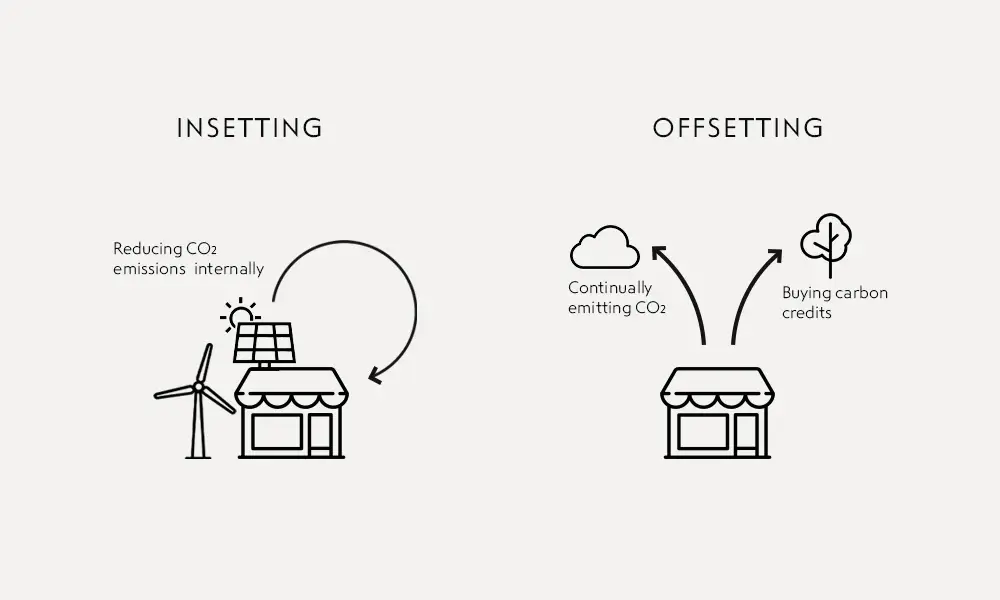
Offsetting
- Occurs outside a company’s value chain
- Credits are purchased from third-party projects (e.g., a forestry project in Brazil)
- Often used to “neutralize” emissions from hard-to-abate sectors
- Subject to scrutiny for additionality and permanence
Insetting
- Occurs within a company’s own supply chain or operations
- Typically involves real reductions in Scope 1 or Scope 3 emissions
- Examples include: refrigerant leak prevention, electrifying fleet vehicles, and regenerative agriculture
- More aligned with science-based targets and internal net-zero pathways
📌 FASB 818 supports both models, but insetting may provide greater financial visibility and operational alignment under this rule.
Which Do You Use When?
| Purpose | Use FASB 818 | Use ACR / Verra / CAR / Protocols |
|---|---|---|
| Record environmental credits in financial statements | ✅ Yes | 🚫 No |
| Determine eligibility to create a credit | 🚫 No | ✅ Yes |
| Define Scope 1/2/3 emissions avoided | 🚫 No | ✅ Yes |
| Value credit on balance sheet at cost | ✅ Yes | 🚫 No |
| Determine carbon methodology or MRV | 🚫 No | ✅ Yes |
| Disclose credit activity to investors | ✅ Yes | ✅ Yes (in narrative form) |
| Prevent double-counting of credit value | ✅ Yes (via derecognition rules) | ✅ Yes (via chain-of-custody rules) |
How Are Environmental Credits Measured?
Initial and Subsequent Measurement of Credits
Accurate measurement of environmental credits and environmental credit obligations is at the heart of the proposed Accounting Standards Update (ASU) on Environmental Credits and Environmental Credit Obligations (Topic 818).
This guidance is designed to bring consistency and transparency to how entities recognize, value, and report these assets and related obligations in their financial statements—an essential step for companies participating in environmental credit programs or facing regulatory compliance obligations arising from existing or enacted laws.

Initial Measurement
When an entity acquires environmental credits (whether carbon offsets, renewable energy certificates, or other credits and environmental credit instruments) the initial measurement depends on how the credits are obtained.
If credits are purchased, they are recognized as assets at the acquisition cost, which includes any transaction costs incurred.
For credits that are internally generated, such as those resulting from a company’s own emissions reduction projects, the initial measurement reflects the direct costs and overheads associated with generating the credits.
In cases where environmental credits are received as a nonreciprocal transfer from a regulatory agency or its designee, the credits are measured at their fair value on the date of receipt.
Subsequent Measurement
After initial recognition, environmental credits are subject to subsequent measurement at fair value.
This means that any changes in the fair value of the credits (whether due to market fluctuations, regulatory changes, or other factors) are recognized in earnings.
Entities are required to use appropriate valuation techniques, such as the income approach (estimating the present value of expected future cash flows from the credits) or the market approach (using observable market data for similar credits).
To enhance transparency, the proposed ASU also requires disclosure of the fair value hierarchy, helping stakeholders understand the level of judgment and estimation involved in determining fair value.
Measurement of Environmental Credit Obligations
Environmental credit obligations refer to regulatory compliance requirements that can be fulfilled with environmental credits, as mandated by existing or newly enacted laws, statutes, or ordinances aimed at controlling emissions or other forms of pollution.
The measurement of these obligations depends on the entity’s expected compliance strategy.
If an entity plans to use environmental credits it already holds to settle an obligation, the liability is measured at the carrying amount of those credits.
If the entity expects to purchase credits to fulfill the obligation, the liability is measured at the fair value of the credits expected to be acquired.
Entities must disclose the measurement basis for their environmental credit obligations, including key assumptions and estimates used.

Implications for Financial Reporting and Compliance
By establishing clear rules for the initial and subsequent measurement of environmental credits and related obligations, the proposed ASU ensures that financial statements accurately reflect the economic realities of participating in environmental credit programs.
This consistency supports comparability across entities, enhances the reliability of financial reporting, and provides stakeholders (including investors, regulators, and private companies) with the information needed to assess compliance with regulatory compliance programs and the financial impact of environmental credit obligations.
As environmental credit programs continue to evolve, these measurement and disclosure requirements will play a critical role in supporting robust, decision-useful financial accounting for credits and obligations recognized as assets and liabilities.
Fair Value and Environmental Credit Obligations
The proposed Accounting Standards Update (ASU) on Environmental Credits and Environmental Credit Obligations (Topic 818) introduces a robust framework for the fair value measurement of environmental credit obligations.
This guidance is designed to ensure that entities accurately reflect the value of their environmental credit obligations and related environmental credits in their financial statements, in line with current market realities and regulatory compliance requirements.
Fair Value Measurement at the Reporting Date
Under the proposed ASU, environmental credit obligations are recognized and measured using fair value principles.
Specifically, the fair value of environmental credits is determined based on the price that would be received in an orderly transaction between market participants at the reporting date.
The measurement of environmental credit obligations is aligned with the relevant compliance cycle, ensuring that obligations are valued in the context of the period over which compliance is assessed and settled.
This approach ensures that the value of environmental credits and the associated obligations are grounded in observable market data, providing a reliable benchmark for financial reporting.
Role of AKO Leak Detectors in This Process
AKO’s leak detection systems (installed in grocery stores, data centers, and cold storage facilities) offer quantifiable emissions reductions by:
- Avoiding costly service events
Reducing Scope 1 emissions and environmental risk.
- Preventing refrigerant leaks
Before they happen, helping to remove emissions and support regulatory compliance.
- Reducing refrigerant use
Through early-warning systems.
Emissions reductions are validated based on events occurring during the reporting period, and specifically over a defined monitoring period, which may impact the recognition of environmental credit obligations at the reporting date.
The use of environmental credits to settle an environmental credit obligation may involve both a funded portion (credits currently held) and an unfunded portion (credits that need to be acquired).
→ Read About “Refrigerant Leak Detection as a Service”
🚨 Get ahead of refrigerant regulations. Learn how our leak and tagging solutions can help.
How AKO Enables FASB 818 Compliance?
Asset Acquisition
AKO leak detectors (hardware + install + monitoring) are treated as a capitalized cost.
Emission Reduction Validation
- Verified refrigerant loss reductions (tCO₂e) using calibrated AKO data streams.
- Can be used to support insetting claims or generate carbon credits under a registry.
Recognition under Topic 818
- If the company uses these reductions to meet internal targets or regulatory obligations, the credit becomes a recognizable asset.
- Companies may use a decision tree to determine when and how to recognize environmental credits and obligations under Topic 818.
- If sold (via carbon markets), revenue and cost of goods sold are recorded per 818 rules.
- Upon adoption of Topic 818, companies may need to adjust their opening balance through a cumulative effect adjustment, as the guidance is applied retrospectively.
Disclosures
- The reporting date result reflects the impact of environmental credits and obligations as of the reporting date.
- Financial statements must disclose how these assets are used (compliance vs. voluntary reduction) and explain any material holdings or transfers.
→ 🎥 Watch! AKO Leak Detector in Action
Navigating FASB 818 Accounting Guidance
The Financial Accounting Standards Board’s proposed Accounting Standards Update (ASU) on Environmental Credits and Environmental Credit Obligations (Topic 818) introduces a structured approach for entities to achieve consistent, transparent financial reporting of environmental credits and related obligations.
To help organizations comply with these new requirements, FASB 818 provides a decision tree: a step-by-step process to guide financial accounting and disclosure for environmental credit programs and regulatory compliance obligations.
1. Assess Environmental Credit Holdings and Obligations
Entities begin by determining whether they hold environmental credits (such as renewable energy certificates, carbon offsets, or other credits) or have environmental credit obligations arising from regulatory compliance programs or existing or enacted laws.
This initial assessment ensures that all relevant assets and liabilities are identified for financial reporting.
2. Identify the Type of Credit or Obligation
Next, entities must specify the nature of the environmental credit or obligation.
This includes distinguishing between credits generated internally (e.g., through emissions reduction projects) and those acquired externally, as well as clarifying whether obligations stem from regulatory compliance or voluntary environmental credit programs.
3. Apply Recognition Criteria for Environmental Credits
Environmental credits are recognized as assets on the financial statements when it is probable they will be used to settle an environmental credit obligation or transferred in an exchange transaction.
This step ensures that only credits meeting the recognition threshold are included in the entity’s financial asset base.
4. Measure Environmental Credits at Fair Value
Upon recognition, environmental credits are measured at fair value, incorporating any transaction costs incurred to obtain the credits.
This approach aligns the carrying amount of credits with current market conditions, supporting the accurate presentation of financial statements.
5. Recognize Environmental Credit Obligations as Liabilities
Environmental credit obligations are recognized as liabilities when events occurring on or before the reporting date give rise to a regulatory compliance obligation.
This ensures that all obligations arising from regulatory compliance or environmental credit programs are properly reflected in the financial statements.
6. Measure Environmental Credit Obligations
Obligations are measured based on the carrying amount of compliance environmental credits held and expected to be used to settle the obligation at the reporting date (the funded portion), plus the fair value of any additional credits required to settle the unfunded portion.
This dual approach provides a comprehensive view of both current and future compliance needs.
7. Address Initial and Subsequent Measurement
The proposed ASU outlines guidance for both initial and subsequent measurement of environmental credits and obligations. Entities must update valuations at each reporting date to reflect changes in fair value and ensure ongoing accuracy in financial reporting.
8. Apply Guidance Retrospective
Entities are required to apply the proposed guidance retrospectively, making a cumulative effect adjustment to the opening balance of equity at the start of the adoption period. This ensures comparability across reporting periods and aligns with best practices in financial accounting standards.
9. Disclose Environmental Credit Information
Robust disclosure requirements mandate that entities provide separate quantitative and qualitative information for significant environmental credits and environmental credit obligations.
These disclosures enhance transparency, allowing stakeholders to assess the impact of environmental credit programs and regulatory compliance obligations on the entity’s financial position.
10. Incorporate Stakeholder Feedback and Monitor Effective Date
The FASB will finalize the effective date and consider whether early application is permitted after reviewing stakeholder feedback.
This iterative process ensures that the final standard addresses the practical needs of entities and users of financial statements, supporting the ongoing evolution of environmental credit accounting.
By following this decision tree, entities can confidently navigate the complexities of FASB 818, ensuring that environmental credits and environmental credit obligations are recognized, measured, and disclosed in accordance with the latest financial accounting standards.
This structured approach not only supports regulatory compliance and robust financial reporting but also enhances the comparability and decision-usefulness of financial statements for investors, regulators, and other stakeholders.
🚨 Don’t wait until the ban hits. Talk to our experts about low-GWP refrigeration systems.
Why This Framework Is a Step Forward?
With FASB Topic 818, companies now have a uniform framework to:
- Quantify their impact
- Report it credibly to stakeholders
- Avoid greenwashing and double-counting
- Align environmental impact with financial accountability
For AKO and other validated technology providers, this creates a pathway to monetize operational performance not just as cost avoidance, but as recognizable environmental credit assets on the balance sheet.
→ Read About “Budget Reality: Where the Money Currently Leaks”

The New Symmetry of Value: from the Wrench to the Balance Sheet
Ultimately, the most profound impact of FASB Topic 818 is not just the creation of a new accounting standard but the application of financial accounting’s unforgiving rigor to the world of operational and environmental performance.
For years, a fundamental asymmetry has defined corporate operations.
The technician in the machine room, tasked with fixing a refrigerant leak, saw their work as a tactical repair. The facility manager saw it as a line item in a maintenance budget.
The CFO saw the budget as a cost center to be minimized.
The value of a proactive, well-executed operational task was often lost in translation as it moved up the chain, becoming invisible on the financial statements.
FASB 818 shatters these traditional silos and creates, for the first time, a perfect symmetry of value that flows from the technician on the floor to the investor on Wall Street.
An operational action (preventing a leak) is no longer just a task; it is a verifiable, data-generating event.
This is where the “operations stuff” becomes the hero of the story. The daily work of skilled technicians, empowered by validated technology, is now the direct source of financial value creation.
Technology like AKO’s NDIR leak detectors provides the critical nervous system for this new, integrated reality. It captures the operational reality (the moment-to-moment prevention of emissions) and translates it into the universal language of auditable data (tCO2e).
This data becomes the foundation for a new environmental credit asset, an entry that is just as real to the CFO as a piece of machinery or real estate.
This is the new paradigm: the technician’s wrench turn is now symmetrical with the CFO’s ledger entry. It creates a single, unbroken chain of value, aligning the entire organization around a shared, measurable, and financially material goal.
In this new era, operational excellence isn’t just a competitive advantage; it’s a reportable asset.
Access FASB Issued Documents and Materials