Introduction to HVAC
HVAC stands for Heating, Ventilation, and Air Conditioning. There are several types of HVAC systems available for residential and commercial use.
HVAC systems use advanced technologies to regulate temperature, humidity, and indoor air quality in various types of buildings.
The three major functions of HVAC systems are heating, ventilation, and air conditioning, which are interrelated.
The main types of residential HVAC systems include central air split systems, ductless mini-splits, heat pumps, hybrid systems, and geothermal units.
A split system is the most common central heating and air conditioning system found in single-family homes in the US.
Heat pumps are also widely used for their ability to provide both heating and cooling efficiently, with options such as ground-source and dual-fuel configurations.
These systems are essential for maintaining comfort, safety, and energy efficiency in homes, offices, supermarkets, and industrial facilities.
The efficiency of HVAC systems is often measured using ratios that compare useful energy output to energy input.
The Energy Efficiency Ratio (EER) measures the efficiency of cooling units at a specific outdoor temperature, typically 95 degrees Fahrenheit, while the Seasonal Energy Efficiency Ratio (SEER) evaluates the average cooling efficiency of an air conditioner or heat pump over a range of temperatures.
A higher SEER rating indicates a more efficient air conditioning unit, which can help reduce energy consumption and save on energy bills.
For heating systems, the Annual Fuel Utilization Efficiency (AFUE) rating expresses the efficiency of a gas furnace or boiler as a percentage, showing how much of the energy input is converted into useful heat.
With this foundational understanding of HVAC systems, we can now delve into the importance of leak detection and system efficiency for facility managers, HVAC technicians, and service contractors.
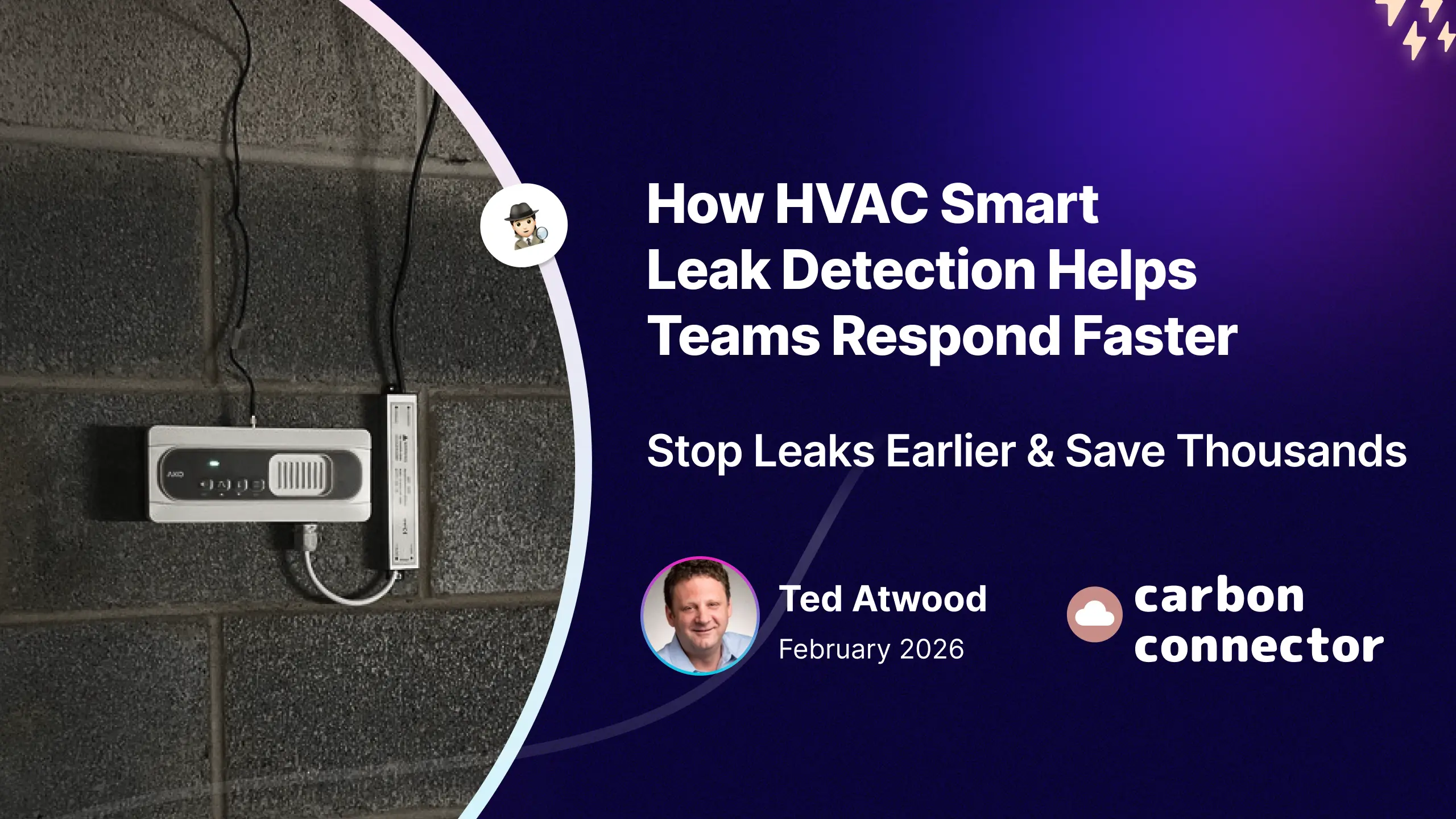
Hint: HVAC Leak Detectors Have Outgrown The Box
Why This Matters: We’re Shedding the Box
This isn’t a guide. It’s a reckoning with how we’ve been doing leak detection for forty years—and an invitation to step into something bigger.
For decades, we’ve been perfecting the box: better sensors, smarter alarms, more accurate thresholds.
We’ve been optimizing a model that was fundamentally broken; isolated devices speaking to no one, generating alerts nobody trusts, sitting abandoned on walls while facilities hemorrhage tens of thousands of pounds of refrigerant annually.
The box has become the problem.
What follows isn’t a manual for better leak detection. It’s a manifesto for why leak detection had to break free from the physical device entirely; move into the cloud, live in databases, pull people into collaborative intelligence instead of pushing isolated alarms at them.
This is what happens when technology outgrows its container. When the solution becomes too big for the hardware that used to define it.
When you realize you’re not selling better boxes—you’re enabling a fundamentally different way of working.
Are You Tired of the 25-Year Pattern?
Are you tired of not trusting your leak detector?
For twenty-five years, you’ve watched the same pattern repeat: install a detector for compliance, get buried in false alarms, learn to ignore it, and discover leaks through quarterly refrigerant bills instead. You’ve stopped believing leak detection actually works.
But here’s the question nobody asks: If your compressors were this ineffective, would you keep buying them?
Are you exhausted by making investments just to satisfy the EPA?
You spend $3,000-8,000 on detection systems knowing they’ll sit unused on the wall, serving only to check a box during audits.
The detector becomes a compliance tax, not an operational tool. You’re investing in equipment you don’t trust to use.
If your compressors delivered compliance but no cooling, would you keep buying them?
Are you exhausted by false alarms and a lack of support?
Forty-seven alerts last year. Three real leaks found. Forty-four wasted $800 service calls.
When you call for help, you navigate phone trees to reach someone who’s never seen your model. Replacement sensors take weeks.
Calibration? “Schedule it for next quarter.” The detector cries wolf so often that you’ve trained yourself to ignore all alarms.
If your compressors failed this frequently with this little support, would you keep buying them?
Are you disappointed by the results from a significant investment?
You spent $15,000 on leak detection infrastructure.
Two years later, you’re still losing 25% of your refrigerant charge annually—$30,000 in replacement costs, $12,000 in energy penalties from running undercharged, and countless hours coordinating emergency repairs.
The investment hasn’t changed anything measurable.
If your compressors consumed this much energy and delivered this little performance, would you keep buying them?

Here’s the truth we need to face
We’ve accepted from leak detectors what we’d never accept from any other HVAC equipment. We’ve normalized failure.
We’ve built an entire industry around selling boxes that don’t solve the problem they were installed to solve.
The 25-year pattern ends when you realize the problem isn’t the quality of the box—it’s that the solution was never meant to live in a box at all.
Who’s Ready to Step Out of the Box
Facility managers
You manage critical HVAC infrastructure worth millions.
Your compressors, chillers, and air handlers: you expect them to perform, and when they don’t, you replace them. Why are you still tolerating leak detectors that don’t work?
What if leak detection actually answered your real questions: Which alert costs $16,350 annually if you ignore it? Which one can wait?
Which one requires dispatch today? What if you could trust the system enough to actually use it?
When it comes to installation, repair, and maintenance, it’s essential to research and select reputable HVAC companies to ensure reliable service and long-term system performance.
HVAC contractors and technicians
You’d never accept a compressor that only worked 8% of the time. Yet that’s exactly what leak detectors deliver: 52 alerts annually, 3-4 actual leaks, 92% false alarm rate.
You’re racing a 4% annual workforce decline while wasting 6-8 hours per leak call checking every joint systematically, often finding nothing.
What if your techs arrived knowing exactly where the leak is (within 2-3 feet), exactly when it’s active (1-3 PM during defrost), and exactly what parts to bring?
What if leak detection multiplied your workforce instead of wasting it?
The HVAC industry offers strong job opportunities, career security, and clear pathways for advancement, making it an attractive field for technicians and new entrants.
📌 Transition from “ignoring alarms” to “actionable financial insights”.
Building engineers
Your compressors don’t hide their energy consumption: you see it on your dashboard, optimize it, and track improvements.
But leak detection? It’s blind to the $63,000 in annual waste it’s supposed to prevent.
You’ve optimized everything visible, while refrigerant leaks silently destroy efficiency at rates that dwarf your LED retrofits.
What if leak detection connected to your BMS and revealed the waste your isolated monitoring completely misses?
Compliance officers
You’d never accept a compressor that only documented its own operation 13% of the time. Yet that’s what leak detection delivers for EPA audits; you spend 18 hours reconstructing what should be automated records.
What if cloud databases generated complete audit reports in 2.4 hours (timestamped detection records, severity calculations, repair verification), all documented automatically as operations byproduct?
Portfolio managers
You’d never deploy compressors that required five-to-seven-times their purchase price in ongoing operational support to function.
Yet that’s exactly what the Australian model proved leak detection requires to actually work.
What if cloud infrastructure delivered 8% leak rates and early detection without staffing monitoring operations at every site?
What You’re Actually Stepping Into
This isn’t about adopting new technology. It’s about refusing to accept from leak detection what you’d never accept from any other HVAC equipment.
- Out of the box. Into the cloud.
- Out of compliance theater. Into operational intelligence.
- Out of 25 years of normalized failure. Into systems that actually work.
You’re stepping into leak detection that meets the same performance standards you demand from every other piece of HVAC infrastructure:
Reliability
Not 52 false alarms annually, but 2-3. Not 8% accuracy, but 96% accuracy.
Value
Not compliance tax sitting unused, but $32,000-48,000 annual savings combining refrigerant, energy, and labor.
Support
Not phone trees and weeks for replacement parts, but cloud systems that update themselves and improve for everyone simultaneously.
Results
Not 25% annual refrigerant loss despite having detection, but 8% loss rates with repairs before you need to add refrigerant.
Integration
Not isolated boxes speaking to no one, but cloud intelligence connecting facility managers, technicians, engineers, compliance officers, and portfolio executives through shared real-time data.
The technology finally got bigger than the physical device that used to contain it.
The question is whether you’re ready to demand from leak detection what you already demand from compressors, chillers, and every other critical HVAC system.
This is the path out of the box.
For Facility Managers
Leak detection you trust enough to actually use—that answers your questions instead of generating noise.
For Technicians
Intelligence that makes you three times more productive instead of wasting 75% of your diagnostic time.
For Building Engineers
Integration that reveals the hidden waste destroying your efficiency programs.
For Compliance Officers
Automation that treats EPA audits as routine instead of emergencies.
For Portfolio Managers
Cloud infrastructure that scales results without scaling operational overhead.
The Shared Truth
If your compressors performed like your leak detectors, you’d stop buying compressors.
You wouldn’t optimize compressor design. You wouldn’t shop for better brands. You wouldn’t blame maintenance practices.
You’d realize the fundamental model was broken and demand something completely different.
That’s where we are with leak detection. The 25-year pattern of normalized failure ends when you realize:
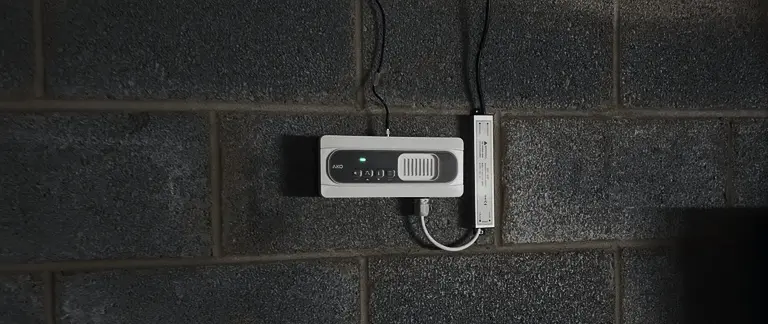
You need leak detection that’s bigger than a box on the wall.
Bigger than hardware. Bigger than compliance theater. Bigger than any one person’s ability to monitor, interpret, and respond alone.
You need intelligence that lives in the cloud, connects people through dashboards and mobile devices, flows into databases that build institutional knowledge, and pulls everyone into working from the same real-time data; delivering the performance you already demand from every other HVAC system.
The box was the limit. The cloud is the liberation.
If you wouldn’t accept this performance from your compressors, why are you still accepting it from your leak detectors?
Are you ready to shed the box?
This stuff is complicated: just look at the System Components
A well-designed HVAC system consists of several key components that work together to deliver optimal performance and efficiency.
Sheet metal is commonly used in constructing ductwork and fan blades, playing a significant role in system performance and energy efficiency.
Proper flow of refrigerant and air within HVAC systems is essential; for example, reversing the flow of refrigerant enables heat pumps to switch between heating and cooling modes, while correct airflow rates are vital for efficiency and indoor air quality.
📌 Understanding these elements is crucial for effective leak detection and maintenance.
Outdoor and Indoor Units
The outdoor unit houses the compressor and condenser coil, while the indoor unit contains the evaporator coil, which keeps the air at the right temperature where you want/need it.
These units work in tandem to transfer heat and regulate indoor climate. Refrigerant is the fluid that moves between them.
Some HVAC systems use boilers to heat water, which is then circulated through pipes and radiators to efficiently provide warmth in buildings.
In heating systems like furnaces and boilers, the type of fuel used—such as natural gas, oil, or electricity; directly impacts system efficiency and combustion performance.
Additionally, heat pumps can extract heat from environmental air, exhaust air from a building, or from the ground.
Geothermal heat pumps use underground pipes to leverage stable underground temperatures for both heating and cooling.
Air Handlers and Thermostats
Air handlers distribute conditioned air throughout the building, and thermostats provide precise control over temperature settings, ensuring comfort and energy efficiency.
Air Filters and Humidifiers
Air filters remove particulates and contaminants from the air, while humidifiers maintain proper moisture levels, contributing to indoor air quality and occupant health.
Maintenance Best Practices
Regular maintenance, including filter replacement, coil cleaning, and system inspections, is essential to prevent leaks, extend equipment life, and maintain efficiency.
With a clear understanding of the essential components, we can now explore how technician expertise ensures these systems operate at peak performance.
Technician Training and Certification
Proper installation, maintenance, and repair of HVAC systems requires skilled technicians with up-to-date training and certifications.
Many companies and organizations offer professional development and training programs for HVAC technicians, ensuring they stay up to date with industry standards.
The HVAC industry also provides a wide range of job opportunities and clear career pathways, from entry-level technician roles to advanced positions through apprenticeships and certifications.
The problem is that not enough techs are joining the workforce, and great ones are retiring every day.
Big questions remain, like how do we retain some of the workforce? How do we attract new people to the workforce?
Importance of Skilled Technicians
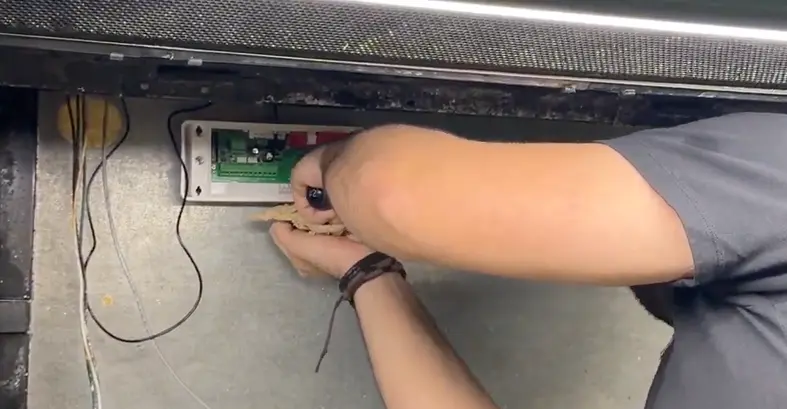
Skilled technicians are vital for diagnosing issues, performing repairs, and ensuring systems run efficiently and safely. This is like the Dr. level people.
Certification and Ongoing Education
Technicians should pursue industry-recognized certifications and participate in ongoing education to stay current with evolving technologies and regulations.
Benefits of Professional Training
Professional training leads to higher quality work, fewer callbacks, and improved system reliability.
By understanding the importance of technician expertise, we can now examine the real-world challenges and solutions in leak detection and system validation.
Every Journey begins with a step
Two years ago, I shifted from a complete focus on refrigerant regulations and began drilling deep into a haunting question:
Why do facilities with leak detectors still have 20-25% annual refrigerant leak rates?
I’d seen the paradox hundreds of times. A store reports catastrophic refrigerant loss. I arrive expecting no monitoring equipment. Instead, there’s a leak detector on the wall, green light blinking, silently watching the HVAC system hemorrhage $8,000-15,000 per year.
Was it the device? The technology? Placement? People? Processes? I thought I’d understand in a few months. I was wrong. But being wrong is often the beginning of being right.
Key Challenges for Facility Managers
Facility managers face several challenges in maintaining HVAC system efficiency and compliance:
- Rising refrigerant costs
- Increasing EPA & state compliance pressure
- Frequent false alarms from outdated detectors
- Deciding which alerts require immediate action
- Balancing maintenance schedules with operational needs
- Considering installation cost when planning HVAC upgrades or replacing outdated equipment with a new system, as expenses can vary based on system type and building requirements
Addressing these challenges requires advanced leak detection solutions that provide actionable insights and streamline workflows.
Three Principles That Guided My Investigation
Remain focused on the solution; don’t form conclusions too early.
I had to resist explaining away what I saw and instead just observe, document, and ask why five more times.
Scrutinize what’s really working; go beyond the hype.
The HVAC industry is full of marketing claims. I needed proof in operational facilities under real-world conditions.
Get in deeply; the John Locke principle.
You can’t understand refrigerant leaks from a conference room. You have to climb into compressor rooms at 2 AM, watch defrost cycles, and install equipment yourself. Knowledge comes from direct experience.
With these guiding principles, the next section explores the limitations of traditional leak detection technology and the need for more connected solutions.
What I Found: Technology Trapped in a Box
I traveled across the US—Midwest, South, West, Northeast—and eventually to Europe, Asia, and Australia. Everywhere (but one): abandoned sentries on walls. Isolated. Disconnected. Speaking to no one.
Most people don’t realize there are two completely different types of refrigerant leak detectors:
- Safety Detectors (High-Threshold) monitor for 2,000+ ppm levels, where refrigerants displace oxygen. ASHRAE 15 mandates these in machinery rooms to protect workers. When they alarm, you evacuate.
- Operational Detectors (Low-Threshold) monitor 5-50 ppm to catch leaks early and reduce refrigerant loss. These require refined sensors to help manage refrigerant consumption, improve system efficiency, and meet EPA Section 608 regulatory requirements.
But here’s what both types share: they’re designed as standalone devices. The intelligence stays trapped inside the box. The data dies at the wall.
Nobody gets pulled into the solution because there’s no connection: no cloud, no database, no way for people to collaborate around what the detector knows.
A safety detector calibrated to 2,000 ppm sits silently while a 110-pound-per-year leak maintains a 50 ppm concentration. The room is safe. The detector works correctly. But the facility hemorrhages $16,500 annually, and nobody knows because the information never escapes the device.
Even facilities with operational-grade detectors faced the fundamental problem: the technology couldn’t reach the people who needed to act on it.
With the limitations of traditional technology established, the next section addresses the translation problem—how data trapped in devices fails to drive business decisions.
The Translation Problem: Data Trapped in Devices
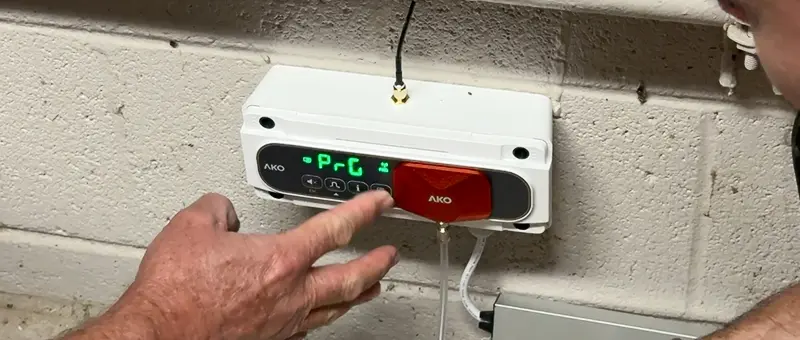
In Wisconsin, a facility manager received an alert on his phone. A rare exception where the detector had basic connectivity: “Refrigerant concentration: 53 ppm.”
He asked me, “Is that bad?”
I started explaining ASHRAE 15 safety thresholds: 53 ppm is perfectly safe for breathing. He interrupted: “No, I mean, is that bad, bad. Should I call someone today? Can it wait? Is this costing me money?”
The detector spoke in concentration. The facility manager thought in business terms.
But more fundamentally, the detector couldn’t pull him into solving the problem because it had no way to show him what mattered: no cloud dashboard calculating costs, no database tracking trends, no system connecting him to the right technician at the right time.
The information stayed trapped inside the box.
Understanding this translation gap sets the stage for exploring how international best practices, like those in Australia, address these challenges.
The Australia Lesson: Why FDD in HVAC Systems Can Need Five Times Its Cost to Work; And Why We Needed Something Bigger
In Sydney, a regional grocery chain had deployed FDD-based leak detection five years earlier, sophisticated software that analyzed data from physical NDIR sensors distributed across its facilities.
Their operations director was blunt about what it actually took to make it work: “For every dollar we spent on FDD software and NDIR hardware, we needed another five to seven dollars in people and additional systems to extract and refine the results into something we could actually use.”
They’d spent $180,000 on the detection technology itself. Made a significant investment in FDD and then built a team of experts responsible for a set of collaborative workflows.
→ Read on how they were focused on energy at first due to a program called NABERS
So the real investment came in building the human infrastructure FDD couldn’t provide: dedicated staff to manually review data streams, analysts to distinguish actual leaks from noise, protocols for escalation, and coordination across locations.
That five-to-seven-dollar multiplier wasn’t a waste: it was human beings doing the work of connection, interpretation, and collaboration that the technology couldn’t automate because it was still thinking inside the box.
Results proved the model worked: reduced annual refrigerant losses from 33% in 2018 to 8% in 2024.
They were catching leaks at 10-20 grams per hour and repairing before needing to add refrigerant. But they’d achieved this by building a human network around technology that couldn’t network itself.
“Americans want technology to solve everything automatically,” the operations director said.
“Just install and forget. That’s why your detectors are abandoned. You’re not willing to make the supporting investment.”
This also removed the need for overtime, which had previously accounted for 20% of all labor spend.
That conversation became the breakthrough.
What if we could deliver those Australian results (8% leak rates, early detection, repairs before refrigerant addition), but instead of building human infrastructure around limited technology, we built technology infrastructure that pulled humans in?
What if the intelligence didn’t live in boxes on walls but in the cloud, in databases, in dashboards that connected facility managers, technicians, compliance officers, and service contractors into one collaborative system?
How AKO and Carbon Connector Blended the Solution
After a few months of investigation, I found AKO Electromecánica in Spain.
They had the patents, the mass conservation mathematics, and the NDIR sensor technology.
But they were still thinking about selling hardware—better leak detectors that did more calculation locally.
That’s where we began to collaborate.
We didn’t want better boxes. We wanted to blow up the box entirely.
Take AKO’s patented algorithms and move them to the cloud. Take the sensor data and push it to databases for analysis, trending, and sharing.
Take the business intelligence and put it in dashboards that pull facility managers into understanding their refrigerant operations in real-time.
Take the spatial coordinates and connect them directly to service contractors’ dispatch systems.
The technology no longer fits in the leak detector. It was bigger than that.
- It was online.
Sensors connected via Narrow Band IoT cellular or Ethernet, streaming data continuously to cloud platforms that never sleep.
- It was in the cloud.
Amazon Web Services is running the mass conservation models, calculating LPI/LCI/TGCI indicators for hundreds of facilities simultaneously, updating dashboards in real-time.
- It was in the databases.
PostgreSQL storing years of concentration trends, repair histories, and compliance documentation—building institutional knowledge that survived equipment changes and staff turnover.
And most importantly, it brought people in and pulled them into the solution.
📌 Transition from “ignoring alarms” to “actionable financial insights”.
Facility managers got dashboards showing which leaks cost what. HVAC technicians got mobile apps with coordinates and timing data before they left the shop.
Compliance officers got automated audit reports they could generate in minutes.
Portfolio managers got fleet-wide analytics showing which regions, which refrigerants, and which equipment types had the highest loss rates.
The Australian model required five-to-seven-times investment in people to make FDD work.
We flipped it: invest in cloud infrastructure that makes people five-to-seven-times more effective at the jobs they’re already doing.
This was the AKO-Carbon Connector blend: AKO’s proven detection and diagnostic mathematics, Carbon Connector’s philosophy that technology should pull people into solutions rather than isolating them behind standalone devices.
With the solution architecture in place, the next section explains the breakthrough in taking patented technology beyond the hardware box.
The Breakthrough: Taking the Patents Beyond the Box
European Patent EP 3 751 209 A1 describes AKO’s innovation: calculating leak severity by modeling mass conservation, diffusion, and convection. Given a steady-state concentration in a known volume, calculate the leak rate. Then translate into three indicators:
- LPI (Leak Potential Index): pounds per year and cost per year
- LCI (Leak Charge Index): percentage of system charge lost annually
- TGCI (Time-Gas Concentration Index): hourly patterns showing when leaks occur
AKO had proven this worked locally. Carbon Connector moved it to the cloud and connected it to people.
Now those indicators didn’t just calculate; they pushed to dashboards. They triggered workflows. They connected facility managers assessing severity with contractors who could fix it.
They pulled compliance officers into documentation processes that updated automatically as repairs happened.
The mathematics was brilliant. But mathematics trapped in hardware helps no one.
Mathematics in the cloud, connected to databases, accessible through dashboards, integrated into dispatch systems; that changes how an entire industry operates.
With the breakthrough achieved, the next section presents real-world experimentation and validation of the new approach.
Real-World Experimentation and Validation
We deployed across all four US regions. The deal: install AKO Cloud free for six months, compared to actual refrigerant consumption, with no marketing pressure.
The stepwise process included:
- Mounting AKO Cloud NDIR sensors in key locations.
- Setting up cloud accounts for facility managers.
- Connecting contractors to mobile dashboards.
- Integrating with existing BMS systems where possible.
- Training teams to use the collaborative workflows.
- Monitoring and validating results over six months.
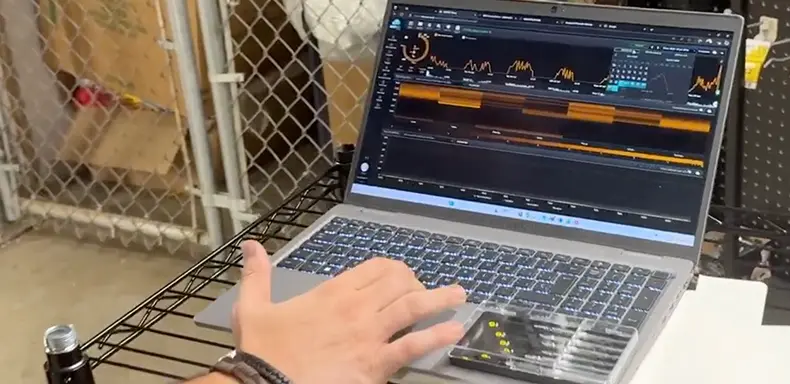
I attended as many installations as possible; not just the physical installation, but the first month of people learning to trust the system, respond to alerts, and coordinate repairs based on shared data visible to everyone simultaneously.
Goal: catch leaks so early that facilities can repair before needing to add refrigerant at all. But achieve it by pulling people into intelligent workflows, not by replacing people with smarter boxes.
With the validation process outlined, the next section shares a detailed case study of cloud intelligence in action.
The 53 PPM Cold Room: Where Cloud Intelligence Met Human Action
Wisconsin Refrigerated Storage. Both detector types are installed. Safety units in machinery rooms. Operational MOS detectors nobody trusted after dozens of false alarms last year.
Refilling 110 pounds of R-448A annually in a 300-pound system.
We installed AKO Cloud NDIR sensors on Monday morning. But we also:
- Set up the facility manager’s dashboard
- Connected their service contractor to the mobile app
- Integrated alerts with their existing notification system
The system spent 48 hours learning a baseline in the cloud, building concentration models using Amazon’s compute infrastructure, not local processing power limited by what fits in a box.
Wednesday morning: the facility manager’s phone buzzed. Not with “53 ppm” but with a dashboard notification he could tap and see:
- Leak intensity
0.2 oz/hour (calculated in the cloud, not in the device) - LPI
109 lbs/year = $16,350 at current prices - LCI
35.2% charge loss annually—well above EPA’s 20% threshold - TGCI
Peak concentration 1-3 PM during defrost - Action recommended
Schedule repair during defrost window, priority: high, estimated service time: 2-3 hours
He tapped “Share with contractor.” The service company’s dispatch system received:
- Cold room #3 leak
- 109 lbs/year severity
- Coordinates: 59 feet X, 39 feet Y, 9 feet Z
- Active during defrost 1-3 PM
- Recommended parts: brazing kit, vacuum pump, nitrogen
The facility manager and contractor were both pulled into solving the problem before they’d even spoken. The cloud had connected them with everything they needed to collaborate effectively.
“So that’s actually costing me $16,350 per year?” the facility manager asked when we spoke.
“Yes. And you’re already past EPA non-compliance at 35.2%. The system flagged it as high priority because it crossed the 20% threshold.”
“When should the technician come?”
“Between 1-3 PM during defrost when it’s active. He already has the dispatch with coordinates and parts list.”
This case study demonstrates the power of cloud intelligence and seamless collaboration. The next section details the repair process and its impact.
📌 Stop Leaks Earlier, and Save Thousands
The Forty-Minute Repair: People and Cloud Working Together
Next Tuesday, 1 PM. The technician arrived with his phone showing:
- The exact coordinates from cloud triangulation
- The TGCI data showing the leak would be active
- The facility’s refrigerant history from the database
- Photos of similar repairs from other sites in the network
He wasn’t responding to a dumb alarm. He was part of an intelligent system that pulled him into the solution with everything he needed.
“Right above the evaporator coil, probably hot gas line to defrost valve,” he said, reading from his phone.
1:15 PM: defrost kicked in. Five minutes later: hiss of escaping refrigerant. Hairline crack in brazed joint that only opened under defrost pressure.
“Forty minutes including coffee time.”
He marked the repair complete in the mobile app. The cloud updated:
- Facility Manager’s Dashboard
Leak resolved, concentration returning to baseline - Compliance Database
Repair documentation timestamped and logged - Portfolio Analytics
The Wisconsin site moved from “critical” to “monitored” status - Contractor’s System
Invoice generated with parts, time, and severity justification
- Total Repair Time: two hours.
- Cost: $1,000.
- Savings: $16,350 Refrigerant plus $1,800 Energy Penalty.
But the real transformation: everyone was pulled into solving the problem together. No phone tag. No emails. No wondering if the repair worked. The cloud connected people through shared intelligence.
With this successful repair, the next section highlights how this pattern of collaboration and efficiency is replicable across different facilities.
The Pattern Held Everywhere: Cloud Connecting People to Solutions
Minnesota cold storage
Cloud analytics detected a slow 8-22 ppm baseline increase over six weeks across multiple cold rooms; a pattern no single local detector could see. The database flagged it as systematic.
The facility manager and contractor reviewed together on the dashboard. Found five small leaks, repaired systematically for $3,500, and recovered 31% of annual consumption.
Tennessee convenience stores
TGCI data in the cloud revealed intermittent defrost leaks, only active 1:00-1:45 PM. Contractor pulled into the solution with precise timing.
Dispatched tech at 1:15 PM withthe mobile app showing real-time concentration.
Fixed in ninety minutes. Contractor marked this repair type in the database; now the system recognizes the pattern at other sites.
Minneapolis distribution center
Cloud-connected leak detection data to their existing BMS energy dashboard.
Revealed $63,000 in hidden waste from running undercharged; energy penalty invisible until systems talked to each other. After repairs: 9% facility energy reduction.
The cloud integration pulled building engineers into understanding how refrigerant leaks destroy efficiency.
These real-world examples demonstrate the scalability and effectiveness of cloud-connected leak detection. The next section outlines the four key capabilities that drive these results.
Four Capabilities That Pull People Into Solutions
Translation from PPM to Business Impact
Converts 53 ppm into “$16,350 annual cost, 35.2% charge loss, EPA violation.” But critically, it delivers this to facility managers’ dashboards in real-time.
Pulls them into understanding their refrigerant operations, not just responding to alarms.
Cloud-based calculation means one algorithm improves for everyone simultaneously; when we refine the model, every facility benefits overnight.
Intelligent Alert Management
Cloud learns a baseline for every facility. Distinguishes real leaks from cleaning chemicals, humidity, and defrost cycling, but instead of triggering dumb alarms, pulls facility managers into assessment workflows.
Dashboard shows: “Possible leak detected, severity calculation in progress, review in 2 hours.” When alert confirms: “High priority: $16,350/year leak, review now and share with contractor?”
The manager stays in control, pulled into decisions instead of reacting to a crying wolf.
That Wisconsin supermarket: 47 false alarms annually to 2-3. Saved $35,000 eliminating wasted service calls, but more importantly, restored trust so people engage with alerts again.
Spatial Triangulation
Cloud analyzes data from multiple sensors, calculates coordinates, but pushes them directly to technicians’ mobile devices before dispatch.
Pulls contractors into arriving prepared, with coordinates visible on phone alongside facility layout. Finding time drops from 6-8 hours to 40 minutes.
Phoenix contractor: “three to four targeted repairs per day” because every tech is pulled into the solution with location intelligence, the cloud calculated.
Early Detection at 5-10 PPM
NDIR sensors detect 5-10 ppm, stream continuously to cloud databases, building long-term trends. But the power is pulling compliance officers and portfolio managers into the data.
Compliance dashboard auto-generates EPA audit reports from the database in 2.4 hours instead of 18 hours, reconstructing paper records.
Portfolio analytics show which regions, refrigerant assets, and equipment types have the highest losses; it pulls executives into strategic decisions about retrofit priorities, maintenance contracts, and equipment replacement timing.
With these capabilities, the next section discusses how cloud connection multiplies workforce effectiveness.
The Workforce Multiplication: People Working Smarter Through Cloud Connection
Phoenix contractor, five techs covering 200 accounts. Before cloud connection: “Traditional call: 6 hours total, maybe find it. Best case: two leaks per tech per day.”
With AKO Cloud pulling them into intelligent dispatch, “We get the alert from the cloud before the customer even calls.
Dashboard shows Cold room #3, 67 lbs/year severity, coordinates X/Y/Z, probably evaporator coil, active 1-3 PM.
Our dispatch system automatically pulls this into the tech’s schedule with the parts list.
He arrives at 1 PM, goes directly to the coordinates on his phone, and finds it in thirty minutes. Total: 2.5 hours. Three to four repairs per day.”
Same technicians, tripled capacity. But achieved by pulling them into cloud-connected workflows where intelligence reaches them before they roll the truck.
The workforce crisis (4% annual skilled labor decline) doesn’t get solved by working harder.
It gets solved by pulling people into systems that multiply their effectiveness through better information, better coordination, better timing.
With workforce efficiency maximized, the next section presents the cumulative results from two years and 47 installations.
Two Years, 47 Installations: Data Living in the Cloud, Pulling People Into Results
Detection Sensitivity
Cloud databases tracking every installation show average leaks caught at 0.11 oz/hour versus traditional 1.6-2.1 oz/hour. 14-19x earlier intervention.
840 pounds of refrigerant saved per installation over two years.
But the real win: facility managers pulled into understanding their leak rates through dashboards, not discovering them through quarterly refrigerant bills—illustrating the advantages of proactive refrigerant leak detection.
False Alarms
Phoenix contractor ignored detectors after 52 false alarms annually. Cloud-based intelligent alert management: 2-3 annually. 96% reduction.
But more importantly, the contractor now pulls up the dashboard voluntarily to check fleet status. Cloud restored trust by pulling people into information that actually mattered.
Diagnostic Efficiency
Pre-cloud: 5.8 hours per leak repair, including diagnosis. Post-cloud with triangulation pushing to mobile devices: 1.9 hours. 67% labor reduction. For contractors handling 200 repairs annually: 780 hours saved.
But achieved by pulling technicians into arriving prepared with location intelligence, not by making them work faster.
EPA Compliance
Compliance officers pulled into automated workflows. The database auto-generates reports from continuous cloud data. Documentation time: 18 hours to 2.4 hours. 87% reduction.
But the transformation is pulling compliance from the end-of-year scramble into a continuous process that the cloud maintains automatically.
Energy Recovery
Building engineers are pulled into seeing hidden waste when leak detection is integrated with BMS via cloud APIs. 14% refrigeration electricity reduction. For a 200 kW load: $22,000-35,000 saved annually.
Minneapolis facility: “We never knew leaks were killing our efficiency until the cloud connected the systems and pulled us into seeing the relationship.”
Return on investment
Installation $12,000-18,000 for a typical supermarket. Annual savings combining refrigerant, energy, and labor: $32,000-48,000. Payback: 4-9 months. Five-year NPV: $140,000-215,000.
But most importantly, matched Australian results (8% leak rates, early detection, repairs before refrigerant addition) without the five-to-seven-times operational investment.
Why? Because cloud infrastructure pulls people into effective workflows instead of requiring dedicated staff to manually extract value from isolated systems.
These aren’t projections. They’re documented results from operational facilities with before-and-after data; all stored in cloud databases, visible to everyone who needs to see them.
With these results in mind, the final section looks ahead to the future of refrigerant leak detection and HVAC sustainability.
📌 Transition from “ignoring alarms” to “actionable financial insights”.
The Future of Refrigerant Leak Detection and HVAC Sustainability
The leak detector evolved from a standalone safety device speaking parts per million to cloud-connected operational intelligence speaking dollars, pounds per year, coordinates, timing, and automated compliance documentation—and most importantly, pulling people into collaborative solutions.
ASHRAE 15 gave us safety standards. ASHRAE Guideline 36 promotes best-in-class standardized HVAC control sequences to improve system performance and shows automated building intelligence.
Ongoing research in the HVAC industry continues to inform the development of new control sequences and standards, enhancing energy efficiency and supporting updates to industry guidelines.
Implementing standardized control sequences can reduce energy consumption and system downtime. EPA Section 608 created accountability.
The Australians proved that results were achievable with FDD plus intensive human oversight.
HVAC systems play a key role in improving the energy efficiency of buildings, as the building sector accounts for one of the highest shares of global energy consumption.
Since the 1980s, HVAC equipment manufacturers have focused on improving system efficiency due to rising energy costs and environmental sustainability.
AKO brought the patented mathematics that calculates business impact from concentration data.
Carbon Connector brought the philosophy that technology should pull people in, not wall them off—and the cloud infrastructure to make it happen.
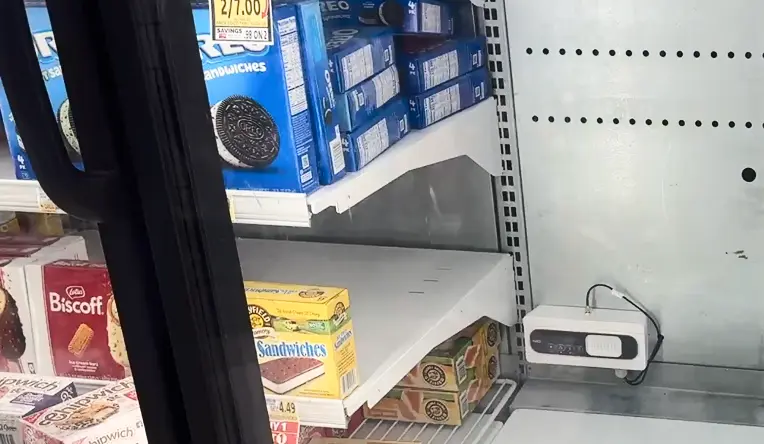
Together, we created something that couldn’t fit in a box on a wall: intelligence that lives online, in databases, in dashboards, connecting facility managers with contractors, compliance officers with auditors, portfolio managers with strategic decisions.
All working from the same real-time data, all pulling to solve the problem together.
Ten years ago, this wasn’t possible. IoT costs were prohibitive. Cloud computing was expensive. Cellular connectivity was unreliable.
But more fundamentally, the industry was still thinking about better boxes instead of systems bigger than boxes.
The technology became viable when the problem became intolerable—and when we realized the solution had to pull people in, not push them away.
That Wisconsin supermarket still has a 53 ppm concentration.
But now facility manager, contractor, and compliance officer all see “$16,350 annual cost, 35.2% charge loss, active 1-3 PM, coordinates X=59ft Y=39ft Z=9ft” on their respective dashboards.
And it gets fixed in forty minutes because everyone was pulled into the solution before the first phone call.
The detector outgrew its box. The solution lives in the cloud. And the people?
They’re no longer fighting isolated alarms: they’re working together through intelligent systems that connect them.
That’s what happens when technology gets bigger than the hardware that used to contain it.
Common Causes of Leaks
Common Causes of HVAC and Refrigerant Leaks, And Why Detection Must Think Bigger
HVAC leaks threaten everything that matters: system performance, operating expenses, occupant comfort, and your bottom line.
When air or refrigerant escapes through gaps, cracks, or faulty components, energy consumption rises, operating costs climb, and system efficiency fails.
The Obvious Issues: Air-Side Leaks You Can See and Fix
Improper installation
creates significant damage. Air conditioning contractors who skip proper duct sealing leave hidden gaps.
Systems sized incorrectly for buildings bleed conditioned air into unconditioned spaces. Your HVAC system works harder. Equipment lifespan shortens. Energy use soars.
Worn air filters
create constant trouble. Filters ignored become clogged, develop holes, and allow stale air to recirculate while fresh air bypasses filtration entirely.
Indoor air quality suffers. Thermal comfort disappears. This puts stress on the system
Mechanical ventilation systems
bring in fresh air and expel stale air. Without proper maintenance, they become leak sources. Poorly sealed ventilation ducts release heated or cooled air.
System efficiency drops. Peak performance becomes impossible. And remember, refrigerant is the fluid that’s circulating to make sure your system conditions the air.
Prevention matters
Regular maintenance by qualified HVAC technicians catches these issues early. Professionals assess systems, identify air leaks, and ensure every component operates as designed.
Indoor units, outdoor units, air cleaners, and supplemental heat sources must all function properly. Local building codes and best practices guide installation and maintenance.
But Here’s What You Can’t See: The Phantom Refrigerant Leaks
As significant and important as air-side leaks are, they pale in comparison to what refrigerant leaks cost you, and what traditional detection completely misses.
Air leaks are visible, measurable, and fixable through systematic inspection. But refrigerant leaks? They’re phantoms:
Installation defects
that don’t manifest for months. Improper brazing techniques create weak joints that fail slowly.
Insufficient nitrogen purging during installation causes oxidation inside copper tubing—invisible damage that cracks joints six months later.
Over-torqued flare fittings create hairline fractures you can’t see until they’ve bled 50 pounds of refrigerant.
Thermal cycling stress
only appears under specific conditions. Brazed joints expand and contract through thousands of heating and cooling cycles.
Hot gas defrost operations create rapid temperature swings—from -10°F to 200°F in minutes—eventually cracking weaker connections. The leak only appears during defrost.
The rest of the time? Silent. Invisible. Costing you $16,350 annually while your detector sits green.
Mechanical wear and corrosion
are happening where you can’t inspect. Valve stems are deteriorating inside sealed components.
Gaskets in sight glasses are compressing and cracking.
Copper tubing corroding from moisture exposure: from the outside in, where you can’t see it until failure.
Galvanic corrosion where dissimilar metals contact, accelerating deep inside junction points.
Physical damage
from operations you don’t witness. Forklift impact on piping during after-hours deliveries. Vibration from nearby equipment is slowly loosening connections over months.
Roof work is damaging condensing unit lines while you’re focused on the HVAC upgrade inside.

The Detection Gap That’s Costing You Thousands
Once you take care of the obvious air-side issues through regular maintenance and proper installation, you’re left with refrigerant leaks that have been phantoms—invisible to traditional detection, impossible to locate, silently bleeding your budget.
Here’s the problem: knowing where refrigerant leaks typically occur doesn’t help if your detector can’t tell you which specific joint in 400 feet of piping is failing.
A technician arrives knowing “leaks usually happen at brazed joints during defrost.” Great.
Your facility has 147 brazed joints distributed across ceiling spaces, mechanical rooms, and rooftop units. Which one? They start checking systematically with a handheld sniffer.
Six hours later, still searching—because the leak only occurs during defrost cycles when they’re not there, or the concentration is too low for their probe to detect, or it’s hidden behind insulation they’d need to remove from every section.
Traditional leak detection was designed for safety (“is this room hazardous?”) not for finding specific failures in complex distributed refrigeration systems.
Why Detection Had to Leave the Box
The solution became too big to fit in a physical device because finding phantom refrigerant leaks requires intelligence that no standalone detector can provide:
Spatial intelligence
Multi-sensor triangulation calculates coordinates across three-dimensional space; mathematics too complex for local processing, requiring cloud computing power to analyze differential response times from sensors 50+ feet apart and pinpoint leak location within 2-3 feet.
Temporal intelligence
Pattern analysis across days and weeks, identifying when leaks are active versus dormant; databases tracking concentration trends that no single device can store, revealing that your “intermittent” leak only occurs during hot-gas defrost, 1:00-3:00 PM daily.
Equipment correlation
Matching leak location and timing to probable components based on facility layout, refrigerant type, and operational schedules; knowledge living in cloud databases that can tell your technician, “based on coordinates and defrost timing, probable source is brazed joint on hot gas line to defrost valve.”
Network learning
Recognizing leak patterns from thousands of repairs across hundreds of installations, institutional intelligence that improves for everyone simultaneously as the network learns, “90% of leaks at these coordinates during defrost timing are thermal cycling failures at specific joint types.”
This intelligence doesn’t fit in a box on a wall.
It lives in the cloud, connects to people through mobile devices, and guides technicians to the exact joint that’s failing; not just tells them “there’s refrigerant in the air somewhere in this 10,000 square foot facility.”
When your contractor’s tech arrives at 1:15 PM with coordinates X=59ft, Y=39ft, Z=9ft, probable source “hot gas defrost line brazed joint,” and timing data showing “active during defrost 1-3 PM”.
That’s cloud intelligence pulling him directly to the thermal cycling stress failure that’s been bleeding refrigerant for three months while your wall-mounted detector blinked green.
What This Means for Your Facility
Air-side Leaks
Address through proper installation, regular filter replacement, duct sealing, and maintenance schedules with qualified HVAC technicians.
These are the obvious issues that building codes and best practices help you manage.
Refrigerant Leaks
Require detection that’s bigger than the box; that lives in the cloud, analyzes patterns across time and space, correlates with equipment and operations, and guides people to phantom failures that traditional detection can’t find.
The causes of refrigerant leaks haven’t changed. Improper installation still creates weak joints.
Thermal cycling still cracks brazed connections. Corrosion still attacks copper tubing. Physical damage still happens.
What changed is that detection finally got smart enough to actually guide people to them, pulling technicians to the exact failure point instead of sending them on six-hour searches through hundreds of potential locations.
Proactive approaches work: regular HVAC maintenance for visible air-side issues, combined with cloud-connected refrigerant leak detection for the phantom failures that have been costing you thousands while hiding in plain sight.
Once you solve the obvious issues, you can finally deal with the ones that have been phantoms all along.
📌 Stop Leaks Earlier, and Save Thousands