
EPA’s new ALDS mandate addresses real operational challenges.
Here’s what facilities managers need to know about the 2026-2027 requirements, and why this generation of leak detection actually works.
Here’s what comprehensive facility assessments across tens of thousands of locations over 33 years reveal: refrigerant leak rates averaging 20% – 25% annually in facilities without automatic monitoring systems.
More than 500 facilities audited in the last 18 months alone show the same pattern—undetected slow leaks creating millions in annual losses.
This isn’t a compliance failure. It’s an enablement gap. Facilities teams didn’t have the tools to manage what they couldn’t continuously monitor.
Every drop of gas is a truck roll, a follow-up inspection, and then someone to arduously track down where the refrigerant leak was – and many of these systems had multiple leaks.
On January 1, 2026, EPA’s Subsection (h) regulations mandated automatic leak detection systems (ALDS) for commercial and industrial refrigeration equipment with charges of 1,500 pounds or more.
Two deadlines matter: January 1, 2026, for new equipment (already in effect), and January 1, 2027, for existing equipment.
The stars might lie, but the numbers never do!
Let’s talk about leak rates. Industry data from facilities without automatic monitoring shows 25% annual leak rates. One quarter of the total refrigerant charge—gone, every year.
The Real Cost of Leak Rates – Per Location Analysis
| Scenario | Leak Rate | Annual Loss (lbs/location) | Cost @ $50/lb | Cost @ $70/lb |
|---|---|---|---|---|
| Without ALDS | 25% | 250 lbs | $12,500 | $17,500 |
| With ALDS | 8% | 80 lbs | $4,000 | $5,600 |
| Annual Savings per Location | 17% | 170 lbs | $8,500 | $11,900 |
Assumption: Average 1,000 lbs total refrigerant charge per location
Portfolio Impact – 300 Locations:
- Without ALDS: 75,000 lbs lost annually = $3.75M-$5.25M
- With ALDS: 24,000 lbs lost annually = $1.20M-$1.68M
- Total portfolio savings: $2.55M-$3.57M annually
What Industry-Wide Non-Compliance Actually Looks Like
Here’s what comprehensive facility assessments across a representative sample of locations across the US, taken randomly from my direct work:
Industry Compliance Readiness (Field Data)
| Compliance Metric | % Meeting Standard | What We Found |
|---|---|---|
| Zero refrigerant records | 33% of facilities | One-third of facilities had no documentation at all |
| Complete tracking (≥15 lbs) | <5% | Almost nobody has comprehensive systems in place |
| Accurate leak rate calculations | 12% | Most don’t calculate, or calculate incorrectly |
| ALDS where required | 8% | Nearly everyone is behind on automatic detection |
| 30-day repair compliance | 18% | Leaks detected but not repaired within deadlines |
| Equipment labeling verification | <10% | Can’t prove “light commercial” AC exemptions – most did well for larger systejms, but failed with systems under 50 LBS |
📌 This isn’t a selective enforcement risk. This is systemic failure across the industry.
And it’s costing individual facilities $8,500-$11,900 annually in preventable refrigerant losses. What’s required? And who is impacted?
Equipment Profile by Sector – ALDS Coverage Assessment
| Sector / Building Type | Typical Equipment | Typical Charge Size | ALDS Required? | % of Portfolio Likely Covered | Notes |
|---|---|---|---|---|---|
| Supermarkets | Centralized refrigeration racks | 2,000-8,000 lbs | YES | 80-100% | Almost every location has equipment >1,500 lbs |
| Grocery stores (smaller format) | Distributed cases, walk-ins | 200-1,400 lbs | NO | 0-20% | Below threshold unless centralized system |
| Cold storage warehouses | Large ammonia or HFC systems | 5,000-50,000 lbs | YES | 90-100% | Nearly universal coverage |
| Distribution centers (refrigerated) | Dock coolers, staging areas | 1,000-5,000 lbs | VARIABLE | 50-80% | Below threshold unless a centralized system |
| Food processing plants | Process cooling, blast freezers | 3,000-25,000 lbs | YES | 80-100% | Depends on the refrigeration scope |
| Restaurants (quick service) | Walk-ins, reach-ins | 50-400 lbs | NO | 0-5% | Industrial-scale systems |
| Restaurants (full service) | Multiple walk-ins, ice machines | 150-800 lbs | NO | 5-15% | Rarely exceeds threshold |
| Hotels | Kitchen refrigeration, banquet | 200-1,200 lbs | NO | 10-30% | Larger properties may have centralized systems |
| Hospitals | Pharmacy, lab, food service cooling | 500-3,000 lbs | VARIABLE | 40-70% | Occasionally, with large systems |
| Data centers | Computer room AC (CRAC/CRAH units) | 200-2,500 lbs per unit | VARIABLE | 30-60% | Comfort cooling EXEMPT, but large chillers may be covered |
| Office buildings (mid-rise) | Rooftop HVAC units (RTUs) | 50-400 lbs per unit | NO | 0-10% | Comfort cooling EXEMPT |
| Office buildings (high-rise) | Chilled water systems, central plant | 1,500-10,000 lbs | VARIABLE | 40-80% | Large chillers ≥1,500 lbs covered IF used for process cooling, not comfort |
| Commercial real estate (Class A) | Central chiller plant | 3,000-15,000 lbs | VARIABLE | 50-80% | Depends on mixed-use (comfort vs. tenant process cooling) |
| Manufacturing facilities | Process cooling, compressed air | 1,000-10,000 lbs | YES | 60-90% | Process cooling covered (not comfort HVAC) |
| Pharmaceutical facilities | Cleanroom cooling, storage | 2,000-8,000 lbs | YES | 70-90% | Process critical cooling covered |
| Universities/campuses | Dining halls, research labs | 500-5,000 lbs | VARIABLE | 30-60% | Specialized cooling often exceeds the threshold |
Why Previous Leak Detection Efforts Failed (And What’s Different Now)
Many operators invested in automatic leak detection years ago and abandoned the systems or disregarded the results. Not because leak detection doesn’t work—but because first-generation implementations failed for three specific reasons:
#1 Poor Sensor Placement and Management
Early ALDS installations often put sensors where they were easy to install, not where leaks actually occur. Equipment rooms got sensors, but refrigeration cases didn’t. Compressor areas were monitored, but piping runs weren’t.
Result: Real leaks went undetected while sensors triggered false alarms from routine service work. Facilities teams lost confidence in the technology.
#2 “Set It and Forget It” Mentality
Vendors sold ALDS as fully automated solutions requiring zero maintenance. Facilities teams believed it—until sensor drift, environmental factors, and equipment changes rendered the systems inaccurate.
Nobody was verifying sensor performance. Nobody was adjusting thresholds as refrigerant blends changed. Systems degraded from “automatic detection” to “expensive decoration.”
Result: Leak detection systems that didn’t detect leaks.
#3 Calibration Abandonment and Vendor Walkaway
Here’s the pattern: Vendor installs ALDS, trains staff on one afternoon, collects payment, disappears.
Quarterly calibration? “Just use the calibration gas we left you.” Six months later, nobody remembers the procedure. Two years later, the sensors haven’t been calibrated since installation.
Vendors treated the sale as the finish line. Their job was done. Your compliance obligation was just beginning.
Result: Non-compliant systems that created liability rather than reducing it.
HFC Refrigerants and the Environment
HFC refrigerants enabled modern cooling. They powered our air conditioning, heat pumps, and refrigeration with precision and reliability. Yet progress revealed truth: these efficient solutions carry environmental weight.
Their high global warming potential sparked change. What began as innovation now demands evolution.
The American Innovation and Manufacturing (AIM) Act directs the Environmental Protection Agency (EPA) to phase down hydrofluorocarbons (HFCs) based on their global warming potential.
The American Innovation and Manufacturing Act is an industry and Congressional solution, with a clear path 15% reduction in HFC production and consumption by 2036. This isn’t disruption—it’s direction.
The HVAC landscape transforms as contractors, operators, HVAC engineers, and manufacturers align with what’s next. Most refrigeration systems are affected by these EPA rules, highlighting the widespread impact across commercial, industrial, and food retail sectors.
The AIM Act accelerates what was already inevitable: sustainability, efficiency, and responsibility. Lower-GWP refrigerants, advanced leak detection, and robust management programs define tomorrow’s HVAC systems.
For operators, professionals, and industry leaders, staying ahead isn’t about compliance alone. It’s about building systems that work better for everyone.
The Enablement Perspective: ALDS as Workforce Tool
📌 Reframe how you think about automatic leak detection.
This isn’t surveillance technology catching mistakes—it’s workforce enablement giving facilities teams the visibility they need to do their jobs effectively.
Without ALDS
The facilities manager walks the equipment room quarterly, looks for obvious problems, and moves on. Slow leaks are invisible. The team has no data to prioritize repairs or predict failures.
With ALDS
The Facilities team gets real-time alerts the moment leaks start. Data shows which systems need attention. Maintenance becomes proactive rather than reactive. The team has tools to demonstrate performance improvement.
Small leaks are tracked, and trend lines are developed – these insights enable our teams to target and isolate trouble spots.
This is about giving your people the information they need to succeed, not about catching them failing.

What the Regulation Actually Requires
Cut through the regulatory prose:
Commercial and industrial refrigeration equipment with charges ≥1,500 pounds must have automatic leak detection systems. Early refrigerant leak detection is crucial for preventing costly emergency repairs and asset failures.
Two deadlines
- New equipment (installed after January 1, 2026)
ALDS required at installation - Existing equipment
ALDS required by January 1, 2027
Existing systems (2017-2025) must comply with automatic leak detection (ALD) requirements by January 1, 2027.
The EPA’s HFC Management Rule imposes mandatory leak detection and repair requirements for appliances with a refrigerant charge of 15 pounds or greater. Refrigerant leak detectors can use various technologies, such as infrared and heated diode sensors, and many are designed to be sensitive to halogen-based refrigerants.
The AIM Act directs the Environmental Protection Agency (EPA) to establish requirements for the management, service, repair, disposal, and installation of equipment utilizing HFCs.
Non-compliance with these regulations can lead to federal fines of up to $60,000 per violation per day.
Building codes and standards for HVAC systems are required by law to ensure safety and efficiency. The HVAC industry is regulated by various organizations that establish standards and codes for safety and efficiency.
When selecting companies to install or service ALDS, it is important to choose reputable providers with proven expertise in compliance and system integration.
The 1,500-Pound Threshold—Who’s Covered?
- Supermarket centralized refrigeration racks: Almost always over 1,500 lbs. You’re covered.
- Large cold storage warehouse systems: Covered.
- Industrial food processing refrigeration: Covered.
- Distribution center systems: Probably covered.
- Individual walk-in coolers? No. Rooftop HVAC? No. Comfort cooling is categorically exempt.
If you operate grocery stores, assume 30% of your locations have equipment meeting the threshold. If you run distribution centers or cold storage, potentially 50-80% of facilities.

New vs. Existing Equipment: The Installation Date Trap
Here’s where operators are getting caught: “new equipment” means manufactured or installed after January 1, 2026.
Scenario: You ordered equipment in November 2025, manufactured it in December 2025, and installed it in March 2026. You think: “We’re grandfathered, right? Manufactured before the deadline.”
→ Wrong. Installation date controls. That equipment needs ALDS.
Industry petitioned EPA for a 12-month sell-through provision. EPA hasn’t responded. Don’t bet compliance strategy on regulatory relief that may never come.
New Generation ALDS: Addressing Past Implementation Failures
The technology has evolved significantly since early ALDS deployments. Cost reduction is important, but the real advancement is in operational sustainability.
ALDS Cost Comparison – 90 Locations, 180 Sensors
| Cost Component | Traditional old school ALDS | AKO Cloud-Based | Savings |
|---|---|---|---|
| Per sensor installed | $16,000 + $3,000 install = $19,000 | $2,200 installed | 88% |
| Total installation (180 sensors) | $3.42M | $396K | $3.02M (88%) |
| Annual monitoring | $2,000-$3,000/location | $250/location (flat rate) | 88-92% |
| Total annual monitoring (90 locations) | $180K-$270K | $22,500 | $157.5K-$247.5K |
| Calibration (quarterly) | $200-$400 per sensor/visit | Self-calibration (~$20/device) | 95-98% |
| Annual calibration cost | $144K-$288K | $3.6K | $140K-$284K |
| YEAR 1 TOTAL | $3.42M (install only) | $396K (install only) | $3.02M (88%) |
| Annual ongoing (Years 2-5) | $324K-$558K/year | $26.1K/year | $298K-$532K (92-95%) |
Installation cost can vary significantly depending on the type of HVAC system, installation complexity, and regional factors, but modern solutions like AKO Cloud-Based ALDS offer substantial savings compared to traditional systems.
The better than 90% cost reduction matters, but here’s what matters more: modern systems are designed for multi-site operations where quarterly technician visits to 90 locations are operationally unsustainable.
For new equipment installed after January 1, 2026, automatic leak detection (ALD) systems must be operational within 30 days of installation. Additionally, annual audits and calibrations are required for ALD systems to ensure ongoing accuracy and compliance.
Coordinated Monitoring Powered by AKO.
Modern Automatic Leak Detection Systems: Coordinated Monitoring and Facility Enablement
A key innovation enabling modern ALDS effectiveness is AKO’s coordinated monitoring technology.
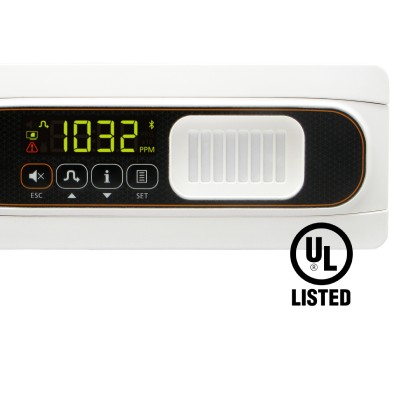
AKO sensors use advanced nondispersive infrared (NDIR) detection to continuously analyze refrigerant concentrations with high precision across multiple sites.
These sensors communicate seamlessly through cloud-based platforms, delivering real-time data and alerts directly to an internal monitoring team, who then filter and screen activity and share information with facilities teams and HVAC professionals.
This coordinated approach allows centralized refrigerant management programs that integrate leak detection with operational workflows, reducing manual inspections and enabling rapid response to leaks.
The AKO system’s self-calibration and automated maintenance alerts ensure sensor accuracy without frequent technician visits, dramatically lowering installation and ongoing operational costs.
By harmonizing data from indoor units, outdoor units, evaporator coils, and condenser coils, AKO’s coordinated monitoring provides comprehensive visibility into system health, helping maintain optimal energy efficiency ratios (EER) and desired temperature control.
The energy efficiency ratio (EER) is a key metric for evaluating the performance of HVAC and refrigeration systems, especially at standard outdoor temperatures, and is used alongside SEER to assess cooling efficiency.
This holistic monitoring supports proactive maintenance strategies, reducing refrigerant loss and extending equipment life.
Additionally, leak rate calculations are triggered every time refrigerant is added to an appliance, except during retrofits or new installations.
Integrating AKO’s technology and services within your service solutions enhances compliance with EPA regulations and the AIM Act by providing documented, continuous leak detection and repair verification, while also reducing after-hours calls.
New systems must meet updated regulatory requirements for leak detection and refrigerant management, making compliance a critical consideration for any equipment upgrades or replacements.
For facilities managing multiple refrigeration and air conditioning systems, AKO’s coordinated monitoring is a critical tool that empowers teams to meet automatic leak detection requirements effectively while optimizing energy consumption and operational performance.
📌 Don’t let regulatory shifts catch you off guard.
How Modern ALDS Enables Facilities Teams
Electronic refrigerant sensors continuously monitor air composition in equipment rooms and high-risk areas. When refrigerant concentration exceeds thresholds, immediate alerts are sent to designated personnel via SMS, email, or mobile app.
The cloud-based architecture eliminates the need for on-site servers, with sensors connecting via WiFi or cellular networks. Dashboard access is available from anywhere, providing portfolio-wide real-time visibility.
Key enablement features include:
- Simple calibration
Automated verification alerts notify when sensors need attention, removing the need for scheduled technician visits that may be inconsistently performed across multiple locations. - Integration capability
APIs connect ALDS to refrigerant tracking systems (such as Trakref), creating a unified data flow from detection to documentation to compliance reporting. - Monitoring and profiling of leaks
Ongoing technical support and system optimization are part of the service model—not just a one-time installation handoff.
This approach addresses common past implementation failures by ensuring strategic sensor placement based on leak history, automated maintenance verification to prevent “set and forget” scenarios, and continuous operational support where the sale marks the start of the partnership, not the finish.
The Operational Case: Beyond Compliance Theater
Forget EPA penalties for a moment. Look at operational economics:
A leaking system loses refrigerant, which means it works harder, runs longer, and wastes energy. This increases energy consumption, driving up utility costs and reducing overall system efficiency.
In humid climates, maintaining indoor air quality and dehumidification requires more energy, making leaks even more costly. HVAC systems play a key role in improving the energy efficiency of buildings, which account for a significant share of global energy consumption.
Over the years, the EPA has imposed tighter restrictions on HVAC systems to promote energy efficiency and sustainability.
State-level regulations will continue to aggressively promote automatic leak detection and refrigerant management, further driving industry adoption.
The longer a leak goes undetected, the more you pay in energy waste and efficiency penalties.
Scenario: Small Leak on a Supermarket Rack
Single Leak Event Cost Comparison
| Cost Factor | Without ALDS | With ALDS | Avoided Cost |
|---|---|---|---|
| Detection time | 6 months undetected | Detected within hours | – |
| Refrigerant loss | 200 lbs @ $50/lb = $10,000 | 5 lbs @ $50/lb = $250 | $9,750 |
| Energy waste (20% efficiency penalty) | $3,000 over 6 months | $1600 | $3,000 |
| Compressor stress (premature failure) | $20,000 (failure 2 years early) | $0 | $20,000 |
| Repair cost | $400 service call | $400 service call | $0 |
| Emergency premium | $5,000 (emergency replacement/expedite) | $0 | $5,000 |
| Lost product | $3,000 (temp excursions) | $0 | $3,000 |
| TOTAL COST | $41,400 | $2,250 | $39,150 |
How many leaks does a 300-location grocery portfolio experience annually? Industry data suggests 150-300 leak events requiring repair across that scale of operation.
If ALDS prevents just 10% from becoming major failures, $611,250 to $1,222,500 in annual avoided costs.
Against ALDS investment of $396K upfront and $90K annually?
Payback in 3-6 months.
Integration with Leak Repair Requirements: The 12-Month Verification Trap
Here’s the compliance piece operators are missing: EPA’s 12-month verification standard for leak repairs.
A leak isn’t considered “resolved” until the system runs 12 consecutive months with zero refrigerant additions after repair.
Process
- Leak detected
- Repair attempted (30-day deadline, 14 days in California)
- Verification testing confirms the repair
- 12-month monitoring begins
- Any refrigerant addition during those 12 months = leak NOT resolved
- The repair process restarts
ALDS provides continuous monitoring during that 12-month verification period. It documents:
- No additional leaks detected (proving repair was successful)
- Early warning if the repair was unsuccessful
- Defense against claims that leaks went undetected
Without ALDS on covered equipment after January 1, 2027, how do you prove 12-month verification? Quarterly manual inspections catch leaks weeks or months after they start.
By the time you detect a new leak, how long has it been leaking?
Can you prove the repair worked, or just that another leak developed?
📌 ALDS eliminates ambiguity. Continuous monitoring provides contemporaneous documentation that repairs hold or alerts you within hours when they don’t.
The Implementation Timeline: 12 Months to Deploy or Fail
Existing equipment deadline: January 1, 2027. That’s 12 months from now.
For a 90-location operation requiring ALDS on 180 pieces of equipment:
- 15-20 installations per month to meet the deadline comfortably
- Equipment procurement: 4-8 weeks
- Installation coordination: 2-4 weeks per wave
- Integration with tracking systems: ongoing
- Staff training: 2-4 weeks
ALDS Implementation Timeline – 90 Locations
| Phase | Timeline | Key Activities | Installations | Cumulative |
|---|---|---|---|---|
| Q1 2026 | Months 1-3 | Vendor selection, procurement, pilot (10 sites) | 20 devices | 20 (11%) |
| Q2 2026 | Months 4-6 | Priority rollout (California, NY, high-leak sites) | 50 devices | 70 (39%) |
| Q3 2026 | Months 7-9 | Continued deployment, system optimization | 60 devices | 130 (72%) |
| Q4 2026 | Months 10-12 | Final installations, testing, and documentation | 50 devices | 180 (100%) |
| Jan 1, 2027 | Deadline | Full compliance across existing equipment | – | 180/180 |
Start Q1 2026 or risk compressed timelines in Q4 2026 when everyone else is scrambling. Vendor capacity, technician availability, and installation scheduling—all constrained by industry-wide deadline convergence.
The Regulatory Context: New Requirements, New Tools
The 2026-2027 ALDS requirements create a compliance floor. But approach this as workforce enablement, not burden management.
Facilities teams have been managing refrigeration without adequate monitoring tools for decades. Manual quarterly inspections can’t catch slow leaks between visits. Service contractors log refrigerant additions without triggering systematic leak investigations.
ALDS gives your facilities teams the visibility they need to:
- Catch leaks when they start (hours, not months)
- Prioritize repairs based on actual severity
- Document verification periods (12-month leak resolution standard)
- Demonstrate compliance with contemporaneous records
- Make data-driven maintenance decisions
The investment math:
- ALDS deployment: $396K upfront, $90K annually (90-location operation, modern systems)
- Avoided refrigerant losses: $2.55M annually from early leak detection
- Payback: 3-6 months
- Additional benefits: Equipment longevity, energy efficiency, penalty avoidance, workforce enablement
This is operational infrastructure that happens to satisfy regulatory requirements—not compliance overhead that happens to provide operational benefits.

What You Need to Do: Now!
Q1 2026 (Immediate):
- Inventory equipment ≥1,500 lbs full charge across portfolio
- Request ALDS proposals from vendors offering ongoing support (not just installation)
- Budget authorization for the installation program
- Identify new equipment installations happening now, requiring immediate ALDS
Q2 2026:
- Vendor selection focused on: self-calibration capability, integration with tracking systems, and ongoing technical support
- Pilot installations at 10-20 locations
- Staff training emphasizing ALDS as an enablement tool, not surveillance
- Integration with refrigerant tracking systems (Trakref, etc.)
Q3-Q4 2026:
- Full deployment (15-20 installations monthly)
- System optimization based on pilot learning and facilities team feedback
- Documentation and reporting protocols established
- Continuous improvement based on operational data
January 1, 2027:
- Full compliance across existing equipment
- Portfolio-wide automatic monitoring operational
- Facilities teams equipped with real-time leak detection capability
The deadline drives urgency, but the operational case drives adoption.
Early implementation gives your teams the tools they need: compliance is the outcome, not the objective.
The Role of the HVAC Technician in Leak Detection Compliance
The HVAC industry is undergoing a significant transformation due to regulatory changes like the AIM Act’s HFC phase-outs, raising the standards for technicians.
Today’s HVAC professionals not only service air conditioning systems, heat pumps, and refrigeration systems but also ensure compliance with evolving regulations.
Equipped with advanced tools such as ultrasonic detectors, electronic sniffers, and cloud-based monitoring, they adopt data-driven approaches to improve efficiency and safety.
Technicians prioritize environmental responsibility by managing refrigerants according to EPA standards, reducing global warming potential, and preventing accidental releases.
They deliver energy-efficient solutions across various system types, including split systems, packaged units, ductless mini-splits, and air conditioning systems, while addressing indoor air quality and humidity control in humid climates.
Air cleaners play a crucial role in removing pollutants, vapors, and gases, improving air quality through metrics like Clean Air Delivery Rate (CADR) and filtration performance.
Technicians also ensure the exchange of fresh air and the removal of stale air as part of whole-house ventilation strategies, using mechanical or natural ventilation to maintain healthy indoor environments.
Sheet metal is commonly used in ductwork and air distribution systems to optimize airflow and energy efficiency.
In residential applications, such as single-family homes, technicians typically install split systems and other HVAC solutions tailored for thermal comfort and indoor air quality.
In heating systems, they manage processes to heat water in boilers or hydronic systems, circulating it through piping or radiators to provide consistent warmth.
Technicians are skilled in working with various types of HVAC systems and components, ensuring each is selected and maintained for specific needs and applications.
Continuous education and industry collaboration, supported by leaders like Trane Technologies and professional associations, empower technicians to stay ahead of building codes and refrigerant phase-outs.
📌 By combining technical expertise with regulatory knowledge, HVAC technicians ensure systems operate safely, efficiently, and sustainably, shaping the future of the industry.
Congress set the rules, EPA deploys them, and you follow them:
There is a technician shortage in the US. For every job, there is a job opening. I constantly tell my own kids that HVAC is in more demand than teachers, engineers, and software developers… It’s true.
At Carbon Connector, all of our work to modernize leak detection has been driven not by regulations but instead by meeting the workforce’s needs by deploying alternative solutions.
We see ALDS as a workforce enablment solution that helps us keep the system running longer, for less money, and reduce the workload stress placed on the men and women responsible for keeping this economy cold.