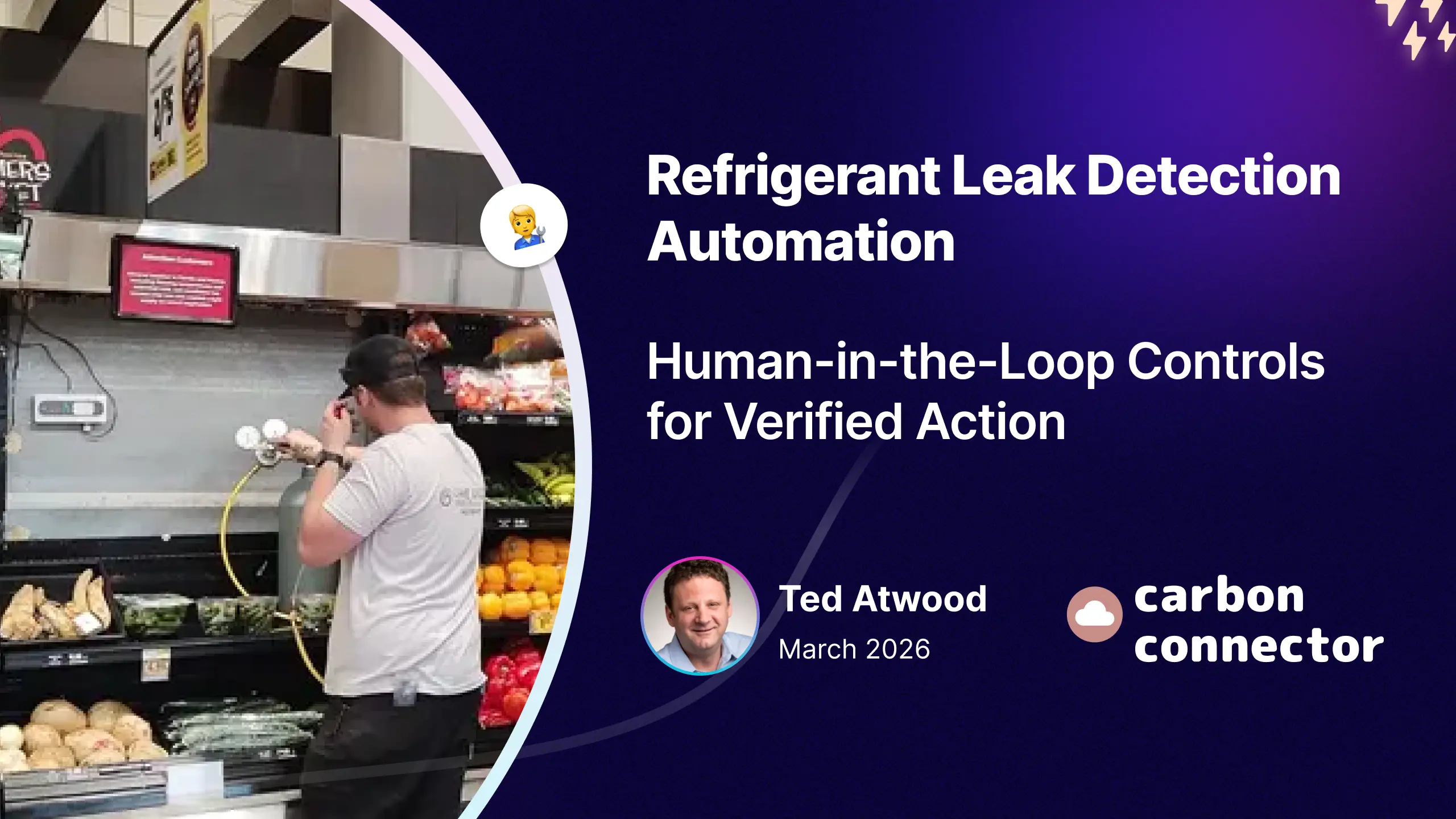
What is a human in the loop?
Refrigerant leak detection automation is transforming HVACR maintenance by reducing noise, improving compliance, and protecting both assets and people.
This article is for facility managers, HVACR professionals, and operations leaders seeking to understand how automation and human oversight can work together to deliver reliable, actionable results.
We will cover the challenges of unchecked automation, the importance of human-in-the-loop controls, regulatory compliance, and best practices for verified action.
Done properly, this is a great way to leverage ge tech to address workforce shortages and meet regulatory requirements.
If it’s done incorrectly, then it becomes an endless offer of spam, spam, and more spam (stolen from the headlines or Monty Python).
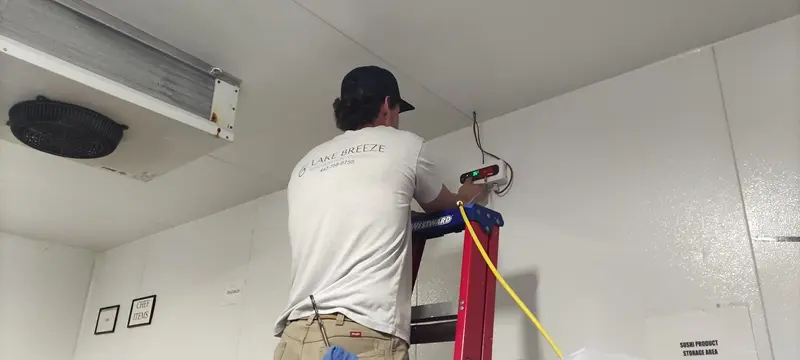
This article explores how refrigerant leak detection automation, when combined with human-in-the-loop controls, can transform noisy alarm signals into verified, actionable maintenance steps.
Regulatory Requirements and the Advantages of Automated Leak Detection
Automated Leak Detection (ALD) systems identify refrigerant leaks at a microscopic level, sometimes at parts-per-billion.
Automation enhances refrigerant leak detection in HVAC systems by shifting from reactive manual inspections to continuous intelligent monitoring.
Automated leak detection systems offer operational, financial, and environmental advantages over traditional manual inspections.
Automation transforms refrigerant management from a reactive process into a proactive strategy that saves money and protects the environment.
Automated systems provide documentation to comply with EPA regulations, helping avoid fines.
Automatic leak detection systems are required for compliance with the AIM Act for certain facilities.
The first generation of Refrigerant management requirements in the United States is governed primarily by Section 608 of the Clean Air Act, and the second generation by the American Innovation and Manufacturing (AIM) Act.
Facilities with systems containing as little as 15 pounds of regulated refrigerant may now be subject to federal leak-tracking requirements.
📌 Stop the Spam. Start the Action.
Key Regulatory Points
- Section 608 is the 1990’s EPA regulation, and focuses on ozone-depleting substances (ODS) and other regulated refrigerants through best management practices for handling, servicing, and disposal of refrigeration and air conditioning equipment.
- The AIM Act addresses climate impacts by phasing down the production and consumption of HFCs (which includes refrigerants like 410A, R-404A, and R-134A) and regulating substitutes with a GWP greater than 53.
- Leak rate tracking is a central requirement under both Section 608 and the AIM Act.
- There are two methods for calculating leak rates.
- The annualized method lives or dies on the quality of your two most recent leak event records. If those records are incomplete (wrong dates, missing refrigerant quantities, vague closeout notes, or a “no issue found” that masked an actual loss event) the calculation is wrong before it starts.
- The rolling 12-month method lives or dies on the accuracy of your refrigerant addition records across the full year.
If your CMMS has stale fields, unlogged service calls, or technician notes that never made it into the system, that picture is incomplete, too.
This is the moment where the ticket printer becomes a liability.
Every junk ticket that closed without verified action is a gap in the record.
Every “no issue found” that wasn’t investigated is a data point the EPA calculation can’t use.
Every dispatch that happened without context, without a documented outcome, and without a closed loop is a hole in the 12-month picture that you may need to defend.
Human-in-the-Loop is not just an operational discipline. In refrigeration, under the AIM Act and EPA Technology Transitions requirements, it is the foundation of a compliance record that can withstand scrutiny.
Facilities must maintain detailed records documenting equipment refrigerant charges, service, maintenance, and refrigerant movement.
- EPA reporting is required in circumstances, including repair deadline extensions and significant leak events, significant varies by.
- Proactive compliance through effective leak management, robust recordkeeping, and strategic planning for refrigerant transitions is essential to manage regulatory risk.
- Proactive compliance with refrigerant regulations supports long-term sustainability goals.
Automated Leak Detection (ALD) and AFDD: Definitions
AFDD (Automated Fault Detection and Diagnostics)
AFDD platforms interpret system data to detect faults, anomalies, and patterns that may indicate leaks or other operational issues. AFDD shifts maintenance from reactive to proactive by surfacing actionable insights.
Automated Leak Detection (ALD)
ALD systems identify refrigerant leaks at a microscopic level, sometimes at parts-per-billion. These systems continuously monitor for leaks, providing real-time alerts and supporting compliance documentation.
Alarms Are Not Actions
This is the first thing most automation conversations skip right over, because it’s uncomfortable to say out loud: a leak detector alarm is a signal. An AFDD event is an interpretation.
A work order is an operational commitment.
Those are not the same thing, and treating them as interchangeable is where the spam starts.
Not every signal should be treated as a task requiring technician intervention; effective refrigerant leak detection automation should distinguish between actionable tasks and routine system noise.
The Nature of Refrigeration System Signals
Refrigeration systems are not quiet. They produce signals constantly:
- Pressure changes
- Temperature excursions
- Compressor behavior shifts
- Defrost interactions
- Airflow anomalies
- Leak detector spikes
- Communication gaps
- Intermittent faults that only appear under specific load conditions
Some of these matter immediately. Some are early warnings. Some are noise. Some are symptoms of something else entirely.
The Problem with Treating All Signals as Actions
When a platform treats “something changed” as “send someone now,” it pushes uncertainty downstream to the field. That is not efficiency.
That is outsourcing ambiguity to the one person who can least afford it — the technician standing in front of a rack at 2 a.m., trying to figure out why the ticket exists.
Understanding the difference between signals and actions sets the stage for examining how context changes the meaning of an alarm.
Regulatory Compliance: Why Rules Matter Before Alarms
Compliance shapes everything. Before alarms sound, before technicians arrive, EPA refrigerant management requirements set the foundation.
Automatic leak detection systems aren’t bureaucratic boxes to check.
They’re intelligent safeguards. They prevent leaks. They protect our environment. This is how smart operations begin.
EPA Requirements
Refrigeration safety codes create the backbone of excellence. Facilities handling refrigerants—especially complex systems—follow these standards for good reason.
Leak prevention works. Proper handling of combustible gases works. Every process, from installation to maintenance, meets a critical standard. This is crafted reliability.
Operational Benefits of Compliance
True compliance goes beyond avoiding penalties. It builds resilient operations. Your team handles urgent calls with confidence. Systems stay monitored.
Leaks get detected early. Small issues never become critical failures. You embed compliance into daily work. You protect your business. You demonstrate environmental leadership.
You set operational excellence as a standard.
Building Resilient Operations
In competitive markets, those who master compliance earn trust. They define reliability. They lead.
Establishing this regulatory and operational context is essential before diving into specific alarm scenarios and the importance of context in interpreting signals.
Same Alarm. Different Reality.
Here is where emphasis and context separate a useful system from a spam cannon.
Comparing Two Scenarios
| Scenario 1: Small System, Residual Gas | Scenario 2: Large Rack, Real Leak |
|---|---|
| The trend has been building for three weeks. Energy consumption is up. Case temperatures are drifting. | A leak detector fires in a mechanical room. |
| AFDD platform sees the signal, assigns urgency, and creates a work order. | The monitoring system tracks the specific refrigeration unit with the loss. |
| Tech dispatched, finds nothing conclusive, writes “no issue found.” | The after-hours detector has fired four times in ten days, each with a longer duration and higher concentration. |
| Residual refrigerant from recent service lingers in the air. | The detector was accurate, but it wasn’t a leak event. |
| The detector was accurate, but it wasn’t a leak event. | The larger rack system shows recurring overnight refrigerant loss. |
The system that treats both scenarios identically (same urgency, same ticket, same dispatch logic) is not protecting your operation.
It is training your team to treat the second alarm the way they treat the first. Like spam.
A detector can measure refrigerant in the air. It cannot measure urgency by itself. Concentration is not the same as consequence.
What Changes the Weight of an Alarm
Before any signal moves toward a work order, the operating model needs to weigh the context that determines the actual consequence:
- Asset charge size — a 20 lb system and a large rack are not the same risk profile
- Estimated leak rate or loss trend over time
- Recent service history — oil changes, repairs, charging events, and adjustments all leave a trace
- Purge and ventilation status of the room or enclosure
- Signal persistence — a single spike versus a recurring trend over multiple cycles
- Corroborating indicators — performance, energy behavior, pressures, temperatures
- Repeat-event history on that specific asset and site
- Operating mode at the time of alarm — defrost, startup, pull-down, off-cycle
- Consequence tier — product risk, uptime risk, EPA compliance exposure
That is not a checklist for slowing things down. That is the difference between dispatching with purpose and dispatching with spam.
Refined rule: If it can’t explain “why” and “why now,” it can’t create work.
Understanding how context changes the meaning of an alarm leads directly to the importance of system design and workflow logic.
How Good Intentions Become a Full Inbox
Nobody builds an automated dispatch system trying to create chaos. The goals are always reasonable: respond faster, reduce missed events, standardize triage, and cover the gaps that understaffed teams can’t. Those are legitimate problems worth solving.
Ticket Multiplication
The trouble starts when the system is rewarded for activity instead of outcomes. If the design logic says detect more, classify more, dispatch more — without equally strong controls for deduplication, bundling, confidence gating, and human review — the system does exactly what it was built to do.
It produces work. Relentlessly. Like a kitchen that only knows how to make spam.
Root Cause Analysis
Tickets multiply because the platform cannot distinguish one root cause from five correlated symptoms. Dispatch gets flooded because urgency is easier to automate than judgment.
Teams get buried because the machine generates work faster than humans can verify the truth.
Scattered data across multiple systems or spreadsheets can further compound these inefficiencies, leading to repeat visits and revenue loss, highlighting the need for centralized information to support effective refrigerant leak detection automation.
And somewhere in the middle of that spiral, the executive dashboard looks busy — which is dangerously close to looking like progress.
That is how smart operations become backlog operations. Not through failure. Through success at the wrong objective.
Recognizing the risks of unchecked automation sets up the need for deduplication and clarity in ticketing.
One Event. Five Tickets. Zero Clarity.
Let’s make the failure mode concrete, because it plays out the same way across grocery portfolios, supermarket chains, and data center facilities every single day.
How Multiple Tickets Are Created
A rack begins drifting overnight. The drift is subtle. A leak detector registers abnormal readings. AFDD sees a pattern change. Case performance degrades slightly. Energy behavior looks off. A threshold is crossed. Then another correlated point moves. Then another.
A system without deduplication logic sees multiple independent alerts and creates multiple tickets:
- One for the leak alarm
- One for the performance anomaly
- One for the temperature excursion
- One for repeated signal recurrence
- One high-priority after-hours escalation because the combined score triggered a threshold
The Impact of Duplicate Tickets
Five tickets. One underlying issue. Zero improvement in clarity.
The dispatcher routes duplicate work. The tech arrives without a coherent problem statement.
Poor schedule management and repeated visits can burden contractors, leading to inefficiencies and increased operational costs.
Contractors are forced to handle unnecessary site visits, and the lack of streamlined scheduling makes it harder to manage workflows and maintain timely service.
Conditions have changed by the time he inspects. “No issue found” gets logged. The root cause remains unresolved. The same patterns return two nights later. Confidence in the system drops another notch.
This is not a technology failure. This is a decision architecture failure. And it compounds silently until the team starts treating every alert the way they treat a promotional email — subject line scanned, contents ignored, deleted without action.
Understanding the consequences of poor ticket management highlights the importance of safety and technician trust.
Safety Considerations in Leak Detection: Protecting People and Product
Safety forms the foundation. Period. Refrigerant leaks threaten equipment. They endanger people. They compromise products. They expose businesses to liability.
Refrigeration safety codes exist for this reason. Ozone-depleting substances demand stringent controls. Commercial buildings know this. Grocery chains with multiple locations live this reality.
Technician Training and Equipment Standards
Effective leak detection goes beyond sensors. Technicians require thorough training. Equipment demands the highest maintenance standards. Emergency procedures need a clear definition. Regular rehearsal ensures readiness.
Supermarkets, data centers, large commercial facilities: every environment with people present faces the same truth.
Every leak creates potential risk. Health, safety, and reputation all hang in the balance.
The Value of Prioritizing Safety
Prioritizing safety protects everything. Assets. People. Customers. The choice of equipment matters. The rigor of technician training decides outcomes.
This approach prevents costly repairs. It eliminates product loss. It safeguards reputation. Safety never gets left to chance.
A focus on safety leads to better operational outcomes and supports the value of learning from every maintenance event.
“No Issue Found” Is Not a Dead End. It’s the Most Valuable Data You Have.
Most organizations treat “no issue found” as a closeout code. Ticket closed. On to the next one.
That is one of the most expensive mistakes in HVACR maintenance, because it turns a learning opportunity into a blank wall.
What “No Issue Found” Reveals
In a healthy Human-in-the-Loop model, “no issue found” tells you at least one important thing is true:
- The alert threshold is wrong for this asset or environment
- The context window was incomplete when the ticket was created
- The problem is intermittent and appears under specific operating conditions
- The site conditions changed between alarm and inspection: residual gas, purge event, defrost cycle
- The asset mapping in the CMMS is incorrect
- The AFDD interpretation overfitted to noise
- The ticket should have been “watch and learn,” not dispatch
Using Feedback to Improve Automation
If that feedback doesn’t go back into the system and change something (a threshold, a rule, a bundling logic) then the automation doesn’t improve.
It repeats. And repetition without learning is the definition of spam.
Learning from “no issue found” tickets is critical for improving overall business operations and efficiency, as it helps organizations optimize scheduling, resource allocation, and service delivery.
Additionally, automated refrigerant leak detection systems can generate compliance records and leak rate calculations, which are essential for satisfying EPA documentation requirements.
Recognizing the value of feedback supports the evolution of leak detection methods and smarter automation.
Leak Detection Methods: Beyond the Beep
Refrigerant leak detection has evolved. The days of simple alarms and guesswork are gone. Today’s systems understand what matters: system type, equipment type, and operating temperature.
They’re built for the real world of commercial and industrial refrigeration.
Features of Advanced Detection Systems
Advanced detection systems deliver what you need:
- Real-time monitoring
- Precise reporting
- Actionable data
They don’t just alert: they inform. Your facility team identifies leaks quickly. Accurately. The technology supports verification testing and enables targeted maintenance.
Equipment runs efficiently. Regular maintenance and calibration keep these systems reliable. False alarms disappear. Missed detections become history. Trust and performance remain intact.
Operational Impact
This intelligence transforms your operation. Energy efficiency improves. Environmental impact shrinks. System status stays clear, interventions documented.
The result speaks for itself: smarter leak detection that supports compliance, reduces costs, and keeps everything running smoothly.
With advanced detection in place, AFDD becomes a powerful tool for supporting human judgment.
AFDD Is the Tool. Judgment Is the Point.
Automated Fault Detection and Diagnostics can be enormously powerful. It can watch what humans cannot continuously watch. It can compare patterns across time and assets.
It can surface conditions that would otherwise go unnoticed until they become expensive.
It can bring consistency to portfolios that span hundreds of locations. AFDD also provides greater control over refrigeration operations by enabling more precise management of job costing, fleet oversight, and safety monitoring.
The Role of AFDD in Operations
Automation transforms refrigerant management from a reactive process into a proactive strategy that saves money and protects the environment.
But AFDD is a tool, not a supervisor. And like any tool, its value depends entirely on how it’s used and who’s holding it.
📌 Don’t Let a “Junk Ticket” Become an EPA Liability.
AFDD as a Support, Not a Replacement
The right role for AFDD in refrigeration operations is not “automatic dispatch machine.” The right role is pattern detection, anomaly ranking, context generation, and recommended next-best verification step. It should accelerate the judgment of a skilled human, not replace it with a ticket.
The moment AFDD is allowed to own dispatch authority without human gates, it stops being a diagnostic tool and starts being a very expensive spam filter running in reverse, generating noise instead of catching it.
Understanding the limits of automation reinforces the need for human oversight in dispatch decisions.
Leak Detectors Are Sensors. Not Supervisors.
NDIR-based leak detection systems and their counterparts provide genuine value in refrigeration operations — particularly in identifying refrigerant events outside normal working hours, in spaces that don’t get walked regularly, and in portfolios too large for manual observation alone.
That value is real, and AKO uses it. Automated sensors provide real-time alerts for hazardous leaks, improving safety for employees and customers.
The Limits of Sensors
But a sensor is a sensor. It detects conditions. It measures concentration. It does not know that the room hasn’t been purged.
It does not know that the tech was just in there charging the system. It does not know that the airflow pattern near that detector changes when the walk-in door is propped open, or when walk-ins occur and disrupt normal airflow.
It cannot weigh urgency against asset size, service history, or consequence tier.
If the downstream logic ignores those realities and auto-dispatches on every excursion, you don’t have a leak detection program. You have an alarm-to-ticket conveyor belt that is actively training your team to treat leak alarms like junk mail.
That is the opposite of what the technology was built to do.
Recognizing the limitations of sensors leads to the critical role of decision-making in dispatch.
Dispatch Is a Decision Right. Not a Default Setting.
This is the line that changes everything, and it’s the one most automation vendors would rather you not think about too hard.
Who Owns Dispatch Decisions?
Dispatch is not a workflow step. It is where operational authority lives. Who gets sent, when, for what reason, with what priority, into what conditions — that is a leadership decision. Software can support it brilliantly.
Software should never silently inherit it.
Automated refrigerant leak detection systems can trigger emergency calls to rescue teams or safety authorities in response to hazardous conditions, ensuring rapid response when safety is at risk.
Additionally, automated systems can predict likely failures based on historical leak data and equipment operating hours, enabling more informed and proactive dispatch decisions.
Accountability in Automation
When dispatch is automated without clear boundaries, accountability diffuses into language that sounds responsible but answers nothing: “the system created it,” “the platform escalated it,” “the AI flagged it,” “we didn’t want to miss anything.”
Who decided this was worth a technician’s time?
If no one can answer that question, the organization hasn’t scaled intelligence. It has scaled plausible deniability. And it has put a very good technician in a mechanical room at 2 a.m., staring at a rack that doesn’t know why he’s there either.
Establishing clear decision rights is the foundation for AKO’s Human-in-the-Loop approach
AKO’s Rule: No “Why,” No Work Order
AKO uses digital tools. That is not in question. Leak detection, AFDD capabilities, and automated pattern recognition are part of how we operate at scale across grocery, supermarket, and facility portfolios.
The industry needs this technology.
The operating environment is too complex and too understaffed to rely on manual observation alone. Automated Leak Detection (ALD) systems can now identify refrigerant leaks at a microscopic level, sometimes at parts-per-billion, providing a new standard of precision for facility operators.
The Human-in-the-Loop Engagement Model
But AKO is deliberately keeping a Human-in-the-Loop tech engagement model, because dispatch, verification, and closeout discipline are what determine whether digital tools reduce risk, or multiply it.
Clear communication with clients is essential for effective service, ensuring that digital updates, quotes, and reports are delivered promptly and accurately.
Criteria for Work Order Creation
The rule is simple:
If it can’t explain “why” and “why now,” it can’t create work.
For an alarm or AFDD signal to move toward a work order, the system must be able to state:
- Confidence — how certain are we that this is actionable, and on what evidence
- Context — what happened, over what time window, in what operating mode
- Asset clarity — what specific system, equipment, and site is implicated
- Next best verification step — what should a human check first before committing a truck
- Dedupe status — is this part of an existing open issue or a new independent event
- Escalation logic — what happens if uncertainty remains after initial review
That is not bureaucracy. That is the difference between dispatching with purpose and filling the queue with spam.
A disciplined approach to work order creation supports a sustainable Human-in-the-Loop operating model.
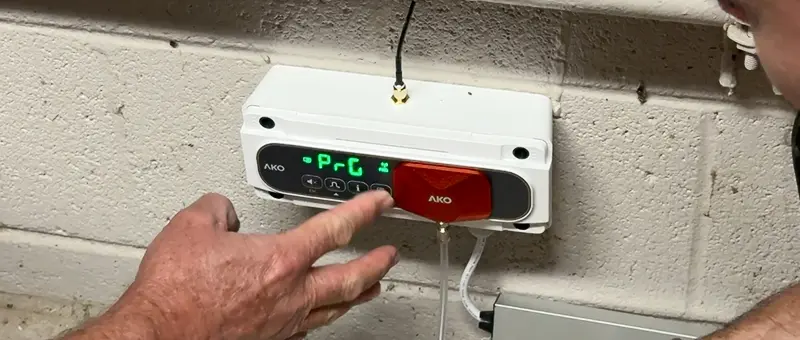
Human-in-the-Loop Is an Operating Model. Not a Marketing Line.
A lot of vendors say “human in the loop.” Very few define it. Fewer still have written it down in a way that survives contact with a real operation.
In refrigeration, Human-in-the-Loop only means something if it is an actual working model with teeth.
For refrigeration service businesses, the value of having one system that integrates multiple functions—such as dispatching, inventory management, customer tracking, quoting, scheduling, and billing—cannot be overstated.
Integrating leak detection systems with building management systems can also streamline operations and improve monitoring capabilities.
Who Owns Dispatch Decisions?
Who can create, suppress, escalate, route, defer, and close? If those roles are not explicitly defined, automation fills the gap by default — and default is always dispatch.
Gating Rules for Event Handling
- High-confidence, high-consequence events trigger immediate human notification.
- Medium-confidence events go to a review queue — not a dispatch.
- Low-confidence events get monitored for pattern confirmation before any work is created.
That is how you stop converting signal into spam.
Handling Failure Modes
What happens when data is missing, delayed, contradictory, stale, or mapped to the wrong asset? What happens when the NDIR sensor is reading residual gas in an unpurged room?
If the answer is “the system dispatches anyway,” the model is not safe.
Ensuring Auditability
Every material action must be traceable: what the system saw, what it recommended, what the human chose, what happened next, and what changed in the rules after the review.
Without that trail, you cannot improve the loop, and you cannot defend the decisions when EPA compliance documentation is on the table.
Backlog Protections
If you do not engineer backlog protections into the workflow, ticket inflation is not a risk. It is a scheduled event.
A robust Human-in-the-Loop model is the foundation for backlog protection and sustainable operations.
Backlog Protection Is Not a Feature. It’s the Foundation.
Facility management teams in grocery, supermarket, and data center operations are already running hard: staffing constraints, aging assets, budget pressure, competing priorities, documentation requirements, and an after-hours call rotation that nobody’s happy about. As operations expand and regulatory requirements such as those under the AIM Act continue to expand, backlog protections become even more important to ensure scalable and compliant growth. Adding automation without backlog discipline is like installing a faster faucet into a clogged drain.
Most modern facilities see a return on investment for ALD systems within 3 to 9 months due to energy savings and avoided costs.
Deduplication
- Correlated alarms roll up into one case.
- One root cause does not become five dispatches because five sensors moved.
- If the platform can’t deduplicate, it is a spam generator by design.
Bundling by Root Cause
- Work gets grouped by site, system, asset relationship, and likely root cause — not by alert count.
- Alert count measures sensor activity. It does not measure maintenance value.
Aging Rules
- Open tickets don’t drift indefinitely.
- The system forces a decision state: verify now, verify soon, watch and learn, or suppress with a documented reason and an expiration.
- That prevents the graveyard of open work orders that everyone ignores, and nobody closes.
Repeat-Event Logic
- The third time the same asset fires the same alarm, it should not look like a new event.
- It should carry full history, trigger smarter escalation, and surface the pattern that the first two tickets didn’t resolve.
- Repetition without escalation is just louder spam.
Suppression With Safeguards
- Noise suppression is necessary and legitimate.
- Blind suppression is dangerous.
- Every suppressed signal needs a logged reason, an owner, a time limit, and a condition for expiration.
- That is how you reduce noise without teaching the operation to ignore real problems.
Backlog protection ensures that automation supports, rather than overwhelms, your maintenance operation.
Technician Fatigue Is a System Design Problem
When automation conversations happen at the dashboard level, the word is efficiency. When they happen at the field level, the word is fatigue.
The Cost of Bad Dispatches
Fatigue is what you get after the third bad dispatch in two days. After the overnight call that turned out to be residual gas in an unpurged room.
After the fifth ticket this week on the same rack with the same “no issue found” result. After the queue that grew faster than you could close it, it stopped feeling like a list of real problems.
Fatigued technicians miss things. They abbreviate inspections. They lose confidence in alerts.
They start treating the whole system like a spam folder; glance, doubt, move on.
And the one alarm that actually matters (the rack with the real leak, the system with real product at risk) gets the same half-attention as the seventeen that came before it.
These inefficiencies cost money, impacting operational budgets and the bottom line.
📌 Ready to Move Beyond the Beep?
Protecting Technicians from Noise
That is not a people problem. That is what happens when system design prioritizes dispatch volume over dispatch quality. The technology created the fatigue.
The fatigue creates the risk. And the risk lands on the store, the product, the refrigerant charge, and eventually the compliance record.
Proactive refrigerant leak detection automation can lead to a 30% reduction in energy costs by ensuring systems operate efficiently, delivering significant money savings.
AKO’s goal is not to automate around technicians. It is to use digital tools to protect technicians from noise so they can spend their energy on the work that actually matters.
A focus on technician well-being leads to more reliable, verified action.
What Verified Action Actually Looks Like
Verified action is not a complicated concept. In HVAC maintenance, verified action ensures that every step taken is documented and trusted, supporting streamlined workflows and coordination across HVAC services.
But it requires discipline to execute consistently at scale, and that discipline is exactly what a Human-in-the-Loop model is designed to protect.
Elements of Verified Action
For any alarm or AFDD signal to become genuinely valuable in HVACR maintenance, the closed ticket needs to tell a story the next person can trust:
- Asset Identified — specific equipment, system, site, and circuit implicated
- Condition Observed — what was abnormal, during what time window, under what operating conditions
- Verification Performed — what the technician checked to confirm or disprove the signal
- Action Taken — repair, adjustment, monitoring, escalation, or no action, with a documented reason
- Evidence Logged — readings, notes, reason codes, and context that can be audited later
Maintaining optimal refrigerant levels with ALD reduces stress on compressors, extending equipment lifespan and improving long-term operational efficiency.
This matters for operations. It matters for repeat-event analysis. It matters for technician training.
And it matters increasingly for regulatory defensibility as EPA requirements, AIM Act compliance expectations, and Technology Transitions continue to raise the bar on refrigerant-related documentation and maintenance decision-making.
A ticket that closes without that story is not a completed work order. It is a gap in the record — and a gap in the loop.
Verified action is the outcome that ties together compliance, efficiency, and technician trust.
Case Studies and Success: Human-in-the-Loop in the Real World
Human-in-the-loop leak detection delivers results you can see. A national grocery chain with hundreds of locations proves this daily. They deployed advanced leak detection with human oversight. Refrigerant leak rates dropped 50%. Thousands saved. Environmental impact reduced. Simple.
A manufacturing facility chose the same path. Their system caught a significant refrigerant leak before shutdown. Multiple sensors. Expert review. Root cause identified quickly. Repairs made efficiently. Performance improved. Everything just works.
Technology provides the data. Humans provide the judgment. Together, they create something intelligent: verified action that improves reliability, reduces costs, and protects what matters. You already know this makes sense. Now it’s yours to deploy.
Real-world results demonstrate the value of combining automation with human oversight.
Future Developments: Where Human Judgment Meets Next-Gen Detection
Leak detection advances through human expertise and next-generation technology. Artificial intelligence and machine learning now analyze sensor data, equipment patterns, and operational processes.
Businesses identify leaks faster. Maintenance predictions reach new levels of accuracy. Everything just works.
The Role of Natural Refrigerants and Evolving Technology
Natural refrigerants like carbon dioxide bring a lower environmental impact. They also create fresh challenges for detection and system management.
As technology evolves, human judgment becomes essential. People interpret data, make decisions, and ensure automated systems serve real priorities. Innovation empowers experience.
Investing in the Future
Success requires investment in advanced systems and skilled teams. Robust monitoring, intelligent analysis, and human oversight work together.
Organizations minimize leaks, reduce costs, and lead sustainable refrigeration operations. The future isn’t about smarter systems alone. It’s about smarter teams working with technology to deliver results that matter.
Looking ahead, the synergy of automation and human expertise will define the next era of HVACR maintenance.
The AKO Position, Plainly
AKO is a digital operation. Leak detection, AFDD-style diagnostics, and automated pattern recognition are part of how we serve grocery and supermarket portfolios at scale. We are not anti-technology. We are pro-outcome.
Our approach is designed to meet evolving regulatory requirements, including those impacting comfort cooling sectors, where new GWP restrictions apply to air conditioning systems for indoor climate control. Refrigerant management requirements in the United States are governed primarily by Section 608 of the Clean Air Act and the American Innovation and Manufacturing (AIM) Act, reflecting the role of American Innovation in shaping regulatory frameworks that drive environmental protection and climate impact reduction.
The difference is this: we refuse to let digital tools own decisions they are not equipped to make. Dispatch is a decision. Suppression is a decision. Escalation is a decision. Those belong to people — supported by technology, not replaced by it.
So yes, the alarms fire. Yes, the AFDD platform surfaces patterns. Yes, the leak detectors run continuously. And yes, a human being applies weight, context, service history, asset profile, and consequence tier before a work order goes anywhere near a technician’s queue.
Because the goal is not more tickets.
- The goal is not a busy dashboard.
- The goal is not a system that looks smart at the demo and creates chaos in the field.
The goal is verified action taken by the right person, at the right time, with the right context, documented in a way that closes the loop and builds the record.
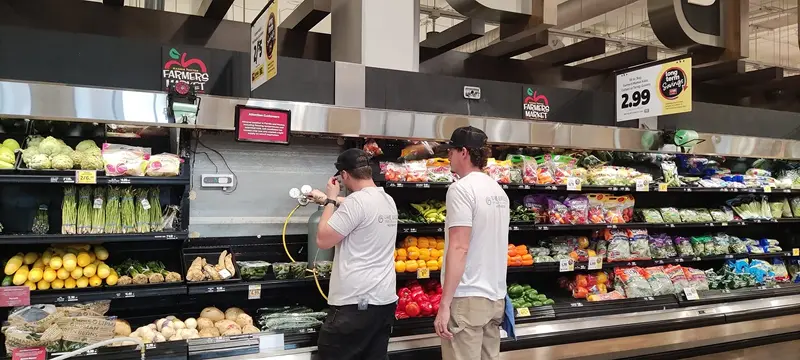
The Walk-Away
The Monty Python sketch ends the same way every time. More spam arrives. The Vikings keep singing. Nobody gets what they actually ordered. And everyone in the room is exhausted from the noise.
That is exactly what happens to a refrigeration operation that automates dispatch without Human-in-the-Loop controls. The alarms keep firing. The tickets keep appearing.
The technicians keep arriving at mechanical rooms where the answer is “no issue found.”
And eventually the team stops trusting the system entirely — which is the moment a real leak, a real product loss event, or a real compliance exposure gets the same treatment as the spam it replaced.
Use the technology. Use leak detectors. Use AFDD. Use digital diagnostics aggressively across your portfolio.
But use them inside a model that keeps humans in the decision, keeps the backlog honest, keeps the audit trail intact, and keeps your best technicians believing that when the alarm fires, it means something.
Because in refrigeration, the cost of spam is not an annoying inbox.
The cost of spam is a freezer full of product, a refrigerant charge in the atmosphere, and a compliance record with a gap where the decision should have been.
AKO is using digital tools. We are keeping humans in the loop. Those two things are not in conflict: they are the point.
📌 Stop the Spam. Start the Action.