
Is your refrigeration and AC Preventive Maintenance data-driven or guesswork? Learn how 24/7 leak detection eliminates incremental refrigerant loss and reactive repairs.
Managing the maintenance of refrigeration and HVAC systems is no small task.
Facility managers and HVAC/R professionals face ongoing challenges in detecting refrigerant leaks early, preventing costly breakdowns, and ensuring compliance with evolving regulations.
Leak detection plays a crucial role in effective preventative maintenance, especially in commercial settings like grocery stores, distribution centers, and data centers.
Proactive maintenance directly improves the health and reliability of HVAC systems, ensuring they function optimally for both business owners and homeowners.
Preventative maintenance not only helps HVAC systems operate efficiently but also prolongs their lifespan. Scheduling HVAC maintenance in November, before winter, is especially important to ensure systems are prepared for the colder months.
This guide aims to provide practical insights into how advanced refrigerant leak detection and predictive maintenance strategies can help you stay ahead of issues, reduce downtime, and optimize your maintenance efforts.
We’ll explore common challenges, proven technologies, and actionable steps to improve your maintenance outcomes without the hype.
How to spot Common AC and Refrigeration Maintenance Challenges?
Let’s skip the consultant pitch. You’ve heard it before. ‘Digital transformation.’ ‘Predictive analytics.’ ‘AI-powered insights.’ All promising the future while your racks are leaking refrigerant in the present.
Here are some questions. Answer them honestly. Nobody’s looking.
When was the last time you opened the door to a mechanical room and weren’t surprised by what you found?
Not the flagship store. The one three hours away that nobody visits unless something’s already broken.
The building where the compressor’s been running hot for six months, and the only reason you know is that the power bill went up.
You know which one I’m talking about.
When was the last time you took a full week of vacation and didn’t check your phone?
Not a long weekend. A week. Without wondering if the dairy case in Store 47 is still holding temp. Without mentally running through which techs are on call and whether they’ll actually show up.
Without that low-grade anxiety that something’s going to fail and you won’t know about it until a store manager calls you on Thursday afternoon.
If you can’t remember the last time you trusted your systems enough to unplug for seven days, that’s not your problem. That’s a systems problem.

Do you know which rack is going to fail next?
Not statistically. Not ‘racks over ten years old are higher risk.’ I mean specifically. Unit 14 in the Decatur store. The one your lead technician mentioned three times in the last year.
The one that’s been adding refrigerant every visit, but nobody’s documented a root cause because the invoice just says ‘topped off.’
Your technician knows. Has anyone asked?
How many assets in your portfolio have you walked past in the last six months?
The rooftop unit that’s been ‘on the list’ since 2022. The walk-in cooler in the back corner that only gets looked at when someone complains the beer’s warm. The dark corners of the building where systems run until they don’t, and then it’s an emergency.
It’s important to notice signs or symptoms of potential issues, such as unusual noises, frost buildup, or temperature fluctuations, as these can indicate underlying problems that require attention before they escalate.
What’s the over/under on how many of those systems are leaking refrigerant right now? Ten percent? Twenty? Thirty?
Industry average is 25%. But you already knew that.
📱 Download Tag Wizard
If a rack added refrigerant three times this year and nobody documented why, would you know?
Or would it be three separate invoices from three separate service calls that nobody ever connected because they live in three different places, and nobody’s job is to look at them together?
That’s not maintenance. That’s managed decay. And it’s expensive.
When was the last time you looked at a Preventive Maintenance contract and asked: how do we know this work actually happened?
Not the invoice. The work. The oil line inspection that’s on the checklist: was it done? With a calibrated instrument? Or did someone look at it from six feet away, check a box, and move on because they had eleven more stops that day?
Nobody’s auditing this. You know that. The contract protects liability. It doesn’t guarantee outcomes.
When considering the frequency or effectiveness of maintenance, factors such as equipment age, usage patterns, environmental conditions, and historical leak data all influence the optimal schedule and approach for technical detection methods.
Is there a Cost if we fix things when they break?
Here’s what we know.
Your PM program probably looks great on paper. It lists inspections. It schedules cleanings. It requires leak checks. It has a vendor relationship and a signed contract.
But without enforcement, it’s fiction. Nobody’s verifying that the work happened. Nobody’s connecting refrigerant additions to service history.
Nobody’s asking the technicians (the people who actually know) where the trouble spots are. And the people making capital decisions don’t have the data they need because the data lives in a truck, a spreadsheet, or nowhere at all.
Meanwhile, you’re adding refrigerant. You’re replacing compressors. You’re losing product. You’re paying overtime.
And every time something fails, everyone acts surprised — even though your best technician saw it coming six months ago and told someone who didn’t write it down.
When proactive maintenance is lacking, failures and costly issues often occur unexpectedly, leading to unplanned downtime and expenses.
That’s not a maintenance problem. That’s a systems problem. And it’s costing you more than you think.
The objective of predictive maintenance is to identify early signs of wear or malfunction before failures occur, optimizing equipment performance and preventing costly breakdowns.
Predictive maintenance leverages advanced technology to monitor equipment in real-time, analyzing key data such as temperature, pressure, and vibration to detect issues before they escalate.
Generic preventative maintenance tasks like cleaning condenser coils, replacing air filters, managing moisture, and inspecting door gaskets are important for HVAC hygiene.
However, these alone do not prevent refrigerant drift or leaks unless their effectiveness is verified and tied directly to refrigerant additions and system performance data.
Without this accountability, “maintenance” becomes a checkbox exercise rather than a proactive strategy to stop leaks before they escalate.
Accountability and Data Gaps
This brief is the science.
Not a seance. Not a pitch. Not a promise that AI will solve everything by Q3.
It’s a three-stage roadmap for moving from where you are (reactive, overwhelmed, hoping nothing fails while you’re on vacation) to something measurably better.
This approach ensures your systems continue to function efficiently over time through ongoing maintenance and proactive care. Not perfect. Better.
📌 Don’t normalize failure.
Here’s the truth we need to face
We’ve accepted from leak detectors what we’d never accept from any other HVAC equipment. We’ve normalized failure.
We’ve built an entire industry around selling boxes that don’t solve the problem they were installed to solve.
The 25-year pattern ends when you realize the problem isn’t the quality of the box—it’s that the solution was never meant to live in a box at all.
A Three-Stage Roadmap
1. Tag and Label
Know what you have. Walk the buildings. Ask the technicians. Rank assets by what failure actually costs. Stop pretending the PM schedule is keeping you safe.
HVAC systems should be serviced at least once a year to ensure optimal performance. Knowing where key components like evaporator coils are located is important for maintenance, as the evaporator coil is responsible for heat absorption in the refrigeration system.
When cleaning air filters or performing other maintenance procedures, always consult the manufacturer’s manual or service guide for proper steps.
For leak detection, practical methods include performing a toilet dye test—add food coloring to the toilet tank and check for color in the bowl within 15-20 minutes to identify a silent leak.
Video pipe inspection uses a small, waterproof camera on a fiber optic cable to visually inspect drain or sewer lines for leaks or blockages. Moisture meters can measure moisture content in building materials to identify hidden leak areas.
Tracer gas detection introduces a non-toxic mixture of hydrogen and nitrogen gas into the plumbing system, detecting leaks by monitoring for escaping gas.
Signs of hidden moisture include musty odors, mold or mildew growth, peeling paint or wallpaper, or unexplained warm/damp spots on floors.

2. Plan your work ahead 2 quarters, then set alerts on your leak detection team to track activity from your desk
Build accountability. Structure leak detection so it’s verifiable. Track refrigerant additions by asset. Connect the data. Pilot workflows with your best people before rolling them out.
Using batch processing to group maintenance tasks can improve efficiency and help prioritize issues.
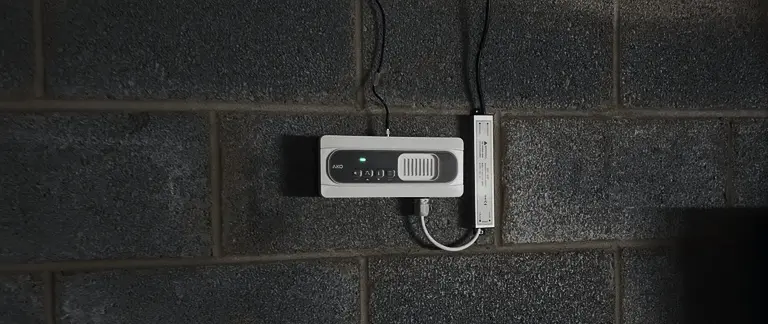
Integrating leak detection systems with building management systems enhances operational efficiency, providing alarms and displaying data to assist in rapid decision-making.
Building management systems can improve the reliability of leak detection systems by providing real-time monitoring, and effective integration can help reduce downtime and inspection time.
Proper installation of high-precision leak detection systems, such as external LDS, fibre-optic sensors, and vapour-sensing tubes, is complex and crucial for system performance and reliability.
This integration also helps facility operators comply with evolving ESG and regulatory standards.
3. Measure things you can control.
There are 1000s of points to track, pick 2 or 3 so you can get traction.
Expand what works. Measure year-over-year movement — not against perfection, but against last year. Let low-consequence assets run to failure.
Invest where consequence demands it. Stop chasing 100% predictive maintenance across a fleet where 30% coverage is the right answer.
Use predictive analytics to identify leading indicators of potential issues before they escalate.
Leak Detection Technologies and Methods
Leak detection is central to all three stages—not as a compliance checkbox, but as the earliest signal that a system is declining.
Because refrigerant leak detection is the check engine light for refrigeration. It means the compressor is working harder. Component wear is accelerating. Energy intensity is rising. Capacity is falling. And if you catch it early, you don’t pay for it late.
The following professional refrigerant leak detection methods are specifically designed for HVAC/R and refrigeration systems, focusing on mechanical rooms, racks, and associated equipment:
NDIR (Non-Dispersive Infrared) Sensors
For continuous monitoring of refrigerant gases in mechanical rooms and around rack equipment, providing precise, real-time leak detection.
Acoustic Leak Detection
Using sensitive microphones and listening devices to detect ultrasonic sounds of refrigerant escaping pressurized systems, enabling pinpointing of leaks in compressors, valves, and piping.
Thermal Imaging Cameras
They are adapted to identify temperature anomalies caused by refrigerant leaks or failing components in racks and mechanical systems.
Tracer Gas Detection
This detection employs safe, non-toxic gas mixtures introduced into refrigeration circuits to detect leaks by sensing escaping tracer gases with specialized detectors.
Electronic Leak Detection Cables
They are installed along refrigerant lines that trigger alarms upon contact with escaping refrigerant, allowing rapid localization.
Pressure and Vacuum Sensors
They are monitoring system pressures to identify unexpected drops indicative of leaks or component failures.
Automated Leak Detection Systems integrated with Building Management Systems (BMS)
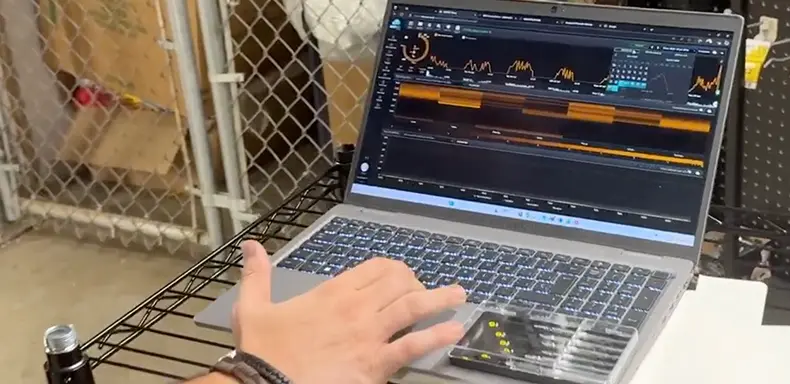
They provide alarms, anomaly detection, and data visualization to facility managers for rapid response.
📱 Download Tag Wizard
Regular Visual and Instrumented Inspections
of refrigeration racks, valves, compressors, and piping for signs of refrigerant leakage, such as oil stains, hissing sounds, or abnormal pressure readings.
The primary purpose of these leak detection systems is to help detect and localize refrigerant leaks early, enhancing productivity and system reliability by reducing downtime and costly repairs.
Compliance with refrigerant leak detection regulations is essential for businesses in the HVAC/R industry to avoid penalties and ensure environmental safety.
The Environmental Protection Agency (EPA) has established regulations requiring businesses to monitor and repair refrigerant leaks to minimize emissions.
Compliance with these regulations can lead to significant cost savings by preventing refrigerant loss and avoiding fines.
Regular maintenance and monitoring of refrigerant systems are critical for compliance and operational efficiency.
The AIM Act mandates stricter regulations on refrigerant management, requiring businesses to implement leak detection and repair protocols.
The dangerous nature of refrigerants makes adherence to these rules essential for safety and compliance.
The success metric is simple.
If an asset with a leak detector added little or no refrigerant over twelve months, that’s success.
If it did add gas, it was from a documented catastrophic event, not three incremental adds that nobody connected.
No slow bleeds. No surprises. No, we didn’t know it was that bad.
That’s the standard. Not perfection. Accountability.

So here’s where you come in.
If you’re the unicorn who’s already doing all of this, if your PM contracts are enforced, your refrigerant additions are tracked to root cause, your technicians are part of capital planning conversations, and you actually took a week off last year without checking your phone, we need you. Join our team. Seriously.
But if you’re human like the rest of us; if your best technician knows which rack is going to fail and nobody’s asked him, if you’ve got a mechanical room you haven’t walked in four months, if your service invoices live in three different systems and nobody’s connecting them, if you’ve been meaning to fix this for two years but the budget keeps going somewhere else; then join the movement.
Because nobody’s doing this alone. Not us. Not you. Not the operator down the street, dealing with the same rack that keeps adding R-404A, and nobody can figure out why.
We’re all in this together. And the only way forward is to stop hoping the PM schedule will save us and start building systems that actually measure whether it’s working.
The roadmap starts on the next page.
📌 If you’d rather talk through it first, contact us.
We’ve been walking mechanical rooms for 32 years. We know what the dark corners look like. We know what the invoices don’t say. And we know how to connect the people who know to the people who decide.
→ Explore upcoming and past events and webinars hosted by Carbon Connector.
Rules and Regulations for Refrigeration Management
Refrigeration management transcends system maintenance. It operates within regulatory frameworks designed to protect business and the environment alike.
EPA Section 608 and the European Union’s F-Gas Regulation establish precise standards.
How refrigerants are handled, monitored, and reported; each step matters. Regular maintenance, leak detection, prompt repairs; these aren’t suggestions. They’re requirements that minimize environmental impact and ensure public safety.
Compliance failures cost more than reputation. Fines accumulate. Environmental damage compounds. The price of avoidance exceeds the investment in prevention. Predictive and preventative maintenance become essential tools, not optional practices.
A robust maintenance program delivers results: regular inspections, accurate leak detection, and timely repairs. The outcome? Reduced costs, extended system life, and reliable operation. Compliance protects more than regulatory standing.
It safeguards your investment, preserves the environment, and prevents costly failures. Your refrigeration systems operate reliably for years to come.
The Science of Predictive Maintenance
Predictive maintenance shapes operations through precision, not promises. In environments where equipment uptime defines success (distribution centers, grocery chains, data centers), this approach transforms how you work.
Real-time monitoring reveals what matters. Advanced systems detect patterns before problems emerge.
Your equipment operates at peak performance because the technology understands what’s coming next. The results speak quietly: lower repair costs, fewer emergencies, maintenance that delivers exactly what it promises.
This approach moves you from responding to breakdowns toward anticipating them.
Effective Leak Detection Methods and Their Role in Maintenance
The most effective refrigerant leak detection methods combine professional techniques with advanced sensors specifically tailored for HVAC/R refrigerant systems and human-in-the-loop guidance.
These approaches enable facility managers and HVAC/R professionals to identify refrigerant leaks early, prevent costly failures, and support both preventative and predictive maintenance strategies.
By integrating advanced leak detection systems and technologies, organizations can ensure compliance, reduce operational costs, and maintain reliable, efficient operations across their commercial environments.
📌 Transition from “ignoring alarms” to “actionable financial insights”.