
Refrigerant Leaks
Don't Wait.
Neither Do We.
Don't Wait.

Low-Stress
Refrigerant Leaks
Don't Wait.
Neither Do We.
Don't Wait.
Low-Stress
• UL LISTED
• UL 60335-2-40
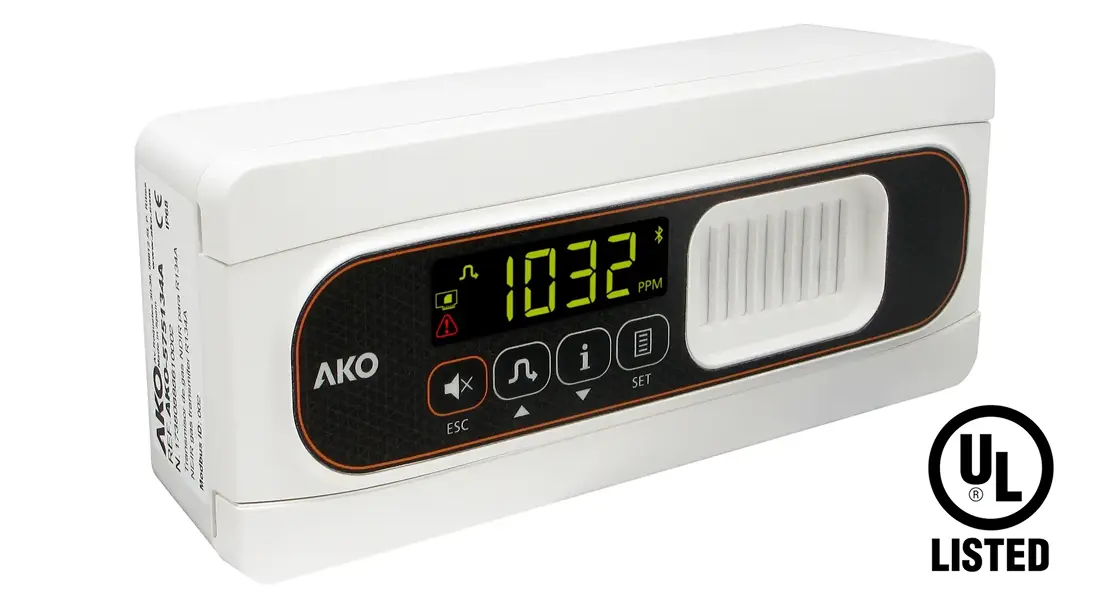
• 1 PPM NDIR
• NB-IoT CLOUD
• IP68 RATED
• SERVING THE USA
25% of a supermarket's refrigerant charge leaks every year.
Centralized detection systems' default blind window
16 zones × 15-minute default hold = 240 minutes between readings. Most defrost leaks are never captured.
R-404A lost in one missed window
At 0.5 lbs/hr over 4 hours = 2 lbs. At GWP 3,922, that's 7.8 metric tons CO₂e — undetected.
Annual refrigerant loss, typical supermarket
Leaks are multiple, distributed, and often concurrent — requiring all zones monitored at once.
Always on.
Every zone.
No cycles.
Every zone.
No cycles.
One sensor per zone, always on
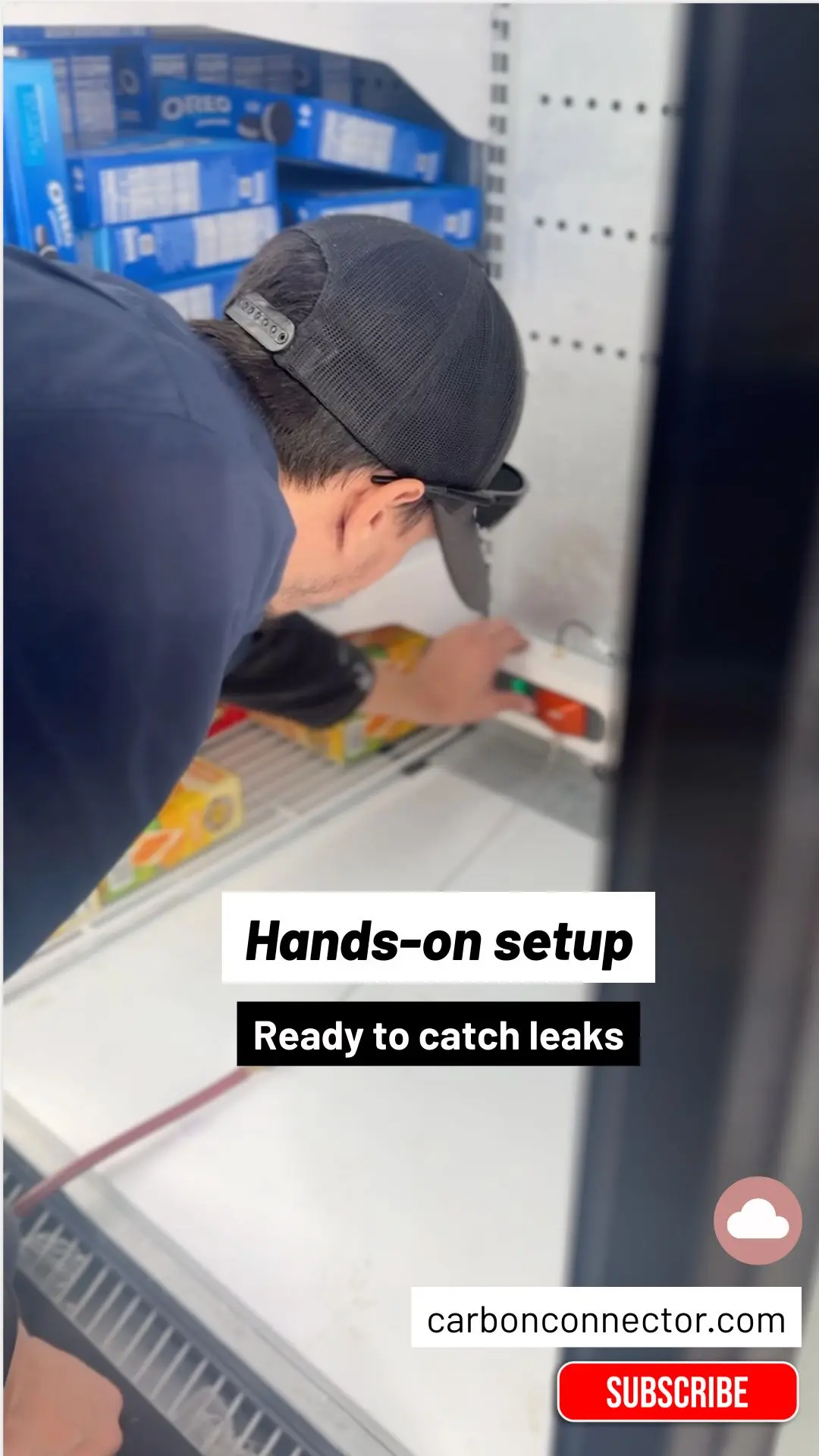
Each AKO NDIR sensor lives inside the refrigerated case or walk-in. It monitors a 50-ft radius — approximately 7,854 ft² — continuously, without cycling. No tube, no pump, no mechanical parts to fail.
Gas migrates to sensor — physics, not plumbing
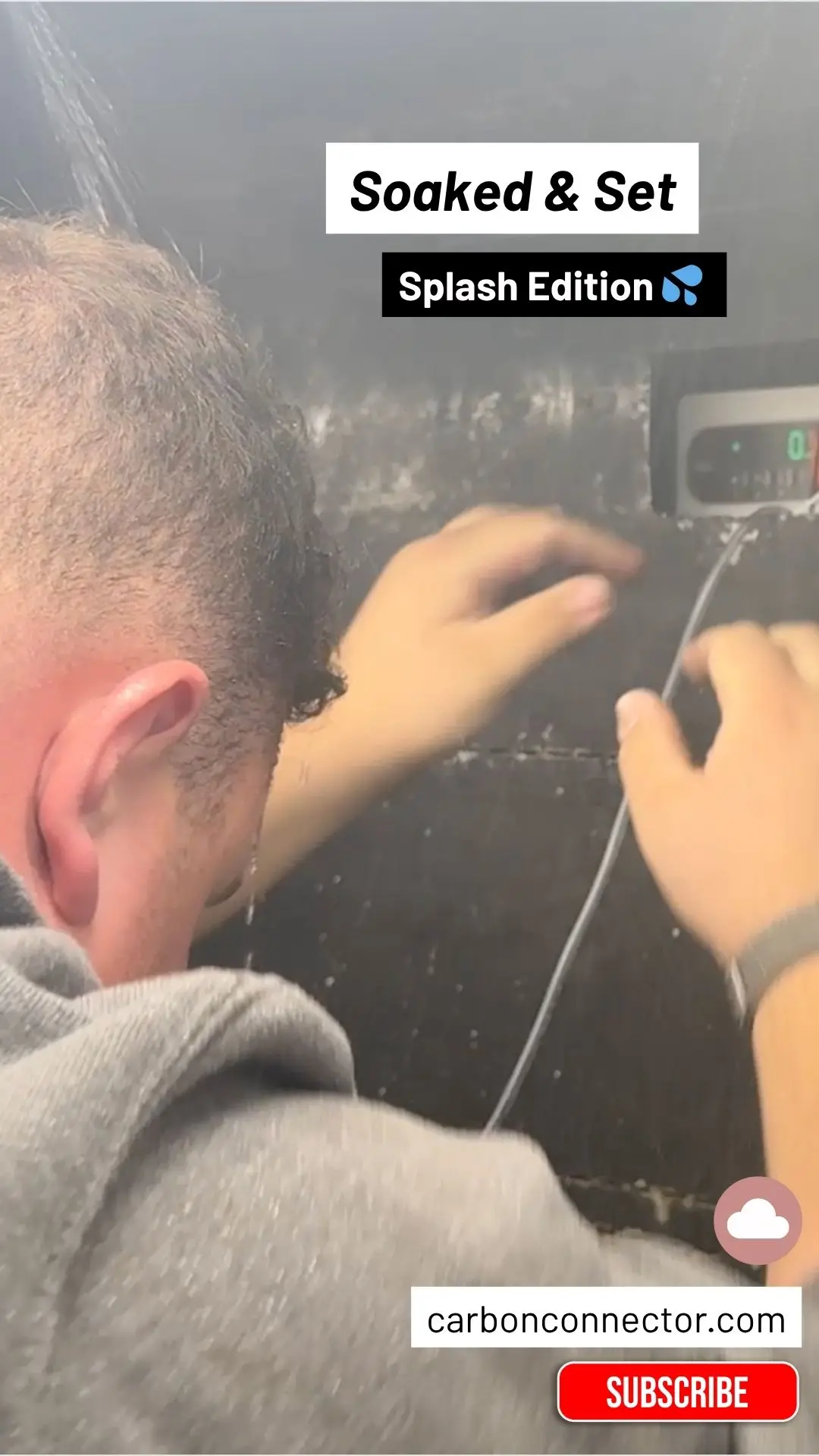
Refrigerants heavier than air settle naturally toward the sensor's mounting position. The IP68 membrane admits gas while blocking moisture that causes false alarms. Detection occurs when gas is present — not when a tube decides to sample.
Cloud alert via NB-IoT — zero IT involvement
AKONET.Cloud receives continuous readings over a dedicated NB-IoT cellular channel. Zero customer network access. No PCI-DSS implications. No 2–8 week IT security review. Live the day the technician leaves.
The architecture debate
is settled by physics.
is settled by physics.
| Parameter | AKO — Passive Diffusion | Centralized detection systems |
|---|---|---|
| Monitoring mode | ✓ Continuous, simultaneous — all zones at once | ⚠ Sequential — 1 zone at a time |
| Default cycle time | ✓ No cycle — reads every second | ✗ 15 min/zone default → 4-hour full cycle (16 zones) |
| MDL sensitivity | ✓ 1 ppm NDIR | 1 ppm NDIR (diluted by distance before reaching port) |
| Coverage per device | ✓ ~7,854 ft² (50-ft radius) | ✗ ~1 ft² at the port at any moment |
| Sensor location | ✓ Inside the risk zone | Machine room — gas dilutes before reaching port |
| Concurrent leak detection | ✓ All zones simultaneously | ✗ Only active zone detected during its turn |
| Single point of failure | ✓ Distributed — no central failure | ✗ Central pump + sensor affects all zones |
| IT / network required | ✓ NB-IoT cellular — zero customer network | ⚠ BMS/BAS — triggers IT security review |
| Deployment timeline | ✓ Same-day — no tube runs, no ceiling access | Weeks — up to 1,200 ft of tube, specialist contractor |
| Maintenance | ✓ Annual calibration only | Pump testing, filter replacement, tube cleaning + calibration |
| Operating temperature | ✓ Down to −40°C in-zone | Machine room temperatures — not exposed to zone extremes |
AKO covers 19 buses.
Centralized Detection Systems cover 1 tire.
Centralized Detection Systems cover 1 tire.
π × 50² = 7,854 ft²
School bus floor area:
50 ft × 8 ft = 400 ft²
Buses per AKO device:
7,854 ÷ 400 = ≈19 buses
Centralized detection systems port capture:
¼" tube aspiration physics ≈ ~1 ft²
"If the end of the tube is not at the exact point of the leak, the system reads a diluted concentration."
— Centralized detection systems' own installation guide
UL-listed NDIR sensors
for every refrigerant.
for every refrigerant.
AKOGAS Universal NDIR HFC Detector
Engineered for HFCs, HCFCs, and modern low-GWP alternatives including R-32, R-454B, R-452A, and A2L blends. UL-listed and compliant with UL 60335-2-40. Post-purchase reconfiguration available as refrigerant profiles evolve.
AKOGAS CO₂ NDIR Detector
Dedicated to CO₂ (R-744) refrigeration systems in supermarkets, cold storage, and industrial refrigeration. NDIR sensor calibrated specifically to CO₂ absorption characteristics for higher precision in natural refrigerant applications.
Don't buy a detector.
Buy a result.
Buy a result.
Six reasons the physics
favor diffusion detection.
favor diffusion detection.
240× Faster Response
AKO detects in ~60 seconds. Centralized detection systems' default 15-min/zone hold on a 16-zone system means 4 hours between readings. A full leak cycle can complete undetected.
Sensor at the Risk Zone
AKO sensors live inside the case or walk-in — centimeters from the evaporator. Gas dilutes with every foot of distance before reaching the Centralized detection systems' port in the machine room.
All Zones, All the Time
Concurrent leaks in two zones? AKO catches both immediately. Centralized detection systems' catches the one it happens to be sampling. 15 of 16 zones are always between readings.
Zero IT Footprint
NB-IoT means no network credentials, no firewall rules, no PCI-DSS review. Centralized detection systems' BMS integration typically triggers 2–8 weeks of IT security review before go-live.
Minimal Maintenance
No pump. No filters. No tube network to clean. AKO requires annual calibration only. Centralized detection systems require pump testing, tube cleaning, filter replacement, and calibration — all separately.
Operates to −40°C
AKO sensors are rated for in-zone deployment in frozen walk-ins down to −40°C. Centralized detection systems' sensor sits in the machine room — protected from the conditions where risk is highest.
Questions we hear from
every facility team.
every facility team.
AKO uses passive diffusion — the sensor is directly exposed to ambient air inside the refrigerated zone. Refrigerant molecules migrate naturally through molecular diffusion and air convection. The NDIR sensor reads gas concentration continuously. No pump, no tube, no cycle needed.
Yes — and we’ve built in a conservative floor. Even at 60 seconds for AKO (accounting for the IP68 membrane’s gas diffusion delay), Bacharach’s default cycle is 4 hours = 14,400 seconds. 14,400 ÷ 60 = 240×. The 4-hour figure is in Bacharach’s own manual and doesn’t move.
The whitepaper does claim this for small enclosed spaces. However, supermarket walk-ins are typically 50m³+ with frequent door activity. AKO’s in-zone sensor retains its proximity advantage. Centralized detection systems’ response-time limitation applies regardless of space size.
The AKOGAS Universal NDIR covers HFCs (R-404A, R-448A, R-449A), HCFCs, HFOs, and A2L blends (R-32, R-454B, R-452A). A dedicated CO₂ detector is available for R-744 systems. Post-purchase reconfiguration allows profile updates as your portfolio changes.
Site survey, hardware, installation, AKONET.Cloud 24/7 monitoring, annual calibration, compliance reporting, and ongoing support — all as a managed service. NB-IoT connectivity means zero IT involvement on your end.
AKO detectors are UL-listed and compliant with UL 60335-2-40. Both HFC and CO₂ models meet EPA Section 608 monitoring requirements for commercial refrigeration systems in the USA.

Stop monitoring
one zone at a time.
one zone at a time.
Fill out the form to get in touch.