
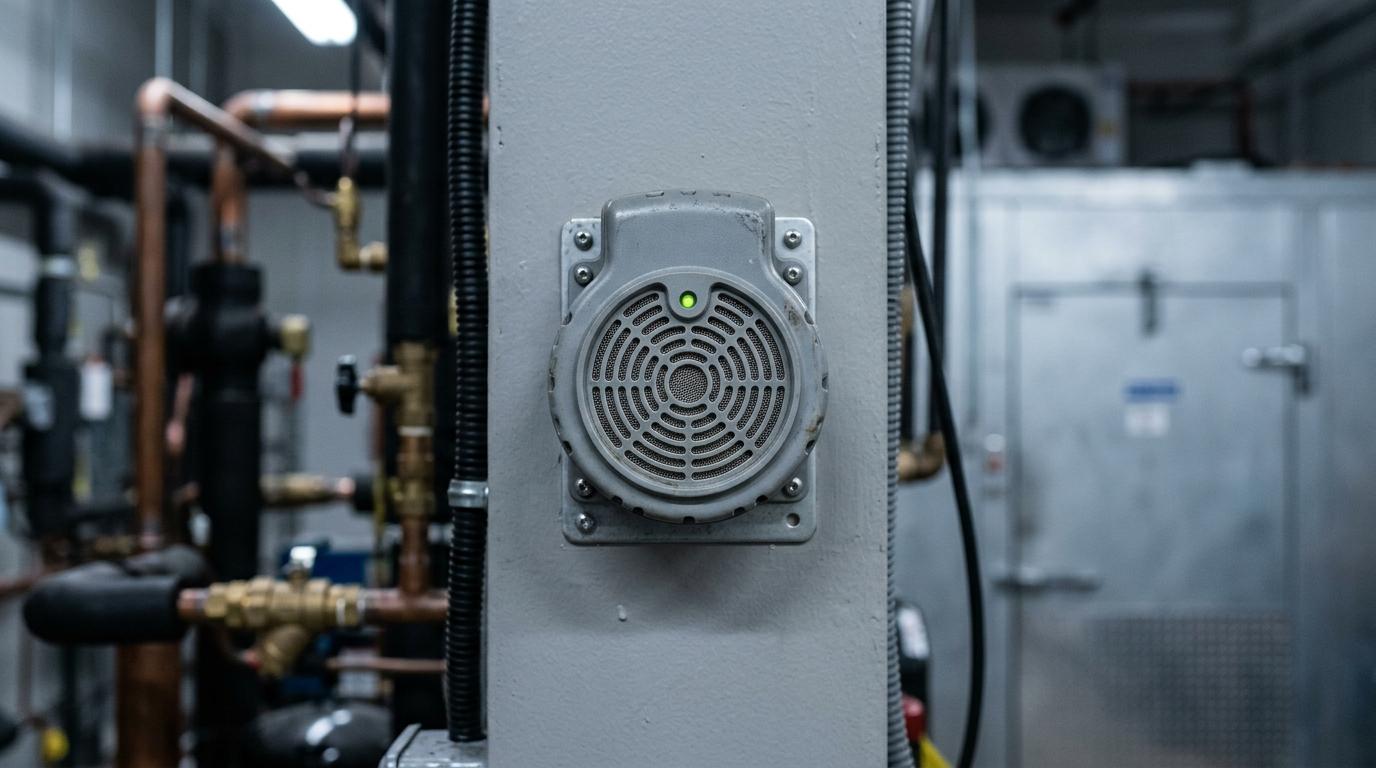
Best HVAC Monitoring Tools in 2026
HVAC monitoring has moved from a maintenance convenience to an operating requirement. In 2026, facilities teams use it to catch drift, reduce energy waste, protect product quality, and document compliance across HVAC and refrigeration assets. The primary problem it solves is delayed visibility: without live data, small pressure, temperature, airflow, or refrigerant issues stay hidden until they become comfort complaints, spoilage, or expensive repairs. The right tool closes that gap with real-time data, trend analysis, and alerts that point teams to action.
Table of Contents
ToggleWhat is HVAC monitoring and why does it matter in 2026?
HVAC monitoring is a live visibility layer for building systems. Platforms from Siemens and Google collect temperatures, runtimes, pressures, alarms, and power data so operators can spot waste and failure risk before occupants or products are affected.
At its core, HVAC monitoring turns raw equipment signals into operational decisions. A rooftop unit that short cycles, a walk-in cooler that drifts 3°F overnight, or a chiller that slowly loses efficiency can all look normal during a single site visit. Trend data changes that. It shows whether a problem is a one-time event or a pattern.
That matters more in 2026 because the stakes are higher. Energy costs remain volatile, refrigerant rules are tighter, and many operators now manage distributed portfolios with lean field teams. Industry reports continue to show that predictive IoT maintenance can reduce unplanned breakdowns by roughly 25% to 40% and cut maintenance costs by 15% to 30% when the data is usable and acted on.
A common misconception is that HVAC monitoring is just remote thermostat control. It is not. Good systems combine sensing, connectivity, alarms, analytics, and workflow, often across many asset types.
How is HVAC monitoring different from building automation systems?
HVAC monitoring and BMS are not the same thing. A Nest thermostat observes and controls a zone; Schneider EcoStruxure or Johnson Controls Metasys can coordinate whole buildings, multiple subsystems, and enterprise alarm logic.
Monitoring answers, “What is happening now, and what changed?” A building management system, or BMS, adds broader control and orchestration. In practice, many buildings have some monitoring without a full BMS, and some have a BMS that still lacks strong analytics.
The trade-off is cost versus depth. A lightweight monitoring stack can be faster to deploy, easier to scale across small sites, and enough for common use cases like temperature assurance, runtime tracking, or refrigerant visibility. A full BMS gives richer control, protocol support like BACnet/IP and Modbus, and better cross-system coordination, but it takes more engineering and often more training.
If your problem is portfolio visibility, alarms, and compliance reporting, monitoring may be enough. If you need sequence control, central plant optimization, and integrated life-safety coordination, then a BMS is the better fit.
Pro tip: ask vendors whether their platform writes control commands or only reads points. Many teams assume “monitoring” includes control, and that assumption creates deployment gaps.
What are the best HVAC monitoring tools in 2026?
The best HVAC monitoring tools depend on asset type and risk profile. Carbon Connector, Siemens, Schneider Electric, BrainBox AI, Google, and Ecobee all fit different jobs, from refrigerant-heavy supermarkets to single-family homes.
Commercial buyers should judge tools on five things: data quality, alert usefulness, integration, compliance support, and time to value. A polished dashboard is secondary if sensors are sparse or alarms are noisy.
- Carbon Connector: Best for refrigerant-heavy commercial HVAC/R portfolios that need early leak detection, managed analytics, and audit-ready reporting. It stands out where EPA, CARB, or F-Gas obligations matter and where refrigerant loss directly drives energy waste and emissions.
- Schneider Electric EcoStruxure Building Operation: Strong choice for enterprise buildings that want cloud access, open protocol support, and fault detection tied to broader building operations.
- Siemens Desigo CC: Best for complex campuses and mission-critical sites that need deep integration, strong visualization, and advanced fault detection across multiple systems.
- Johnson Controls Metasys: Reliable fit for large commercial portfolios already standardized on JCI controls and contractor support, especially when BACnet integration and energy dashboards matter.
- BrainBox AI: Best for sites that already have usable BMS data and want AI-driven optimization. Public case studies cite HVAC energy reductions in the 15% to 18% range.
- Google Nest Learning Thermostat: Good consumer option for homes and light-duty monitoring of comfort, schedules, and remote access, but not built for enterprise analytics.
- Ecobee SmartThermostat Premium: Strong residential alternative with occupancy sensing and indoor air quality features, useful for homeowners who want more than basic scheduling.
- Sense Home Energy Monitor: Helpful for whole-home electrical visibility when the goal is energy tracking rather than HVAC fault detection.
The subtle but important distinction is this: “best” rarely means one universal winner. It means best match for failure modes, compliance pressure, and staffing reality.
How do you choose the right HVAC monitoring tool for your facility type?
The right HVAC monitoring tool starts with the failure you can least afford. For a supermarket and a data center, Siemens and Carbon Connector may both be useful, but for very different reasons.
Step 1: Map the risk. A grocery chain worries about refrigerant leaks, food safety, and case temperatures. A warehouse may care more about rooftop unit uptime and utility spend. An office tower may prioritize comfort complaints, tenant retention, and central plant efficiency. If the top risk is hidden refrigerant loss, choose tools that can actually detect gas concentration trends, charge loss indicators, and response workflows.
Step 2: Check the data path. Ask which sensors are native, which are inferred, and which depend on existing BMS points. This matters because AI is only as good as the underlying signals. If a platform depends entirely on poor point naming or missing calibration, its predictions will drift.
Step 3: Match staffing to the operating model. A self-serve dashboard can work for a sophisticated central engineering team. A managed service model can be better for lean teams that need alarm triage, compliance reporting, and technician guidance.
Pro tip: request a sample alarm report and a point list before signing. A good demo screen can hide weak field execution.
How should you set up sensors, tags, and alerts for clean HVAC data?
Clean HVAC data comes from disciplined setup, not more hardware. AKO sensors and mobile tools like Tag Wizard are useful because they reduce blind spots in asset identity and sensor placement.
Step 1: Build the asset register first. Every monitored unit needs a clear ID, location, refrigerant type if relevant, service history, and owner. If the condenser, evaporator, thermostat, and leak sensor all use different names, your alarms will not connect to action. This is where asset tagging tools help.
Step 2: Place sensors for the failure mode you care about. Room temperature sensors do not replace supply air, suction pressure, or refrigerant gas sensors. A common mistake is mounting sensors where installation is easy rather than where failures show up early. If product protection matters, monitor the product environment, not just the mechanical room.
Step 3: Tune alerts by persistence and impact. A one-minute spike is not the same as a two-hour trend. Use thresholds, time delays, and escalation logic. If every minor fluctuation pages a technician, the team stops trusting alarms.
Common misconception: more sensors always means better monitoring. In reality, bad naming, poor calibration, and noisy thresholds can make a larger system less useful than a smaller, well-tuned one.
What is the difference between HVAC monitoring and refrigerant leak detection?
Refrigerant leak detection is a specialized subset of HVAC monitoring. Honeywell or Siemens may watch general HVAC performance, while Carbon Connector focuses on leak events, charge loss risk, and related compliance workflows.
General HVAC monitoring looks at temperatures, runtimes, occupancy, airflow, power, and comfort. Leak detection concentrates on refrigerant concentration, leak rate indicators, charge loss, and the downstream effects on efficiency and emissions. The two overlap, but they are not interchangeable.
That distinction matters because refrigerant-heavy systems behave differently from standard comfort-only HVAC. A 25% refrigerant leak can raise electricity consumption by roughly 18% while also increasing product risk and regulatory exposure. If then logic is useful here: if your site uses large direct-expansion refrigeration or VRF systems, then general monitoring alone may miss the most expensive problem.
Another misconception is that a low-level leak is mainly an environmental issue. It is also an efficiency, uptime, and maintenance issue.
How can HVAC monitoring reduce energy costs and unplanned downtime?
HVAC monitoring reduces cost by finding drift before failure. BrainBox AI and Trane case references show that continuous analytics can cut HVAC energy use by around 15% in the right buildings.
Energy waste usually starts as a small control or equipment problem. A stuck economizer, fouled coil, low refrigerant charge, failed sensor, or simultaneous heating and cooling condition can quietly persist for weeks. Monitoring catches the pattern through trends and correlations.
Downtime prevention works the same way. If supply temperature rises while compressor runtime increases and suction pressure falls, that combination tells a better story than any one point alone. Teams that act on those signals can fix the root cause before a trip, lockout, or product loss.
The trade-off is that energy dashboards alone do not create savings. Savings come from workflows. If alerts do not route to a person, a ticket, or a contractor with context, the data stays interesting but not useful.
How do you turn HVAC monitoring data into compliance-ready reports?
Compliance-ready HVAC reporting requires traceable records, not screenshots. EPA Section 608 and CARB expectations favor time-stamped logs, asset identity, repair history, and documented follow-up.
Step 1: Standardize your records. Every alarm, leak event, repair, verification check, and refrigerant adjustment should tie back to a unique asset. Accepted SOPs also call for consistent units, timestamps, and technician notes.
Step 2: Separate operational alarms from regulatory events. Not every fault becomes a reportable incident. Create logic that flags what needs investigation, what needs a service ticket, and what enters the compliance record.
Step 3: Automate the evidence trail. The best platforms export audit-ready histories, not just dashboards. That means change logs, acknowledgment records, sensor histories, and service verification.
After the setup work, the reporting layer should answer a few recurring questions clearly:
- Asset identity: Which unit, at which site, with which refrigerant or system type?
- Event history: When did the condition start, when was it acknowledged, and when was it resolved?
- Corrective action: What repair was made, by whom, and was the issue verified afterward?
- Retention and export: Can records be pulled quickly for EPA, F-Gas, or internal audit review?
Pro tip: if a platform cannot connect alarms to asset-level service actions, it will struggle in an audit.
Which HVAC monitoring metrics actually predict faults early?
Early fault prediction comes from combined metrics, not single readings. ASHRAE-oriented workflows often get better value from trend pairs like runtime plus supply temperature than from room temperature alone.
Teams often overfocus on thermostat readings because they are easy to understand. In practice, the stronger predictors are the variables that show mechanical stress, control mismatch, or declining heat transfer.
Useful examples include:
- Supply air temperature drift
- Compressor short cycling
- Suction and discharge pressure instability
- Approach temperature on condensers or evaporators
- Fan current changes
- Humidity deviation by zone
- Refrigerant concentration trend, not just alarm peak
- After-hours runtime versus schedule
Pro tip: watch rate of change, not just absolute thresholds. A pressure reading that is still “in range” can still reveal a fault if it is moving the wrong way every day.
Are AI HVAC monitoring tools better than rule-based systems?
AI HVAC monitoring is better when the data foundation is sound. BrainBox AI and Schneider both benefit from strong point quality; without that, rule-based alerts can be more dependable.
Rule-based systems use fixed thresholds and logic. They are transparent, easy to audit, and effective for known conditions like high space temperature, low suction pressure, or sensor offline status. AI systems look for patterns, anomalies, and optimization opportunities that fixed rules may miss.
The trade-off is explainability versus adaptability. AI can surface issues earlier and optimize setpoints dynamically, especially when weather, occupancy, and historical response matter. Rule engines are easier to validate and may be safer for regulated workflows. If the site has messy metadata, missing sensors, or infrequent calibration, then AI will not rescue the deployment.
A common misconception is that AI replaces technicians. It does not. The strongest 2026 setups combine industrial sensing, rule-based guardrails, statistical models, and human review. That mix is usually what turns monitoring into fewer leaks, lower energy spend, and faster repairs.

Recent Posts
Best HVAC Monitoring Tools in 2026