
We sell physical NDIR leak detectors.
So you’d expect us to say that indirect monitoring (the AI platforms watching your refrigeration controllers and flagging anomalies before they become failures) is overrated.
We’re not going to say that. It’s not true. A specific category of vendor pitch is gaining traction in our market, nonetheless, and it deserves a contextual response.
The version making the rounds goes something like this: connect to your existing refrigeration controllers, stream the data to the cloud, apply AI pattern recognition, surface anomalies, and resolve 70% of them within 45 days.
No new hardware. No rip-and-replace. Done.
What they’re getting is something much narrower.
And this memo exists to make sure our team understands exactly why and how to have the conversation with a customer without getting pulled into a vendor argument that benefits nobody.
Why does this matter?
This is not a discussion about direct vs indirect, since that’s not the claim; it’s the distinction between “Indirect Monitoring” and “Refrigerant Management“.
- Indirect monitoring is a valuable diagnostic tool, but it cannot pinpoint leak locations, repair leaks, or maintain compliance records.
- True refrigerant management requires finding, repairing, and documenting leaks to ensure regulatory compliance and operational reliability.
Why Indirect Monitoring Is Not Refrigerant Management, but it is something worth talking about
Indirect monitoring is not refrigerant management because it cannot pinpoint leak locations, does not repair leaks, and does not maintain compliance records.
Refrigerant management requires finding, repairing, and documenting leaks.
Indirect Monitoring Is Only Part of the Solution
Indirect monitoring and refrigerant management have been intermingled in many conversations, but they serve different purposes:
Indirect Monitoring
It is a diagnostic tool for detecting refrigerant leaks that analyzes operating parameters such as temperatures, pressures, runtimes, and energy consumption.
It identifies anomalies that may indicate a leak, but cannot pinpoint the exact location of a leak, nor does it repair leaks or maintain compliance records.
📌 Detect Refrigerant Leaks with us
Refrigerant Management
It is a comprehensive process that requires finding, repairing, and documenting leaks.
It includes physical leak detection, repair, and compliance documentation, ensuring that all regulatory, operational, and compliance requirements are met.
Compliance with refrigerant management regulations is essential for avoiding steep fines and operational disruptions.
Refrigerants are present in a wide range of systems, including HVAC, commercial refrigeration, and transportation, making their management critical for sustainability and operational efficiency.
Refrigerant leaks are one of the most persistent and costly issues facing grocery store operators; even slow leaks can reduce system efficiency and increase energy bills.
For example, a typical supermarket system with 4,000 pounds of refrigerant can lose $12,000 to $80,000 annually due to a 25% leak.
Effective refrigerant management can help organizations avoid costly fines and reputational damage, while poor management can cost facilities tens of thousands annually through energy waste and penalties.
Investing in proper refrigerant management is not just an environmental imperative but a sound business decision, as inefficient management affects multiple KPIs, including energy consumption and maintenance costs.
In the United States, refrigerant management is overseen by the Environmental Protection Agency (EPA).
Indirect monitoring platforms often promise centralized monitoring and real-time alerts, giving the impression of complete coverage.
But they provide only a narrow view: they tell you something changed, but not where or how to fix it.
📌 Our goal is to help customers understand their actual problem and ensure they have the right tools to solve it.
Why Indirect Monitoring Alone Falls Short?
Indirect Monitoring: The Forecast Layer
Indirect monitoring analyzes operating parameters to detect anomalies that may indicate refrigerant leaks. It acts as an early warning system, similar to a weather forecast that signals the probability of rain.
The Weather Forecast Analogy
Weather forecasting uses multiple instruments (balloons, buoys, satellites) to predict storms.
The forecast gives a probability, but Doppler radar shows where the rain actually is.
You need both to decide if you should grab an umbrella.
Similarly, indirect monitoring is the forecast; a signal that something changed in the system.
Physical leak detectors are the radar: they show where the refrigerant is escaping. Without both, you’re making decisions without full information.
Physical Detection: The Location Layer
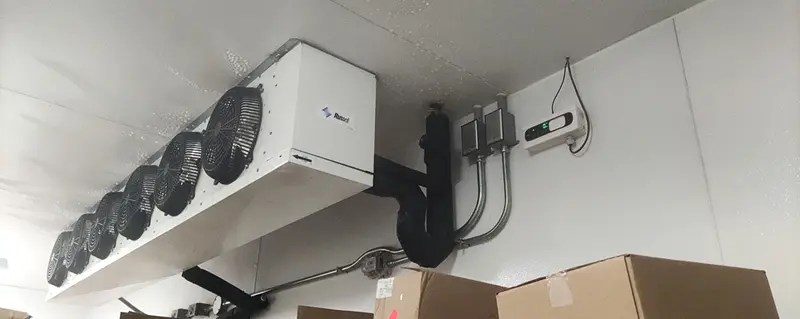
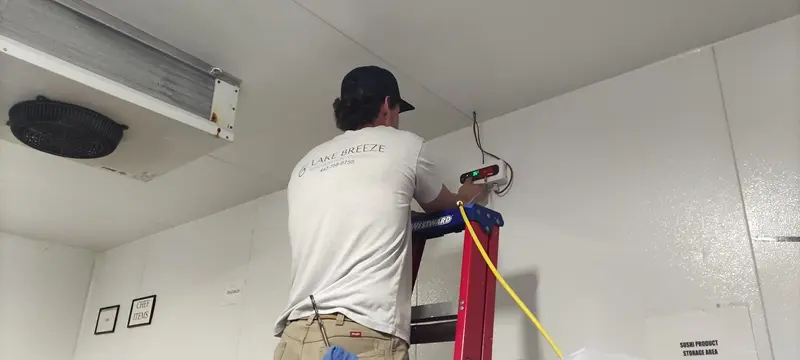
A physical leak detector identifies the exact location of a refrigerant leak, whether at a service valve, a brazed elbow, or a flex line.
Without this, technicians waste time searching blindly, leading to recurring leaks and increased costs.
Some detection systems can be configured with one sensor or expanded to include multiple sensors for detecting different gases, offering flexibility and scalability.
NDIR sensors can also be designed to detect multiple gases simultaneously by using different optical filters for each gas.
Combining indirect monitoring with physical detection creates a comprehensive refrigerant management system. Indirect monitoring flags anomalies; physical detection locates the leak for repair.
Why Location Matters?
In complex refrigeration systems with thousands of feet of tubing and numerous potential leak points, knowing the precise leak location is critical. Indirect monitoring signals a problem, but cannot pinpoint where it is.
Direct leak detection uses portable or “sniffer” sensors to measure refrigerant concentration near potential leak points, enabling targeted repairs.
Without location data, repairs are guesswork, leading to repeated leaks and wasted resources.
The AC Challenge
Indirect monitoring relies on stable parameters like liquid levels and predictable pressure-temperature relationships, common in commercial refrigeration.
Air conditioning systems lack these stable signals due to variable ambient conditions, load, and airflow, making indirect monitoring less effective for AC leak detection.
Claims that indirect monitoring applies equally to both refrigeration and AC systems are overstated. AC requires different approaches and more data to detect leaks reliably.
The 45-Day Resolution Claim: Marketing vs Reality
Vendors often claim resolving 70% of anomalies within 45 days, but:
- Anomalies are self-defined, affecting difficulty.
- “Resolved” may mean a closed ticket, not a verified repair. What does resolved mean?
- The remaining 30% unresolved leaks can still cause damage.
- No independent baseline confirms effectiveness.
Chronic low-level leaks can persist undetected beyond 45 days, eroding compliance and efficiency quietly.
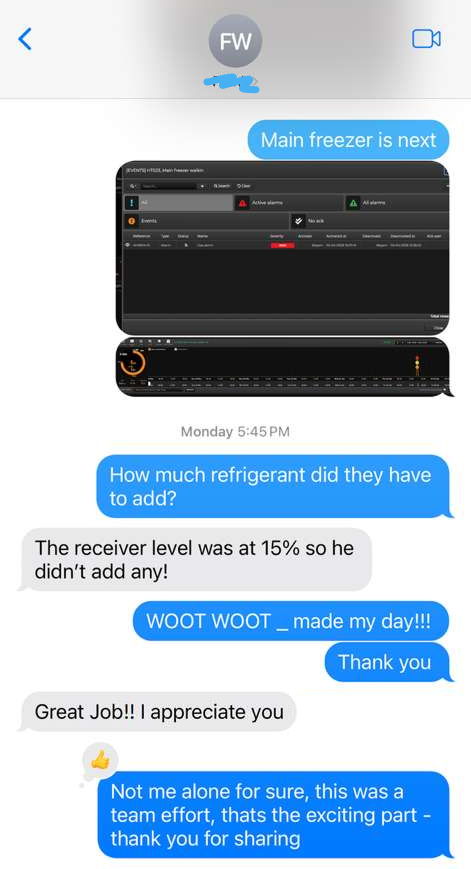
Want to send your team texts like these? Reach out today.
Best Practices for Comprehensive Refrigerant Management
We cannot overstate this: effective refrigerant management goes far beyond simply responding to alarms.
It demands a proactive, comprehensive approach that protects both operational efficiency and regulatory compliance.
Facilities that prioritize continuous monitoring and rapid leak detection consistently outperform those stuck with reactive maintenance; especially when energy efficiency and costly downtime are on the line.
Refrigerant management is also an essential part of Corporate Social Responsibility (CSR), as refrigerant leaks are classified as Scope 1 emissions and must be accurately tracked for ESG and sustainability reporting.
Continuous Monitoring for Superior Performance
Let’s be clear about this: implementing continuous monitoring with ultra-sensitive sensors enables early detection of refrigerant leaks, stopping small issues from becoming major failures.
By tracking gas concentration and system performance in real time, facility teams can quickly spot sudden changes that signal leaks or inefficiencies.
This approach doesn’t just reduce refrigerant loss; it maintains optimal energy efficiency, directly impacting cost control and sustainability goals.
Integrating automatic leak detection systems can transform maintenance from reactive to preventive, extending refrigerant life and reducing long-term costs.
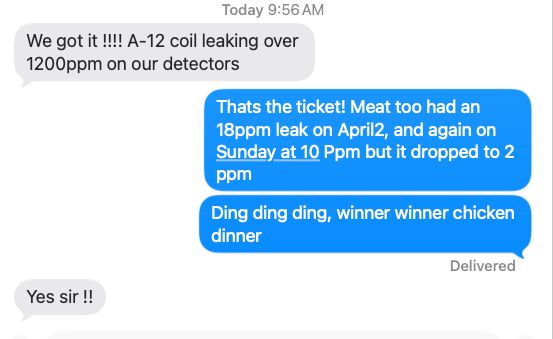
Want to send your boss good news like these? Contact Us today.
Proactive Leak Detection and Predictive Maintenance
Here’s the reality.
Combining automatic leak detection technology with predictive maintenance schedules ensures that potential leak points are addressed before they cause significant energy waste or equipment damage.
Regularly calibrating sensors and integrating them with centralized monitoring platforms allows for swift response to alerts, minimizing downtime and extending equipment lifespan.
A detection unit can be installed as a standalone or integrated device, providing comprehensive monitoring and compliance support across various facility types.
This proactive stance is essential for maintaining compliance with evolving regulatory requirements and avoiding those emergency calls that disrupt operations.
Using advanced leak detection technologies can help facilities comply with evolving ESG and regulatory standards.
Integrated Compliance and Documentation
Effective refrigerant management also means closing the compliance loop, and this is where many facilities fall short.
Leveraging software that automates documentation, such as recording when and where leaks are detected and repaired, ensures audit-ready records and supports ESG reporting.
Regulatory agencies like the EPA require specific documentation of refrigerant usage and leak repairs as part of compliance with environmental standards.
The EPA’s AIM Act regulations include limits on both production and imports of refrigerants, while Section 608 of the Clean Air Act prohibits intentional venting of all ozone-depleting substances (ODS) refrigerants.
In California, SB 253 requires large companies to publicly disclose their greenhouse gas emissions, and SB 261 mandates disclosure of climate-related financial risks.
Non-compliance with refrigerant management regulations can lead to criminal prosecution in cases of willful violations.
This integration streamlines compliance, reduces administrative burden, and provides the transparency needed across multiple facilities.

Optimizing Operational Efficiency
Facilities that adopt these best practices benefit from superior performance, reduced energy waste, and improved operational efficiency.
By maintaining a robust refrigerant management program (combining continuous monitoring, automatic leak detection, and integrated compliance support), organizations can minimize downtime, control costs, and meet both internal and external performance standards.
The financial implications of poor refrigerant management extend beyond regulatory penalties to increased operational costs.
The bottom line is this: comprehensive refrigerant management isn’t just about detecting leaks. It’s about enabling a culture of efficiency, compliance, and proactive maintenance that delivers measurable results across your entire operation.
Implementation and Integration: Making Comprehensive Management Work
Achieving effective refrigerant management isn’t just about installing a few sensors or responding to occasional alarms; it’s about building a seamlessly integrated system that delivers real-time insights and actionable data across your entire operation.
We cannot overstate the importance of combining automatic leak detection, refrigerant tracking, and continuous monitoring. When facilities proactively manage refrigerant gases, they optimize system performance and maintain energy efficiency at every stage. This is fundamental.
Automatic leak detection technology serves as the frontline defense, continuously scanning for leaks and alerting teams to even the smallest changes in gas concentration.
Here’s the truth most people don’t fully grasp: when paired with robust refrigerant tracking and centralized monitoring platforms, this approach enables facility managers to monitor system performance in real time, quickly identify inefficiencies, and take immediate action to prevent energy waste.
The technology exists. The question is whether facilities will embrace it.
Integration is key, and we mean truly integrated: connecting these technologies ensures that every detected leak is tracked, documented, and addressed as part of a comprehensive maintenance strategy.
This not only minimizes downtime and extends equipment lifespan, but also supports predictive maintenance.
Teams can anticipate issues before they escalate into costly failures. This is how smart facilities operate.
The result?
Superior performance across all systems, with reduced refrigerant loss, lower energy bills, and improved cost control.
Facilities that embrace this integrated approach to refrigerant management consistently outperform those relying on fragmented or reactive solutions.
They maintain compliance and operational efficiency while meeting the demands of today’s regulatory and sustainability standards. The choice is clear: integrate or fall behind.
📌 The right data starts with the right refrigerant leak detectors.
Business Model Considerations
Conflicts of Interest
Some vendors combine software platforms with maintenance services, creating conflicts. The platform meant to hold contractors accountable becomes managed by them, risking deprioritized issues.
Our independence (selling hardware, software, and compliance support separately) ensures unbiased service and accountability.
Avoiding Vendor Lock-In
Vendors pitching “one-stop-shop” solutions can trap customers with high switching costs.
Our approach integrates with existing refrigerant tracking systems, fitting into workflows rather than forcing rebuilds.
What Our Solution Provides
Physical Detection and Automatic Leak Detection
Technician Efficiency
- AKO leak detectors provide ground truth by detecting leaks at specific locations with precise concentration readings.
- Using NDIR sensor technology enables early detection of halogen-based refrigerants like CFCs and HFCs.
- This precision improves technician efficiency, enabling direct targeting of leaks, reducing search time and costs.
Root Cause Repair
- Physical detection allows technicians to address the actual source of the leak, not just symptoms.
- Targeted repairs reduce the likelihood of recurring leaks and associated costs.
EPA Documentation
- Regulations like the AIM Act and CARB require documenting when, where, and how leaks are detected and repaired.
- Indirect monitoring alone can not satisfy these documentation requirements.
Compliance and Documentation
Tag Wizard: Closing the Compliance Loop
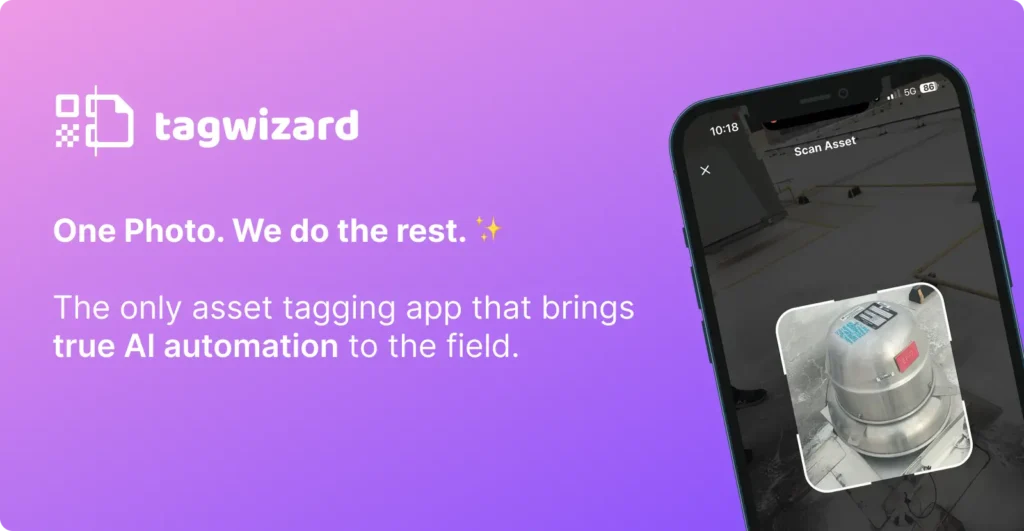
Our Tag Wizard application integrates with AKO sensor data to automate compliance documentation, closing the loop between detection and record-keeping.
📱 Download Tag Wizard
Experience Matters
With decades of industry experience and thousands of facility visits, we understand the realities of refrigerant leaks and compliance enforcement. Our expertise complements technology, ensuring practical, effective refrigerant management.
The anatomy of a Healthy Discussion
Four Traps to Avoid
1. Features Debate
Focus on solving the real problem, not just comparing features.
2. Leading with operations
Start with goals to uncover gaps about where everyone is on the journey – and understand how they got here.
3. Acknowledge the value
Indirect monitoring has a role, but clarify its limits.
4. Be humble about the Completeness of any one solution
Be honest about gaps and the need for integrated solutions.
It is always important that if, as an industry, we don’t solve the problems by working openly with all types of solution providers, then the owners and operators will have to be the integrator, a role they have little time to fulfill.
Key Questions to Reframe the Conversation
- Who services your equipment, and is there any conflict of interest?
- How quickly does your technician find and fix leaks after an alert?
- Can your current platform identify the exact leak location?
- Do you have audit-ready compliance documentation?
- How effective is your system for AC equipment?
Our Position
We are committed to long-term, honest solutions. We acknowledge that indirect monitoring works but requires complementary tools and labor investment to be fully effective.
Compliance Must Be Inevitable
Effective refrigerant management requires a chain: detection → location → repair → documentation. Indirect monitoring supports detection but cannot complete the chain alone.
Competitors Are Not Wrong, Just Incomplete
Indirect monitoring is a valuable layer but insufficient by itself. Our comprehensive stack fills the gaps to provide complete refrigerant management.
The Bottom Line
Refrigerant leaks are costly and persistent. Every pound lost erodes profits and increases energy bills. Effective refrigerant management reduces costs, extends equipment life, and ensures compliance.
Indirect monitoring signals problems early, but cannot locate leaks or satisfy documentation requirements. Physical leak detection, combined with compliance software and expert support, completes the solution.
Customers should leave conversations understanding why location and documentation matter and why AC systems require different approaches.
We win by telling the truth about this complex problem and delivering complete solutions—earned through decades of experience.