
Refrigerant leak detection, walk-in controller data, and asset documentation
A Roadmap for Not Blowing Your Cool
Let’s skip the consultant pitch.
Leak detection is how facility teams find refrigerant loss in HVAC/R systems before it leads to compressor failure, higher energy spend, avoidable service calls, or a compliance problem—and in commercial refrigeration, annual leak rates often exceed 20–25%.
If you run refrigeration or HVAC assets across grocery stores, commercial real estate, or data centers, you already know the present-tense problem: leaks don’t wait for “digital transformation,” “predictive analytics,” or “AI-powered insights.”
They show up as reactive maintenance, wasted refrigerant, unstable equipment performance, and reporting risk.
This article stays practical.
It looks at refrigerant leak detection, walk-in controller data analysis, HVAC asset monitoring, AKO NDIR sensors, and the asset documentation that supports maintenance and audits, including Tag Wizard.
It also connects the operational side to EPA, CARB, and AIM Act requirements, including how EPA HFC Technology Transition regulations under the AIM Act reshape refrigerant choices and leak management, as well as the sustainability pressure on cold-chain emissions.
A dashboard nobody checks is a treadmill that became a coat rack — good intentions, wrong job.
Here are some questions. Answer them honestly. Nobody’s looking.
When was the last time you opened the door to a mechanical room and weren’t surprised by what you found?
Not the flagship store. The one three hours away that nobody visits unless something’s already broken.
The building where the compressor has been running hot for six months, and the only reason you know is that the power bill went up.
You know which one I’m talking about.
When was the last time you took a full week of vacation and didn’t check your phone?
Not a long weekend. A week.
Without wondering if the dairy case in Store 47 is still holding temp.
Without mentally running through which techs are on call and whether they’ll actually show up.
Without that low-grade anxiety that something’s going to fail, and you won’t know about it until a store manager calls you on Thursday afternoon.
If you can’t remember the last time you trusted your systems enough to unplug for seven days, that’s not a you problem. That’s a systems problem.

Do you know which rack (or which walk-in) is going to fail next with predictive maintenance?
Not statistically. Not “racks over ten years old are higher risk.”
I mean specifically. Unit 14 in the Decatur store. The one your lead technician mentioned three times in the last year.
The one that’s been adding refrigerant every visit, but nobody’s documented a root cause because the invoice just says “topped off.”
And what about the walk-in in the back of that same store?
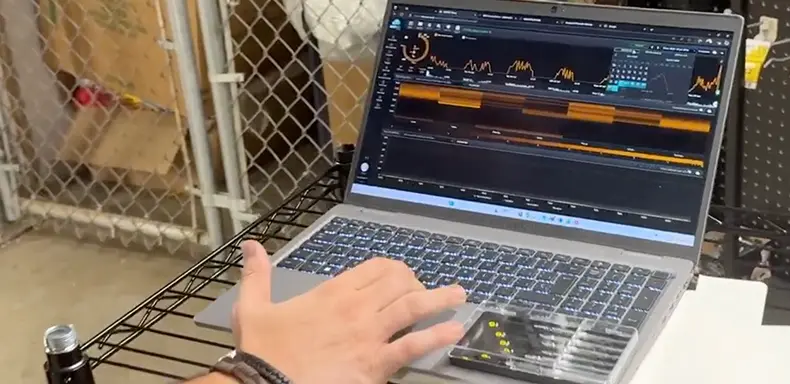
Its controller has been logging every defrost cycle, every door-open event, every compressor runtime hour for years. It has been telling a story the whole time. Has anyone read it?
How many assets in your portfolio have you walked past in the last six months?
The rooftop unit that’s been “on the list” since 2022.
The walk-in cooler in the back corner that only gets looked at when someone complains the beer’s warm — or worse, when the produce starts to turn.
The dark corners of the building where systems run until they don’t — and then it’s an emergency.
Here’s the part that stings: the walk-in already had the answer. Controllers on modern walk-in systems track compressor runtime, defrost efficiency, and temperature recovery time continuously.
When runtime starts climbing and recovery starts slowing, that’s not noise. That’s the earliest form of an alarm going off in a language nobody bothered to learn.
The industry average leak rate across commercial refrigeration is 25%. But you already knew that.
📱 Download Tag Wizard
If a rack (or a walk-in) added refrigerant three times this year and nobody documented why, would you know?
Or would it be three separate invoices from three separate service calls that nobody ever connected because they live in three different places, instead of being reviewed as a single batch, and nobody’s job is to look at them together?
📌 That’s not maintenance. That’s managed decay.
Climbing runtime and slowing recovery are early signs of a leak or a developing system problem, and ignoring them is expensive.
When was the last time you looked at a preventative maintenance contract and asked: how do we know this work actually happened?
Not the invoice. The work. The oil line inspection that’s on the checklist — was it done? With a calibrated instrument?
Or would it be three separate invoices that should really be reviewed as one batch of maintenance tasks, instead of isolated calls, because someone looked at it from six feet away, checked a box, skipped basics like checking door gaskets, and moved on with eleven more stops that day?
Nobody’s auditing this. You know that. The contract protects against liability. It doesn’t guarantee outcomes.
What percentage of your refrigeration spend is on reactive repair costs?
Be honest. How much of your budget goes to emergency calls, overtime labor, expedited parts, and product loss from failures you didn’t see coming?
If you’re running 80% reactive and 20% planned, you’re not alone. That’s the industry norm in grocery HVAC/R. But let’s call it what it is: that’s not a maintenance strategy.
That’s a firefighting budget with a PM line item that makes the spreadsheet look better.
Even if HVAC systems are serviced at least once a year, the right maintenance tasks still depend on several factors, and that baseline only helps reduce repair costs and support peak performance if the work is actually verified.
For example, checking oil lines for signs of wear or leaks should be part of the annual service. Routine door-gasket inspection matters too, because damaged door gaskets let cool air escape.
With a solid maintenance budget in place, the next step is to implement these strategies and measure their impact on your operations.
By moving from a reactive approach to a proactive, data-driven maintenance plan, you can reduce emergency costs, improve reliability, and ensure compliance.
Now, let’s explore the most effective methods for leak detection and how they can be integrated into your maintenance workflow.
Do you actually know which systems are mission-critical and which ones you could let run to failure without meaningful consequence?
A self-contained beverage cooler failure is an inconvenience.
A walk-in full of dairy or produce failing is a food safety event, a product loss event, and possibly an EPA reporting trigger, depending on charge size.
A multi-circuit rack failure is all of that plus an emergency labor call at 2 AM, a phone call you don’t want to make to your VP, and added risk when valves, liquids, and gases are involved in systems carrying dangerous contents under strict rules — especially for owners and operators of commercial AC and HVAC units who must balance performance, maintenance, and evolving refrigerant regulations.
Those assets are not the same. So why are we maintaining them like they are, instead of using leak detection and predictive maintenance — including top techniques for detecting refrigerant leaks in HVAC — to catch leaks before failure, support safer operation, and enable precise intervention that reduces unnecessary spend and repair costs?
The objective is to spot wear and leak patterns early, before they become failures.
Even if HVAC systems are serviced at least once a year, the right schedule depends on load, runtime, environment, and asset criticality, and annual service alone does not guarantee peak performance.
In one instance, cleaning the condenser coil is essential for maintaining efficiency, and regularly checking and replacing air filters is crucial for efficiency.
📌 A service invoice that says ‘topped off’ three times a year is like a Band-Aid on a bullet wound
Here’s what we know.
Your Preventive Maintenance program probably looks great on paper. It lists inspections. It schedules cleanings.
A worn door gasket might be a low-consequence failure, while pipeline leak detection is used to determine if a leak has occurred in systems carrying liquids and gases, where failures can create serious safety and compliance consequences, and the source must be accurately located from pressure-wave data, infrared thermography, fibre-optic sensing, SCADA alerts, or a measurable change at the surface.
It requires refrigerant leak detection to reduce emissions and cost. It has a vendor relationship and a signed contract.
But without enforcement, it’s fiction. Nobody’s verifying that the work happened.
Nobody’s connecting refrigerant additions to service history.
Nobody’s pulling the data that’s already sitting inside the walk-in controller to ensure preventative maintenance supports system health, performance, and the essential benefits that help equipment continue operating as expected.
Nobody’s asking the technicians (the people who actually know) where the trouble spots are.
And the people making capital decisions don’t have the data they need because the data lives in a truck, a spreadsheet, a controller nobody logs into, or nowhere at all.
That’s not a maintenance problem. That’s a systems problem.
And it’s costing you more than you think if you aren’t matching leak detection effort to operational consequence.
The tools for continuous monitoring already exist. They’re just not connected.
This is the part that surprises most facilities leaders: you don’t need to invent a predictive maintenance program from scratch. The pieces already exist. They’re just scattered.
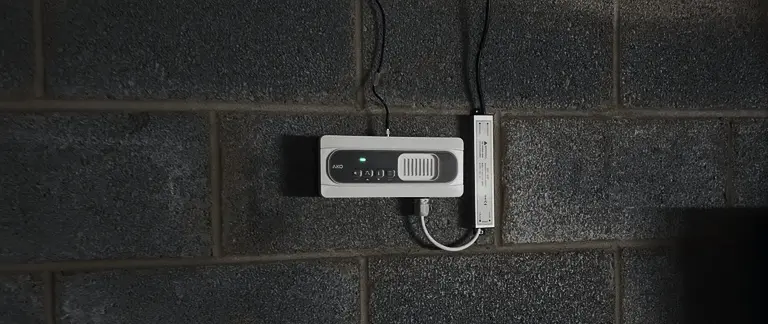
AKO refrigeration controls bring together the three data streams that matter most. AKOGAS provides purpose-built refrigerant leak detection — not a repurposed industrial gas sensor, but a system designed specifically for refrigeration applications, well-suited to refrigerant leak detection under pressure with layered strategies.
AKOCORE controllers manage the walk-ins and racks themselves, continuously logging compressor runtime, defrost cycles, temperature recovery, and pressure — the exact data points that reveal developing leaks before a detector ever alarms and that go far beyond traditional ASHRAE 36 HVAC control sequence best practices.
Preventative maintenance only delivers real benefits when inspections, cleanings, and leak checks are actually done, because that work helps HVAC systems operate efficiently and last longer; at least annual service is the minimum baseline, not proof that a program will ensure optimal performance.
AKODATA layers in wireless temperature and humidity monitoring across the store, and AKONET.Cloud ties all of it into one platform instead of three disconnected systems that nobody cross-references.
That means the walk-in controller isn’t just running the box. It’s a diagnostic instrument whose display can help teams spot anomalies early — if someone’s reading it.
📌 Sensor data sitting in a queue for three weeks is like a certified letter nobody signed for — technically delivered, functionally ignored.
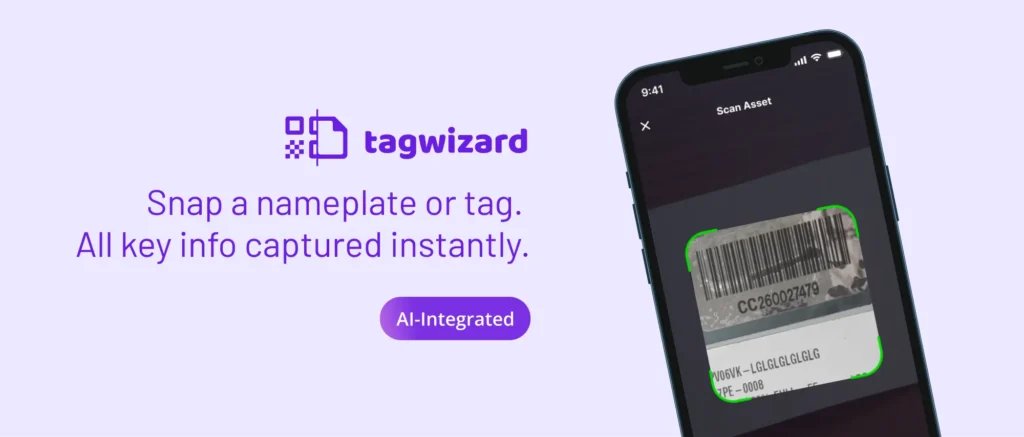
Tag Wizard solves the other half of the problem: knowing what you actually have.
Most facilities teams can’t answer basic questions about their own equipment (model numbers, refrigerant charge, install date, service history, valves, and installation details) because that information was never captured in a usable format.
Tag Wizard turns a 15-minute manual documentation process into a 90-second digital workflow, reducing reliance on manual files and improving productivity, so every asset in a store (every rack, every walk-in, every rooftop unit) gets a real record.
You cannot rank assets by consequence, and you cannot prioritize leak detection investment if you do not know what you own.
Put together:
- Tag Wizard tells you what you have.
- AKOCORE and AKODATA support continuous monitoring across a wide range of operating conditions and help systems operate with stronger performance in the real environment.
- AKOGAS uses purpose-built technologies with the sensitivity to detect refrigerant the moment it makes contact where it should not, helping reduce losses and improve day-to-day operation — the same outcomes targeted by bridging technology and service to solve refrigerant leaks.
That’s not three separate purchases. That’s one connected picture of every asset in your portfolio — visible in one place, for the first time.
Data without a human is just noise. Slow response is just a different kind of failure.
This is the part of Refrigerant Leak Detection as a Service that most vendors skip, because it’s the hardest part to build — and the only part that actually determines whether the technology pays for itself.
At AKO, this wasn’t theoretical. It came out of years of field research, firsthand experience, and expert insights from watching sensor deployments succeed or quietly fail.
The pattern was always the same: the hardware worked.
The data was accurate. And it sat unread — a classic example of trust gaps in refrigerant leak detection programs.
A controller logging runtime drift for three weeks before anyone looked at it wasn’t predictive maintenance — it was a very expensive way of confirming what had already gone wrong after the fact.
This is where most “smart” refrigeration programs quietly fail. The sensors are installed.
The dashboards exist. But nobody owns the job of actually reading them on a defined cadence, and nobody is accountable for how fast a flagged anomaly turns into a work order.
LDaaS closes that gap by design.
Refrigerant leak detection services for grocery, data centers, and commercial real estate work only when a human is in the loop — someone whose job is to read the AKOCORE runtime trend, the AKODATA temperature curve, the AKOGAS alert, and decide what it means for that specific asset.
Not an algorithm alone. Not a dashboard that nobody checks.
A person who knows the difference between a Tuesday afternoon defrost anomaly and a compressor that’s six weeks from failure.
And once that person sees something — the clock matters. In too many programs, an anomaly gets flagged, sits in a queue, and doesn’t reach a technician for days. Sometimes weeks.
By the time someone responds, the incremental refrigerant add has already happened, or the compressor has already seized, or the product in the case has already turned.
The standard has to be hours, not days.
A flagged anomaly on a Tier 1 asset (a rack, a high-consequence walk-in) should reach a decision-maker and generate a dispatch or a diagnostic call within hours of being detected. Not at the next scheduled service visit.
Not when someone gets around to checking the dashboard. Hours.
📌 A PM contract without enforcement is like a gym membership in January — it exists, it costs money, and by March nobody’s using it.
That means building a real escalation path: who reviews flagged data, how often, and what happens in the first sixty minutes after something looks wrong.
It means AKONET.cloud alerts are going to a specific person with a specific responsibility — not a shared inbox that becomes a graveyard for warnings.
And it means focusing on effective truck rolls. A truck roll driven by a flagged runtime trend or a documented AKOGAS alert (where the technician arrives already knowing what to look for) is effective.
A truck roll driven by a random schedule, a vague complaint, or a failure that’s already happened is not.
The measure of a mature LDaaS program isn’t how many service visits occur.
It’s what percentage of those visits were triggered by real data and resolved the actual problem on the first trip.
The technology tells you something is happening. The human-in-the-loop decides what it means.
The response time and the effectiveness of the truck roll it produces determine whether that insight saved you money — or arrived just in time to explain what already went wrong.
📌 A leak detector nobody reads is a smoke detector with the battery pulled out.
This brief is the science.
Not a seance. Not a pitch. Not a promise that AI will solve everything by Q3.
It’s a three-stage roadmap for moving from where you are (reactive, overwhelmed, hoping nothing fails while you’re on vacation) to something measurably better. Not perfect. Better.
Stage 1 — Know what you have.
Tag every asset with Tag Wizard, so you have a real inventory instead of a guess. Walk the buildings.
Ask the technicians. Pull the runtime and defrost data your AKOCORE-controlled walk-ins have already been collecting for free.
Rank assets by what failure actually costs.
Stage 2 — Build accountability.
Deploy AKOGAS leak detection on your highest-consequence assets.
Make controller data pulls a required part of every service visit — not an afterthought.
Track refrigerant additions by asset inside one system, not three disconnected invoices. Pilot AKONET.Cloud reporting with your best people before rolling it out fleet-wide.
Stage 3 — Expand what works.
Measure year-over-year movement — not against perfection, but against last year.
Let low-consequence assets run to failure. Invest in AKO’s controller and detection technology where the consequences demand it.
Stop chasing 100% predictive maintenance across a fleet where 30% coverage is the right answer.
Refrigerant loss is the canary in the coal mine for refrigeration. It means the compressor’s working harder. Component wear is accelerating.
Energy intensity is rising. Capacity is falling.
On a walk-in with an AKOCORE controller, you often don’t even need to wait for the leak alarm — runtime trending, defrost cycle drift, and slowing temperature recovery tell you first, especially when paired with specialized refrigerant leak detector HVAC tools.
As part of every service visit, pull the controller data and document any visible damage tied to the leak or overall equipment condition; that step is crucial to catching issues before they get more expensive.
Catch it there, and you don’t pay for it later.
The success metric is simple.
If an asset with AKOGAS leak detection (or a walk-in with an AKOCORE controller that’s actually being monitored) added little or no refrigerant over twelve months, that’s success.
If it did add gas, it was from a documented catastrophic event — not three incremental adds that nobody connected, and not a walk-in that had been quietly degrading for months while its own controller logged every step of the decline.
No slow bleeds. No surprises. No “We didn’t know it was that bad.”
Frequently Asked Questions
What is refrigerant leak detection, and why does it matter for commercial refrigeration?
Refrigerant leak detection identifies refrigerant loss in HVAC/R systems before it causes compressor failure, energy waste, or regulatory exposure under EPA Section 608 and the AIM Act.
In grocery and commercial refrigeration, industry-average leak rates exceed 20–25% annually, making early detection a direct driver of cost and reliability — and accurate asset tagging with tools like Tag Wizard for compliance-ready asset management is what keeps those records auditable.
How does a walk-in cooler controller help predict maintenance needs?
Modern walk-in controllers such as AKOCORE continuously log compressor runtime, defrost cycle efficiency, and temperature recovery time.
Rising runtime and slowing recovery are early indicators of refrigerant loss or mechanical wear — often visible weeks before a fixed leak detector would alarm or a technician would notice on a routine visit.
What is Tag Wizard, and how does it support predictive maintenance?
Tag Wizard is an AI-powered mobile asset documentation platform that captures equipment records (model, refrigerant charge, install date, service history) in under 90 seconds per asset.
It gives facilities teams a complete, accurate inventory, which is the foundation for consequence-based maintenance ranking and EPA compliance recordkeeping.
📱 Download Tag Wizard
What is the difference between preventive, predictive, and reliability-centered maintenance?
Preventive maintenance is schedule-based. Predictive maintenance uses condition data (like AKOCORE runtime and defrost trends) to forecast failure before it happens.
Reliability-centered maintenance (RCM) is a decision framework that matches strategy to failure consequence, applying predictive methods where consequence justifies it and accepting planned run-to-failure where it doesn’t.
How much refrigerant leak detection coverage does a facility actually need?
There is no universal answer. Coverage should be proportional to consequence — high-charge, high-consequence assets (multi-circuit racks, large walk-ins) warrant AKOGAS detection and AKOCORE monitoring; low-consequence, easily replaceable units may be appropriate candidates for run-to-failure.
Most organizations should expect 20–30% predictive coverage to be a realistic and effective target, not 100%.
But in our experience, the average grocer only has about 1-3% coverage due to the way detection is deployed.
📌 Dashboards are like the spare key under the mat — everyone knows it’s there, nobody actually uses it until something’s already gone wrong.
So here’s where you come in.
If you’re the unicorn who’s already doing all of this — if your Preventive Maintenance contracts are enforced, your refrigerant additions are tracked to root cause, your walk-in controllers are actually being read on every visit, your technicians are part of capital planning conversations, and you actually took a week off last year without checking your phone — we need you.
But if you’re human like the rest of us — if your best technician knows which rack is going to fail and nobody’s asked him, if you’ve got a walk-in whose AKOCORE controller has been quietly logging a slow decline that nobody’s looked at, if you don’t have a real inventory of your own equipment, if your service invoices live in three different systems and nobody’s connecting them — then join the movement.
Because nobody’s doing this alone. We’re all in this together.
And the only way forward is to stop hoping the PM schedule will save us and start building systems that actually measure whether it’s working — starting with the data we already have sitting inside the equipment we already own.
Here’s how we start, on us:
Or a free leak detection scan of one property.
We’ll walk it with you. No sales deck, no obligation — just an honest read on where you stand right now, using the same consequence-ranking approach in this brief.
Free Tag Wizard access for one store.
Tag every asset yourself in under 90 seconds each and see what a real inventory looks like — no guessing, no spreadsheet archaeology.
If you don’t already know exactly what you own, this is where the roadmap actually begins.
Pick one. Either gets you real data instead of another Preventive Maintenance schedule you’re hoping is working.
Or if you’d rather talk through it first — call us. We’ve been walking mechanical rooms for 32 years.
We know what the dark corners look like. We know what the invoices don’t say.
And we know how to connect Tag Wizard’s asset data, AKO’s controller and leak detection intelligence, and the people who know the buildings best to the people who decide.