
Refrigerant leak detection equipment is essential for accurately detecting leaks, preventing costly HVAC system failures, and boosting energy efficiency.
This guide is designed for HVAC professionals and facility managers seeking to understand, select, and use refrigerant leak detection equipment effectively.
This article covers the main types of refrigerant leak-detection equipment, their key features, how to choose the right tool, and best practices for optimal use.
📌 Whether you are an HVAC technician, facility manager, or maintenance professional, this comprehensive guide will help you ensure your HVAC system runs smoothly and efficiently.
Main Types of Refrigerant Leak Detection Equipment
Refrigerant leak detection equipment includes several main types, each suited for different applications and sensitivity requirements.
Below is a summary table outlining the primary types and their uses:
| Type of Detector | Primary Use |
|---|---|
| Electronic Detectors | Detect refrigerant gases electronically for fast, accurate leak identification |
| Ultrasonic Detectors | Listen for high-frequency sounds produced by escaping gas from pressurized systems |
| Fluorescent Dyes | Added to the system; leaks glow under UV light for visual identification |
| Bubble Solutions | Applied to suspected areas; bubbles form at leak sites for easy detection |
Definitions of Key Terms
Electronic Detectors
Devices that sense refrigerant gases electronically, providing quick and accurate leak detection.
Ultrasonic Detectors
Instruments that detect high-frequency sounds generated by gas escaping from pressurized systems.
Fluorescent Dyes
Special dyes are introduced into the HVAC system; leaks are revealed by glowing under ultraviolet (UV) light.
Bubble Solutions
Soapy solutions are applied to joints or suspected leak areas; bubbles form where refrigerant escapes.
These types of refrigerant leak detection equipment are available for different applications and required sensitivity levels, ensuring there is a suitable option for every HVAC maintenance scenario.
Key Takeaways
- Refrigerant leak detection equipment is essential for maintaining HVAC system efficiency, preventing equipment failures, and minimizing environmental impact.
- Recent advancements in detection technology, such as electronic, infrared, and wireless systems, enhance accuracy and enable real-time monitoring for effective refrigerant management.
- Advanced refrigerant leak detection equipment can also detect combustible gases, enhancing its versatility and safety.
- Regular maintenance, proper technician training, and adherence to safety codes are crucial for optimizing the performance of refrigerant leak detection systems.
Importance of Refrigerant Leak Detection Equipment
Reliable refrigerant leak detection equipment reduces downtime and maintains efficient refrigerant monitoring.
Using refrigerant leak detectors properly can significantly boost HVAC system efficiency and safety. Recent innovations in refrigerant leak detection technology emphasize safety and efficiency, including automated systems that react to detected leaks.
Contemporary refrigerant leak detection solutions often integrate with broader HVAC monitoring systems for enhanced safety and compliance management.
📌 Selecting the appropriate leak detector is crucial for effective refrigerant management.
Preventing Equipment Failures
- Detecting leaks promptly can greatly reduce the risk of catastrophic equipment failures.
- Traditional methods like using soapy water to detect leaks are less reliable, especially for small leaks, compared to modern electronic detectors.
- Accurate leak detection helps prevent costly repairs and potential environmental damage.
- Proactive refrigerant leak detection enables timely repairs and proper refrigerant recharging, preventing complete system failure.
- Small refrigerant leaks can create tiny holes, causing slow leaks that gradually affect performance.
Advanced sensors now enable real-time performance monitoring and leak detection by communicating directly with HVAC systems. Electronic refrigerant leak detectors offer efficient, reliable, and accurate leak detection.
Experienced technicians are more adept at identifying and repairing refrigerant leaks, safeguarding both the environment and system performance.
Enhancing Energy Efficiency
- Modern refrigerant leak detection technologies integrate with HVAC systems for continuous monitoring and improved operational reliability.
- Effective leak detection can significantly reduce energy costs by improving system efficiency.
- Wireless leak detection devices enable real-time monitoring and alert systems, enhancing operational efficiency.
- Wireless leak detectors facilitate remote monitoring, allowing users to receive alerts on their mobile devices.
Environmental Protection
- Refrigerant leaks lead to waste and hinder repairs on older equipment.
- Monitoring refrigerant leaks is key to minimizing harmful environmental impacts from refrigerant emissions.
- Service technicians must ensure refrigerants remain safe in closed-loop systems and prevent leaks.
- Adhering to refrigeration safety codes consistently in refrigeration systems ensures safe and effective leak detection procedures.
- Following safety codes prevents hazardous situations and ensures compliance with legal requirements during refrigerant leak detection.
📌 With an understanding of why leak detection is important, let’s explore the various methods available.
Methods of Leak Detection
Refrigerant leak detection is crucial in maintaining refrigeration systems’ efficiency and safety.
Several methods of leak detection exist, each with its own advantages and disadvantages. The main methods include:
Electronic Detection
Uses sensors to electronically detect the presence of refrigerant gases.
Ultrasonic Detection
Identifies leaks by detecting high-frequency sounds emitted by escaping gas.
Fluorescent Dye Detection
Involves adding a fluorescent dye to the system and using UV light to spot leaks.
Bubble Solution Detection
Applies a soapy solution to suspected areas; bubbles form at leak sites.
Each method offers unique benefits and is suited to different applications and sensitivity requirements.
📌 Now that we’ve covered the general methods, let’s look at the specific types of refrigerant leak detectors in more detail.
Electronic Refrigerant Leak Detectors
Electronic leak detectors improve energy efficiency and offer cost savings by enabling early leak detection, reducing the risk of refrigeration failure.
Electronic leak detectors operate by probing for potential leaks and providing alerts (audible or visual) when a leak is found.
Infrared leak detectors utilize infrared light that is absorbed by leaking refrigerant, allowing for precise detection.
The PGM-IR portable refrigerant monitor is equipped with advanced features, including a built-in library of over 60 refrigerants and data logging for up to 200 readings.
Different sensor technologies used in electronic leak detectors include heated diode sensor technology, which is effective for detecting halogen-based refrigerants.
Fluorescent Dye Leak Detectors
Fluorescent dye leak detectors use a fluorescent agent that reveals leak points under UV light. These detectors are especially effective in identifying small leaks that other methods may miss.
Ultrasonic Leak Detectors
Ultrasonic leak detectors identify leaks by detecting high-frequency sounds emitted by escaping gas from pressurized systems.
The integration of leak detection technology with HVAC systems allows for automated responses to leaks, improving system efficiency.
📌 With a clear understanding of the main types of leak detection equipment, let’s move on to how to choose the right refrigerant leak detector for your needs.
Choosing the Right Refrigerant Leak Detector
Reliable detection systems are crucial for optimizing HVAC performance and ensuring environmental safety. Recent advancements have led to more sensitive electronic leak detectors capable of identifying smaller leaks than traditional methods.
Advancements in refrigerant leak detection now involve smart sensors that enhance accuracy and response times.
When choosing refrigerant leak detection tools, consider the device’s durability and maintenance needs. Also, consider the specific needs of your HVAC system and the types of refrigerants in use.
Durability and Reliability
- A solid warranty and responsive customer support can greatly enhance the purchasing experience and ensure long-term satisfaction with the equipment.
- A robust warranty and accessible customer support are key factors to consider before making a purchase.
📌 After selecting the right equipment, it’s important to use it effectively. Let’s review best practices for using refrigerant leak detection equipment.
Best Practices for Using Refrigerant Leak Detection Equipment
Durable leak detectors are vital for consistent performance in challenging work environments.
Reliable detectors often include features like battery longevity and protective casings, enhancing their usability in demanding environments.
Best Practices
- Understand the operational features of each tool for effective use.
- Maximize detector sensitivity to allow detection of refrigerant leaks as small as 1 gram per year.
- Use a systematic approach to leak detection to improve accuracy and reliability.
Regular Maintenance and Calibration
- Regular maintenance and calibration of leak detectors ensure their accuracy and reliability in detecting refrigerant leaks.
- Accurate detection is crucial to prevent false positives caused by environmental contaminants affecting some detectors’ sensitivity.
📌 Stop Refrigerant Loss Today.
Proper Training for Technicians
- Training technicians on refrigerant gas behavior aids in effectively locating leaks, as refrigerant tends to settle in lower areas.
- Comprehensive training for technicians on specific equipment is crucial for effective leak detection.
- Technicians should receive specialized training to understand different refrigerant detection methods and tools.
- Hands-on training helps technicians become proficient in accurately interpreting detection results.
Following Refrigeration Safety Codes
- The Chillgard 5000 aids in predictive maintenance and diagnostics, helping to adhere to safety regulations.
- Compliance with safety codes is crucial for the safe operation of refrigeration systems.
📌 With best practices in mind, let’s examine the latest innovations in refrigerant leak detection technology.
Innovations in Refrigerant Leak Detection Technology
Recent advancements in refrigerant leak detection have aimed at improving environmental sustainability through more efficient detection methods.
Emerging technologies offer significant enhancements in the accuracy and speed of detecting refrigerant leaks.
Infrared Sensor Technology
- The Chillgard 5000 Refrigerant Leak Monitor uses photoacoustic infrared technology to detect refrigerant leaks.
- Devices like the MGS-250 use advanced infrared sensing technology, which is immune to cross-sensitivities from both combustible gases and toxic gases, enhancing its reliability.
- The MGS-250 can be configured as a broadband sensor for gross leak detection or as a gas-specific version for targeted applications.
- Modern infrared sensors offer high sensitivity and specificity for accurate refrigerant leak detection.
Wireless and Smart Leak Detectors
- Wireless and smart leak detectors have emerged as innovative HVAC maintenance solutions, utilizing advanced technology for enhanced detection capabilities.
- These detectors often feature real-time monitoring, mobile connectivity, and automatic alerts, setting them apart from traditional leak detectors.
- Wireless and smart leak detectors offer improved accuracy, enhanced ease of use, and remote monitoring capabilities.
📌 Integrating these advanced technologies into HVAC systems ensures better efficiency and safety, leading to cost savings and reduced environmental impact.
Integration with HVAC Monitoring Systems
- The MGS-460 sensor triggers audio-visual alarms and integrates seamlessly with gas detection systems, enabling real-time monitoring.
- Monitoring temperature fluctuations is crucial for maintaining the accuracy and reliability of integrated leak detection systems.
- Integrating leak detection technologies with HVAC monitoring systems boosts the overall safety and efficiency of HVAC operations.
- Integrated leak monitoring systems provide timely alerts, reducing potential damage and ensuring compliance with safety regulations.
- Future advancements are likely to further enhance the integration of leak detection systems with HVAC technology, promoting smarter and safer buildings.
📌 With these innovations in mind, let’s look at how to make an informed purchase.
Purchasing Guide for Refrigerant Leak Detection Equipment
Types of refrigerant leak detection equipment include:
- Fixed gas detectors – Advanced monitoring systems
- Portable leak detectors
Budget Considerations
- When purchasing refrigerant leak detection equipment, balancing cost and quality is crucial to meet budget constraints while ensuring reliability.
- Checking brand reputation and customer reviews provides insights into the performance and reliability of leak detection equipment, aiding in making a quality purchase.
- Considering warranty and customer support is essential, as these factors affect long-term satisfaction and service continuity for the leak detection equipment.
Brand Reputation and Reviews
- Brand reputation is critical as it reflects reliability, quality, and performance, influencing customer trust and loyalty.
- Customer reviews provide insights into user experience, helping potential buyers gauge the effectiveness and reliability of equipment.
- Positive reviews enhance a brand’s reputation and increase confidence, while negative reviews deter potential customers and raise concerns about product quality.
Warranty and Customer Support
- A warranty is crucial as it assures customers of the quality and reliability of the refrigerant leak detection equipment.
- A strong warranty protects investors from financial losses due to faulty equipment, making it a critical factor in purchasing decisions.
- Accessible customer support ensures users can get help quickly and efficiently, significantly impacting the effectiveness of leak detection equipment.
- Good customer support enhances user experience by providing technicians with guidance on troubleshooting and equipment usage.
- Brands with better customer support often receive more positive reviews, influencing potential buyers’ choices.
📌 With purchasing considerations addressed, let’s summarize the key points.
Fixed Refrigerant Leak Detectors: Continuous Protection Where It Matters Most
While portable detectors are invaluable for periodic inspection and service calls, fixed leak detectors provide something portable tools cannot: continuous, unattended monitoring of the spaces where refrigerant leaks are most likely to occur and most costly to ignore.
Machinery rooms, walk-in coolers, compressor rooms, and sales floor cases all benefit from permanent sensor installations that watch around the clock — catching slow-developing leaks between service visits and providing the documentation trail that EPA and state-level compliance programs increasingly require.
Fixed detectors are generally categorized by their underlying sensor technology, each with meaningful differences in performance, maintenance demand, and application fit:
Metal Oxide Semiconductor (MOS)
The most widely deployed fixed sensor type is due to its low upfront cost. MOS sensors react to refrigerant presence by measuring changes in electrical resistance across a metal oxide element.
They are adequate for safety alarming at high concentrations but are prone to false alarms from humidity, cleaning chemicals, and other environmental variables, and their sensitivity degrades meaningfully over time without frequent recalibration.
Catalytic Bead (Pellistor)
Primarily used for combustible gas detection, catalytic bead sensors work by measuring heat generated when a gas oxidizes on a heated element.
They have limited application in refrigerant-specific monitoring and are generally not the right tool for HFC or HFO refrigerant detection.
Electrochemical
Best suited for toxic gas detection: carbon monoxide, ammonia, and similar hazards.
Electrochemical sensors are highly specific to their target gas but are not well matched to the broad refrigerant gas families common in commercial HVAC and refrigeration applications.
Non-Dispersive Infrared (NDIR)
The performance standard for refrigerant-specific fixed detection.
NDIR sensors measure refrigerant concentration by detecting infrared light absorption at wavelengths unique to each refrigerant molecule, delivering superior sensitivity, selectivity, and long-term stability compared to all other fixed sensor technologies.
For facilities where refrigerant loss, energy efficiency, and regulatory compliance are operational priorities (not just safety checkboxes), NDIR is the only fixed sensor technology worth serious consideration, which brings us to what AKO has built around it.
AKO and the AKOGAS NDIR Fixed Leak Detector: A New Standard in Refrigerant Monitoring
Not all fixed leak detectors are created equal.
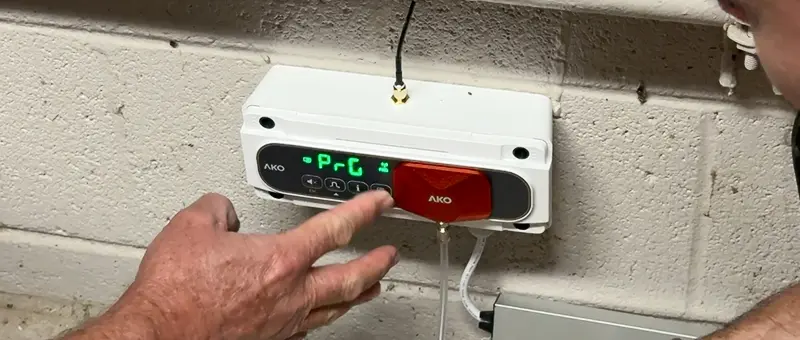
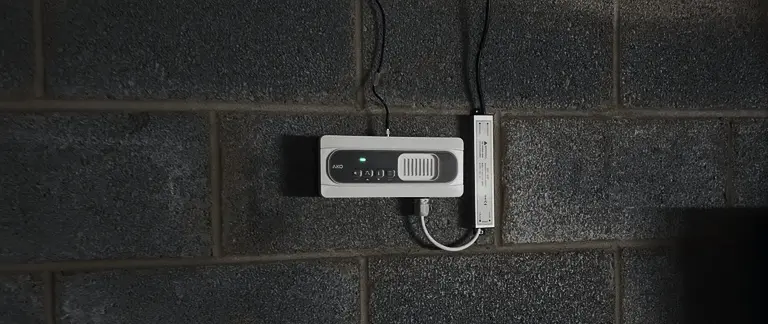
While the market offers a range of wall-mounted sensors that will tell you when a room has become dangerous, AKO has taken a fundamentally different approach — building a fixed detection platform that not only protects people but also actively protects your refrigerant charge, your operating budget, and your compliance standing.
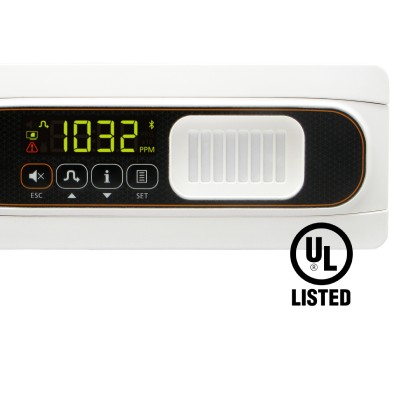
The result is the AKOGAS NDIR sensor system, one of the most advanced fixed leak detection solutions available today.
Why NDIR Changes Everything
The foundation of AKO’s performance advantage is Non-Dispersive Infrared (NDIR) sensor technology.
Here’s the physics: refrigerant molecules absorb infrared light at specific wavelengths unique to each gas.
When an infrared light source emits radiation through an air sample, the degree to which those specific wavelengths are absorbed correlates directly (and precisely) with the concentration of refrigerant present.
The sensor measures what’s actually there, not a proxy signal that can be confused by humidity, cleaning chemicals, cardboard off-gassing, or the dozens of other environmental variables that plague older Metal Oxide Semiconductor (MOS) sensor technology.
The practical difference is significant:
Detection threshold
NDIR reliably detects refrigerant concentrations down to 5 ppm — compared to 50 ppm or higher for MOS-based sensors.
Leaks that have been costing you money for months are invisible to MOS technology; NDIR catches them early, when repair costs are minimal.
Selectivity
Because NDIR targets specific infrared absorption wavelengths unique to refrigerant molecules, cross-sensitivity false alarms are dramatically reduced — typically by an order of magnitude compared to MOS alternatives.
Stability
NDIR sensors don’t degrade the way MOS sensors do. There’s no chemical reaction consuming the sensor element over time.
Drift rates stay under 2% annually, meaning calibration intervals extend from every six months to every two to three years — a significant maintenance cost reduction in multi-location operations.
From Parts Per Million to Business Intelligence
Where AKO truly separates itself from the field is in what happens after the sensor detects refrigerant.
Most fixed detectors stop at concentration — they tell you “there’s gas in the room.”
AKO’s patented methodology, protected under European Patent EP 3 751 209 A1, translates that raw concentration data into three actionable business indicators:
LPI (Leak Potential Index)
Expresses leak severity in pounds per year and estimated cost per year — numbers a facility manager or CFO can act on immediately.
LCI (Leak Charge Index)
Calculates the percentage of system charge being lost annually, giving technicians and compliance teams a precise picture of refrigerant loss rate.
TGCI (Time-Gas Concentration Index)
Tracks hourly concentration patterns to reveal when leaks occur — identifying whether a leak is tied to a specific compressor cycle, defrost event, or operational condition.
This translation layer (from “53 ppm” to “this is costing you $16,350 per year”) is the bridge between detection and decision-making.
It’s the difference between a sensor that sounds an alarm and a system that drives action.


Proven in the Field
AKO USA deployed the AKOGAS NDIR system across 47 U.S. installations spanning all four regions, using a rigorous six-month evaluation protocol: free installation, performance measured against actual refrigerant consumption records, and no marketing pressure on participants.
The goal was to catch leaks early enough that facilities could repair before needing to add refrigerant at all — eliminating the charge-and-ignore cycle that drives up both operating costs and EPA compliance risk.
The results consistently validated the technology’s sensitivity advantage.
In one documented Wisconsin supermarket installation, the AKOGAS NDIR system detected a sustained 53 ppm concentration within 48 hours of commissioning, a leak that the facility’s existing operational MOS detector registered as normal with no alarm.
The system had been quietly costing that operator significant refrigerant losses annually, completely undetected.
Built for Fixed Installation, Designed for Integration
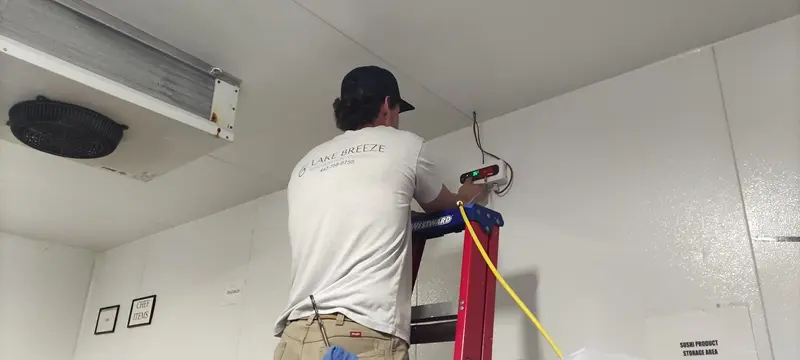
The AKOGAS platform is purpose-built for permanent fixed installation across machinery rooms, walk-in coolers, sales floor cases, and any refrigerated space requiring continuous monitoring.
Multiple sensors can be deployed in array configurations, providing both redundancy for reliability and spatial data for leak triangulation, helping technicians identify not just that a leak exists, but where to find it.
The system integrates with building management systems (BMS) and HVAC controls, enabling automated responses to detected leak events (from alerts to equipment shutdowns) and supports the kind of continuous compliance recordkeeping that EPA’s AIM Act and state-level regulations increasingly require.
For HVAC professionals and facility managers who are serious about refrigerant management (not just regulatory minimum compliance, but operational excellence), the AKO AKOGAS NDIR fixed detection platform represents the current state of the art.
It’s not a smarter alarm.
It’s an entirely different category of tool.
Summary
Refrigerant leak detection is a critical aspect of HVAC maintenance that cannot be overlooked.
The right leak detection equipment ensures system efficiency, cost savings, and environmental protection. Main types of refrigerant leak detection equipment include:
- Electronic detectors
- Ultrasonic detectors
- Fluorescent dye detectors
- Bubble solutions
Proper use and maintenance, along with adherence to refrigeration safety codes, are essential for maximizing the effectiveness of these detectors.
Innovations in technology continue to enhance the precision and ease of use of leak detection equipment, making it an indispensable tool for HVAC technicians.
Investing in reliable, high-quality leak detection equipment is not just a smart financial decision but also a crucial step towards sustainable and efficient HVAC operations.
Frequently Asked Questions
What types of refrigerant leak detectors are available?
Refrigerant leak detectors come in several types, including portable, fixed, and multi-zone systems, each designed to meet specific monitoring requirements.
Selecting the appropriate type depends on your particular application and environment.
How do electronic refrigerant leak detectors work?
Electronic refrigerant leak detectors operate by sensing the presence of refrigerants in the air and alerting the user with audible or visual signals upon detecting a leak.
This immediate feedback allows for timely intervention and maintenance.
Why is regular maintenance and calibration of leak detectors important?
Regular maintenance and calibration of leak detectors are crucial to ensure their accuracy and reliability in identifying refrigerant leaks.
Consistent upkeep prevents costly leakage issues and enhances operational safety.
What should I consider when choosing refrigerant leak detection equipment?
When choosing refrigerant leak detection equipment, it is essential to consider durability, maintenance requirements, the specific needs of your HVAC system, and the types of refrigerants you are using.
Additionally, considering the operating temperature range of the equipment is important to ensure it functions accurately in different environments.
Prioritizing these factors will ensure effective and reliable leak detection.
How do wireless and smart leak detectors benefit HVAC maintenance?
Wireless and smart leak detectors enhance HVAC maintenance by providing real-time monitoring and automatic alerts, leading to improved accuracy and ease of use.
This proactive approach allows for remote monitoring, ultimately reducing the risk of damage and ensuring system efficiency.
–📌 Protect Your System. Cut Costs.