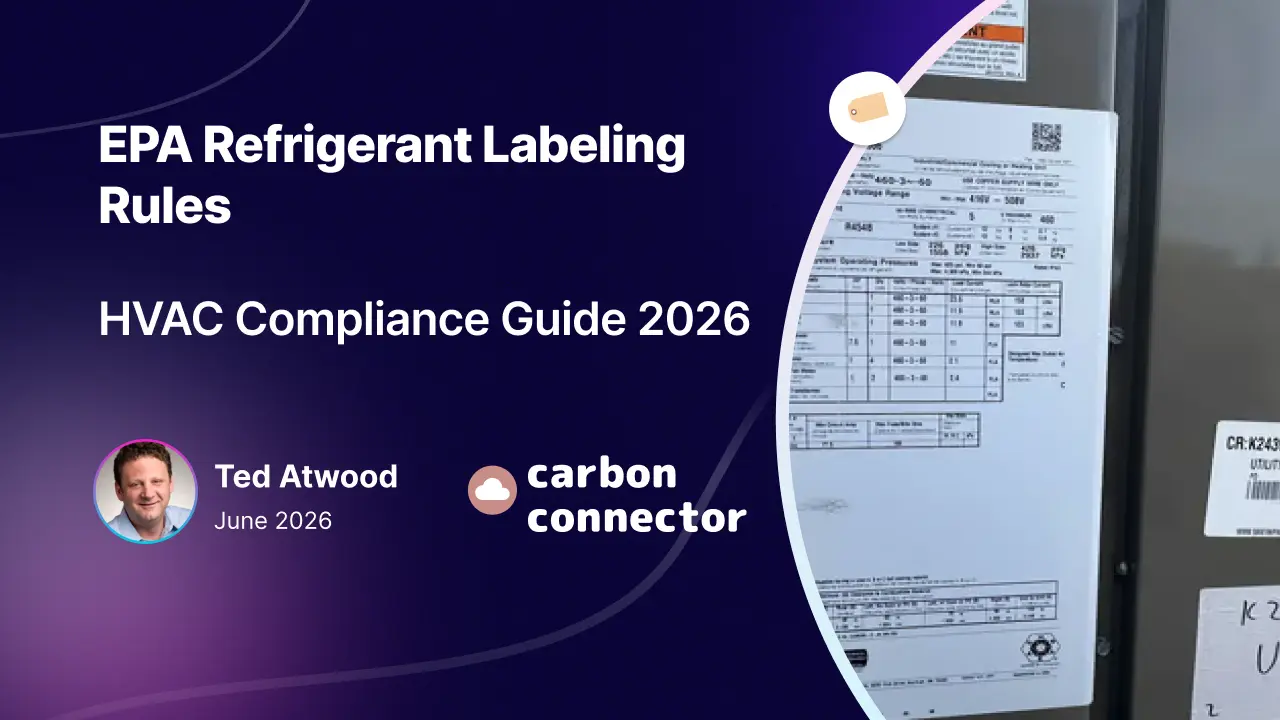
In May 2026, the EPA finalized the Technology Transitions Reconsideration Rule under the AIM Act, providing targeted regulatory relief to industry.
This update relaxes interim Global Warming Potential (GWP) limits, extends certain compliance deadlines, and lifts stringent installation deadlines for older HVAC equipment to reduce operating and capital costs.
Notably, the installation deadline for pre-2025 residential and light commercial air conditioning units was removed, allowing continued use of older inventory.
Additionally, GWP limits for supermarket systems and cold storage warehouses were temporarily relaxed, and some deadlines for industrial chillers and semiconductor equipment were extended.
However, these adjustments do not alter the overall trajectory of the phasedown.
The final compliance dates remain unchanged, and key responsibilities such as leak detection, accurate and durable equipment labeling, and refrigerant tracking continue to be strictly enforced.
The phase-down schedule and overarching goals to reduce HFC production and consumption by 85% by 2036 remain firmly in place.
Thus, while the reconsideration rule provides temporary flexibility to ease industry transition costs, it maintains the pattern of steady progress toward the AIM Act’s environmental objectives.
The Remaining Aspects of the Section Titled Proposed Rule Phasedown of Hydrofluorocarbons, Management of Certain Hydrofluorocarbons and Substitutes Under Subsection H of the American Innovation and Manufacturing Act, We Will Cover:
This is not about leaks or paperwork, but instead, it’s about how you label and identify your HVAC/R equipment
The first email landed in John Peterson’s inbox back in late 2023. A dry, official-looking missive from the EPA about “Technology Transition Final Rule” and “compliance dates.”
He signed up for it back in 2020 when he attended that online EPA update during COVID.
At the time, he skimmed it, maybe flagged it for “later,” then buried it under the avalanche of daily operational fires. Everyone else did too.
The industry hummed along, business as usual. 2025? Maybe I will retire by then, he thought.
Then came the letter. Not to John directly, but to the corporate legal department.
More formal, more pointed, referencing specific CFR sections and upcoming January 2025 compliance dates, this one came from one of the team’s associations.
The letter also referenced required regulatory documents and official forms that must be maintained for compliance. Legal sent a terse summary, advising “awareness.”
John’s eyes glazed over. More bureaucracy.
📱 Download Tag Wizard
Ready for the New Era of Refrigerant Management?
Until one Tuesday morning. No knock at the service company’s main entrance. Instead, a sleek black sedan pulled up to the loading dock.
Two figures, crisp in state environmental agency uniforms, bypassed the front office, showed their badges to a startled security guard, and stated,
“We just need access to the machine room. Unscheduled inspection, per the Technology Transition mandate.”
John, alerted by a frantic call from security, felt the blood drain from his face. The emails. The letters.
The distant rumblings had just become a very loud, very present reality. His complacency and the industry’s complacency were about to be exposed.
Your Missing Equipment Labels Are a Ticking Time Bomb.
Let’s cut through the fluff. The EPA’s Technology Transition Final Rule, with compliance dates that kicked off in January 2025 for a vast range of new equipment, isn’t just about applying a sticker.
Companies must follow specific labelling guidelines. It’s about uncompromising accuracy, durability, and legibility.
This is where most of the industry is already falling catastrophically short.
Note: Accurate label data is critical for compliance and must match the information in your regulatory documents.
It must be legible, and there is no excuse for a faded label, because everyone knows that the labels on the roof are faded.
This started happening years ago when the industry switched to heat-treated labels on Equipment (Hint, it fades in the sun… a terrific source of heat)
The reality? You are likely part of the 99% of businesses operating with equipment that is missing 99% of the right label data.
Or, worse, labels that are already obsolete, illegible, or flat-out wrong. This isn’t theoretical; it’s a direct path to enforcement action.
Your equipment’s label is no longer a suggestion; it’s its legal passport.
If that passport is faded, incorrect, or missing critical stamps, your asset is considered non-compliant.
The EPA isn’t sending a warning letter; it’s sending an enforcement team. And their partner? Often, the Department of Justice.
→ Learn more about our AI-Powered Asset Tagging App


How We Got Here: The Unfolding Saga of HFC Regulation
As the agents moved through John’s machine room- their methodical pace a stark contrast to his rising panic- he felt a cold clarity.
This wasn’t arbitrary; they were not looking for a leak or even an oil spill; they were looking for labels on the equipment.
This was the culmination of decades of policy, born from environmental necessity and now enforced with surgical precision by the Environmental Protection Agency, because HFCs are potent greenhouse gases with global warming potentials hundreds to thousands of times greater than carbon dioxide.
Under the AIM Act, the phase-down targets an 85% reduction in HFC production and consumption from historic baseline levels by 2036 through allowance limits, sector-based technology transitions, and emissions-reduction and reclamation measures.
The AIM Act (American Innovation and Manufacturing Act) of 2020
This was the legislative earthquake. The AIM Act is a federal statute that provides the EPA with the authority to regulate HFCs.
Producing HFCs now requires expending specific allowances, and the EPA’s allowance system is designed to strictly control the production of regulated substances within set limits.
Congress empowered the EPA to tackle HFCs head-on through three distinct regulatory functions: a phase-down that reduces the amount of refrigerant in circulation; sector-based restrictions under subsection (h) that restrict or ban high-GWP HFCs in certain manufacturing uses; and refrigerant management rules that govern handling, reclaiming, and disposal to minimize leaks and maximize reuse.
Those management rules primarily focus on the servicing, installation, and disposal of HFCs and their substitutes, including the new 15 LB+ rule and stricter record-keeping.
Together, these restrictions affect refrigeration, air conditioning, heat pumps, aerosols, and foam-blowing and are expected to avoid 4.56 billion metric tons of emissions while helping limit warming by up to 0.5°C by 2100.
The Technology Transition Final Rule
This wasn’t a proposed rule that vanished into the ether.
It was developed through a formal rulemaking process methodically executed by EPA, as defined by Congress, and once finalized, this final rule translated the AIM Act’s “technology transition” pillar into concrete, legally binding compliance dates and technical requirements.
The EPA’s authority to implement these rules is derived from the AIM Act statute.
It’s the culmination of years of data, public comments, and industry feedback, refined into a granular set of rules for various subsectors.
The Driving Force: A Supply Chain on the Brink
The EPA isn’t doing this to be punitive.
They’re doing it because a sustained supply of reclaimed HFCs is absolutely essential to service the enormous installed base of HFC equipment as virgin HFC production steeply declines.
As allowance caps tighten, un-reclaimed virgin HFC components can become scarce and more price-volatile for legacy systems.
Without tight controls and crystal-clear visibility into what refrigerants are where, the market faces catastrophic shortages post-2028.
Proper, accurate, and durable labeling is the bedrock for that visibility and control, ensuring reclaimers know what they’re getting and the supply chain isn’t rife with “phantom” gas.
EPA also set rolling compliance and installation dates to avoid stranding existing inventory during the transition to alternatives.
This isn’t just about environmental policy; it’s about the very economic viability of servicing existing equipment in the coming years.
The HFC Allocation Program is projected to avoid about 4.6 billion metric tons of CO2e from 2022 to 2050 while delivering roughly $269.9 billion in cumulative net benefits.
📌 Let us help you with the EPA Technology Transitions Program
What’s REQUIRED on Your Equipment Labels
The agent stopped at a new split system, installed just last month.
“Mr. Peterson,” she stated, her voice devoid of emotion,
“this unit falls under the Stationary Residential and Light Commercial Air Conditioning and Heat Pumps subsector. Its compliance date for manufacture and import was January 1, 2025. Let’s examine the label.”
The EPA has specified clear “Labeling Profiles” (ranging from Profile 1 to Profile 4) under 40 CFR 84.58.
These aren’t suggestions; they are the granular requirements that dictate exactly what information must be present on your equipment.
While the exact combination varies by subsector, the core requirements are unforgivingly precise:
Universal Core Labeling Elements (Required across all Profiles):
These elements are designed to demonstrate compliance with EPA requirements and must be included on all relevant equipment.
ASHRAE – Chemical Name
“R-410A,” “R-32,” “R-134a.” Not “Coolant” or a generic brand name. The label must use the ASHRAE refrigerant designation or the full chemical name for unregulated substances.
Why this matters
Clarity. This standardizes identification across the industry, leaving no room for ambiguity that could lead to mixing incompatible refrigerants or misidentifying materials for reclaim.
Full Date of Manufacture (or Model Year/Commissioning Date)
The exact month and year the equipment was manufactured or imported.
For certain transport refrigeration or custom-built systems, it might be the model year or commissioning date. Also, you have to identify when it went into service.
Why this matters
This is the EPA’s timestamp. It allows them (and you) to instantly determine if the equipment was placed on the market after its sector’s compliance date and thus if it should meet the new GWP limits. It’s your unit’s birth certificate for compliance.
Capacity Weight Listed
The precise refrigerant charge size in pounds or kilograms. No rounding.
Why this matters
This verifies compliance with GWP limits tied to charge size (e.g., “less than 200 lb” vs. “200 or more lb” in Industrial Process Refrigeration).
At the point where the charge size reaches 200 lb, new compliance requirements are triggered, such as additional labeling and documentation.
It also provides crucial data for leak rate calculations, allowing technicians to immediately know how much refrigerant should be in the system, and aids in accurate record-keeping.
“For Servicing Existing Equipment Only” (If Applicable)
If a component or system is intended only for servicing older equipment that uses high-GWP refrigerants above the new limits, it must be clearly labeled with this specific disclaimer.
Why this matters
This prevents high-GWP components from being accidentally or intentionally installed in new systems, undermining the phase-down. It’s a critical guardrail against backsliding.
Durable – Weatherproof
The label must be able to withstand the environmental conditions the equipment will endure throughout its operational life.
This means resisting UV, moisture, extreme temperatures, and chemicals.
Methods such as using UV-resistant inks, laminated coatings, and industrial adhesives are employed to ensure labels remain legible and compliant over time.
Why this matters
A faded, peeling, or unreadable label is a useless label in the eyes of the EPA. And a useless label is a non-compliant label, triggering presumptive violations.
Readily Visible
The label must be easily found and read without requiring disassembly, special tools, or contorting into impossible positions. Labels cannot be behind a control box or disconnected.
Why this matters
If an inspector can’t easily see it and read it without effort, it’s presumed non-existent.
Contrasting Color
The text must stand out clearly against the label background to ensure maximum legibility.
Why this matters
Clarity is paramount; no squinting or guessing allowed.
Labeling practices must be consistent with the latest EPA regulations to ensure ongoing compliance and avoid enforcement actions.
Subsector-Specific Details: The Devil is in the Detail
John watched as the agent noted that his new residential unit’s label was missing the precise manufacture date, only listing the year.
“Violation,” she murmured. Then she moved to a new self-contained ice machine. “Harvest rate not listed. Another violation for this subsector’s Profile 3 requirements.”
The nuances vary by equipment type and compliance dates, emphasizing the need for granular understanding.
To explain, each subsector has specific requirements that differ based on the type of equipment and the applicable compliance date, which must be carefully reviewed to ensure proper labeling and regulatory adherence:
Self-Contained Units (Residential AC/Heat Pumps, Household Refrigerators, Vending, Retail Standalone, Motor Vehicle AC, Dehumidifiers)
These, hitting January 1, 2025, compliance dates, largely fall under Profile 1 (see the cheat sheet we made for you).
They demand the core elements and adhere to strict GWP limits (e.g., 700 for AC/dehumidifiers, 150 for household/vending).
Industrial Process Refrigeration (Various Dates: Jan 1, 2026, 2028)
These often use Profile 1 or 3, introducing complexities like specific notes about charge size (less than 200lb, 200lb or more) or high/low temperature side of cascade systems, with GWP limits spanning 150 to 700. Some applications might be “Not Covered.”
Label implication
If your equipment has a charge of “200 or more lb” and a 150 GWP limit, the label needs to reflect both the GWP limit AND the charge size indication as per Profile 3.
Self-Contained Automatic Commercial Ice Machines (Jan 1, 2026/2027)
These can be Profile 1 or Profile 3.
Crucially, if it’s a batch type (above 1,000 lb harvest rate) or continuous type (above 1,200 lb harvest rate), specific prohibited substances are listed, and the label must declare the GWP limit or prohibited substance.
Profile 3 for remote ice machines specifically requires the harvest rate to be noted on the label.
Cold Storage Warehouses (Jan 1, 2026/2027)
These are typically Profile 1 or 3, with GWP limits of 150 or 300, and often requiring indication of charge size (e.g., “charge size over 200 Lbs” for Profile 3).
Refrigerated Transport (Jan 1, 2025)
Including intermodal containers and road/marine self-contained products. These fall under Profile 2 or 4, with a 700 GWP limit for intermodal or specific prohibited refrigerants for road/marine.
Label implication
Profile 2, for example, specifies “Model Year” for the date of manufacture, aligning with common vehicle industry norms.
The phase-in dates for tagging and labelling are spread across the next 3 years, so not every appliance has to have this label – YET, but they all will.
Faded, Bad Data, and Missing Labels
John’s face paled as the agent moved to an older but still operational refrigeration system used in the cafeteria.
The unit was sitting outside, and the original label was barely visible, a sun-baked ghost of its former self. “Mr. Peterson,” the agent stated, “this label is illegible.
Therefore, under 40 CFR 84.58(e), this unit is presumed to contain a prohibited HFC installed after the compliance date for this subsector.
We’ll be documenting this as a violation. Such violations must be reported to the EPA as part of regulatory compliance.”
This scenario plays out daily because, based on field observations and common industry practices, the vast majority of existing labels on HFC equipment are a compliance disaster:
Faded into Oblivion
How many outdoor units, rooftop chillers, or transport refrigeration units have labels baked by the sun, washed by rain, or blasted by chemicals until they’re ghost images?
If an EPA inspector can’t read it, it’s a missing label. Circumstances such as prolonged exposure to harsh weather, chemical cleaning agents, or improper label materials can lead to missing, faded, or incorrect labels.
This isn’t theoretical; it’s happening right now in your facilities.
The “Bad Data” Catastrophe
Outdated Info
Your equipment might have met standards when built. But what if regulatory changes (like new GWP limits for certain applications) have made that data obsolete?
Or what if a system were retrofitted with a different refrigerant and the label wasn’t immediately and accurately updated? An outdated label is a false statement to the EPA.
Retrofit Roulette
If a system has been retrofitted with a different refrigerant (especially a lower-GWP one) and the original label wasn’t meticulously covered or updated with the new, correct, compliant information, you’re presenting false data.
An incorrect label is just as bad as a missing one, implying deliberate deception.
Incomplete Data
Missing serial numbers, vague refrigerant descriptions, approximated charge sizes.
These might have flown under the radar before, but with the new detailed profiles, they’re red flags.
The “Missing” Problem (and the “Presumed Guilty” Rule)
Many companies simply lack the robust, centralized systems to ensure every single unit manufactured, imported, or installed after January 1, 2025, has the correct, durable, and visible label.
And if that label isn’t there or is illegible, the EPA’s stance is clear: your equipment is presumed to contain prohibited, high-GWP substances.
That’s not an accusation; it’s a legal finding until you can prove otherwise.
The EPA provides official responses to common questions about these presumptions.
📱 Download Tag Wizard
Beyond Equipment: The Full Lifecycle Under Scrutiny
The agents weren’t done with John. They moved from the equipment to the refrigerant storage area, a space John had always considered well-organized.
The game has changed. Stewardship in this new era isn’t just about what escapes into the atmosphere; it’s about the meticulous due diligence and the unforgiving exposure of every administrative gap.
The EPA’s jurisdiction now extends over the entire lifecycle of refrigerant management, including storage, handling, and disposal activities, requiring strict compliance at every stage.
Expanded Scope: The 15 LB+ Rule is Here
“Mr. Peterson,” the agent continued, pointing to a small walk-in unit, “this system has a 20-pound charge of R-404A.
Under the new regulations, any system with 15 pounds or more of an HFC with a GWP greater than 53 is now subject to the same leak repair and record-keeping requirements previously reserved for 50-pound systems.
Are your technicians trained on this expanded scope?”
John realized his team was still operating under the old 50 LB rule.
This exponentially expands the affected equipment, bringing countless smaller systems (many of which are in commercial settings, previously ignored) under the EPA’s direct purview.
This impacts roughly 70% of equipment, compared to the previous 5%.
Certain requirements, however, apply only to a limited subset of equipment or refrigerants, so it is important to review the specific thresholds.
Cylinder Tracking (Jan 1, 2026): Your Containers are Under Surveillance
“And these disposable cylinders,” the agent said, gesturing to a stack of “empty” tanks.
“Beginning January 1, 2026, every single refrigerant cylinder—virgin, reclaimed, disposable, reusable—enters a new era of granular tracking.
Each container, whether a cylinder, drum, or ISO tank, must be properly labeled and tracked throughout its lifecycle to ensure regulatory compliance.
These ‘empty’ cylinders, Mr. Peterson, still contain a ‘heel’—residual gas. That heel is now considered reclaimable material.
Are these being returned to certified reclaimers, and is their journey documented?” John knew many of his “empty” disposables just went to scrap.
The sale of refrigerants and HVAC equipment is also subject to regulatory restrictions, and improper sale or distribution may result in violations.
The “Illegal” Cylinder
“Furthermore,” she added, “as of January 1, 2028, any cylinder containing HFCs that does NOT have the proper, compliant labeling (including the ‘reclaimed’ designation and 85/15 blend info if applicable) will be considered in violation.
If you’re found with one, it’s tantamount to possessing contraband.”
Importers and the importer of record are responsible for ensuring that all imported containers meet labeling and documentation requirements.
Certain states, such as Virginia, have additional regulations and labeling standards for refrigerant cylinders, and businesses operating in Virginia must ensure compliance with these state-specific requirements.
Reclaimed HFCs: The Future of Your Supply Chain
“Your ability to service existing high-GWP equipment after 2028 hinges entirely on a robust reclaim program,” the agent explained.
“The EPA is pushing for a maximum of 15% virgin HFCs in reclaimed blends by January 1, 2028. This means reclaimers need meticulous tracking and certification. In 2021, only 60,580 lbs of R-404A were reclaimed.
RCRA Alternative Standards
The Flammable Frontier:
“And your A2L refrigerants?” the agent asked, pointing to a small, segregated storage locker.
“As lower-GWP, often flammable, refrigerants gain traction, the EPA is extending the Resource Conservation and Recovery Act (RCRA) to manage ignitable used refrigerants.
This mandates on-site recovery, prohibits speculative accumulation, requires facility certification, emergency preparedness, and rigorous documentation.
Are your emergency plans updated for these materials? Is your team trained on safe recovery for flammables?”
John realized his existing fire plan was woefully inadequate for this new class of refrigerants.
Regular testing of equipment and personnel is required to meet regulatory standards and ensure safe handling.


Chain of Custody: Shared Accountability
Finally, Mr. Peterson,” the agent concluded, “the EPA is instituting a ‘Chain of Custody’ tracking process.
This is a deliberate move to make it clear that owners/operators and service providers share mutual responsibility for proper refrigerant management.
The blame game is over. If there’s a problem, both parties are on the hook. Your records, and your clients’ records, must align.”
Additionally, all required documents (including shipment records, import permits, and compliance formsà must be maintained for regulatory compliance.
Proper documentation is essential during shipment and transportation of HFCs to ensure traceability and legal movement of materials. Imports of HFCs are closely tracked, and importers must comply with EPA requirements for allowances, labeling, and reporting.
If there are questions about compliance or certification, it is important to contact the EPA or relevant authorities for approvals or clarifications.
The EPA provides helpful tools and lists to assist with allowance transfers, compliance tracking, and regulatory updates.
The Dividends: The Cold, Hard Truth of This New Reality
John’s mind reeled. He’d always believed the EPA’s focus was solely on preventing leaks.
But a colder, more pragmatic truth hit him: This new era of stewardship isn’t just about emissions; it’s a relentless pursuit of due diligence, exposing every administrative gap.
This is not business as usual. The EPA knows much of this refrigerant leaks. Their paramount concern is the loss of potential replacement refrigerant.
As virgin HFC production plummets, the industry will depend entirely on reclaimed supply.
These regulations aren’t just about environmental idealism; they’re about maximizing capture, tracking, and reuse of every pound of HFC in circulation.
The “dividends” of this new reality are a direct result of an iron-fisted focus on administrative control, data integrity, and supply chain resilience.
Compliance doesn’t just protect you from fines; it safeguards the very refrigerant you’ll need to stay in business.
This is about survival, driven by the cold logic of supply and demand.
The Verdict: Master These Skills, Or Face the Consequences
John Peterson stood amidst his seemingly organized facility, now revealed as a minefield of non-compliance.
The mounting list of violations was a stark indicator of how far behind his company was.
He had ignored the emails, dismissed the legal letters, and now the reality had come calling. He had focused on service, not on the intricate web of new regulations born from the AIM Act.
He hadn’t mastered the new skills demanded by the Technology Transition.
The consequences are NOT negotiable:
Automatic Presumption of Non-Compliance
A missing, faded, or incorrect label on new equipment (manufactured/imported/installed after Jan 1, 2025) means the EPA presumes it contains prohibited, high-GWP refrigerants.
Massive Fines and Penalties
Civil penalties up to $121,275 per violation (as of recent updates), and potential criminal charges for egregious offenses like false statements or deliberate evasion.
Product Seizure/Recall
Your newly manufactured or imported equipment could be confiscated, rendering your investment worthless.
Operational Shut-Downs & Reputational Damage
Inspections can lead to cease-and-desist orders, severely impacting your ability to operate and eroding customer trust. Your business could be crippled.
📌 Let us help you with the EPA Technology Transitions Program
ACTION PLAN: Stop guessing. Start acting.
This is where mastering new skills truly becomes non-negotiable.
Immediate “Label Integrity” and “Process Readiness” Audit
Don’t wait for the EPA. Scrutinize every single HFC-containing asset and cylinder you own, manufacture, import, or service.
Check for legibility, accuracy, completeness, and durability according to its specific profile (1, 2, 3, or 4). Verify your internal processes for compliant labeling, tracking, recovery, and disposal.
Develop a “Refrigerant Lifecycle” Protocol
Map out your entire refrigerant journey, from procurement to reclaim. Identify every touchpoint where the new rules (labeling, tracking, RCRA) apply.
Ensure you have robust systems for:
- Sourcing only compliant, correctly labeled equipment and cylinders.
- Maintaining label integrity throughout the equipment’s lifespan.
- Accurately tracking refrigerant movement and cylinder custody.
- Managing the allocation of allowances for production and import in accordance with regulatory requirements.
- Properly recovering, reclaiming, and disposing of all HFCs, including those crucial “heels.”

Mandatory, Granular Training & Culture Shift
Every individual in your organization, from the executive suite to the newest field technician, must intimately understand these regulations.
This isn’t just about what they should do; it’s about the dire consequences of what they don’t do. Foster a culture of proactive compliance, where attention to detail on a label is as critical as a perfect repair.
All personnel should also disclose any conflicts of interest to ensure transparency in compliance documentation.
Timely and Accurate Reporting
Establish procedures for timely and accurate reporting to the EPA as part of ongoing compliance, and submit required reports while maintaining records in the format and timing the EPA requires.
This includes maintaining records and filing each required report to demonstrate adherence to allowance and labeling regulations.
The era of casual refrigerant management is over. The EPA knows the common failures, and it’s built these rules to target them directly.
Will you be part of the solution, mastering the new skills required for this transition, or will your non-compliant labels and practices expose your business to severe repercussions?
The choice, and the responsibility, are now irrevocably yours.
The Digital Chain: Tracking Systems for HFC Containers
To further tighten control over the movement and use of HFCs, the EPA is introducing a digital tracking system for all refrigerant containers.
The tracking system appears in the proposed rule and is intended to strengthen EPA oversight and industry response to illegal movement or improper disposal.
This proposed regulation requires that every cylinder (whether refillable or disposable) be equipped with a machine-readable tracking identifier, such as a QR code.
These identifiers will allow the agency to monitor each container’s journey from production and import, through distribution and use, to final disposal or reclamation.
This digital chain of custody is designed to close loopholes in the supply chain, making it much harder for illegal imports or unauthorized disposal of refrigerants to occur.
By tracking every cylinder, the EPA can ensure that only certified, compliant refrigerants are in circulation and that reclaimed and recycled materials are properly documented.
For businesses, this means adapting to new requirements for labeling, scanning, and reporting, but it also offers the benefit of greater transparency and accountability throughout the supply chain.
As the agency refines these requirements, industry stakeholders are encouraged to provide feedback and the agency’s response to help shape a system that is both effective and practical for real-world operations.
The Race is On: Milestones Already in Motion, Compliance is Non-Negotiable
Forget “upcoming” deadlines. The cold, hard truth is this: the milestones are already in motion, and the race is already being run.
The path to full compliance with the EPA’s Technology Transition and refrigerant management rules isn’t a future planning exercise; it’s a current, accelerating reality.
The agency has adopted a phased approach, yes, but that “phase” started years ago, and the critical checkpoints are being hit now.
Some allowance-related deadlines and transfers also fall in October, underscoring that compliance milestones extend beyond January dates.
For instance, by January 1, 2028, it won’t be a suggestion: stand-alone retail food refrigeration, supermarket systems, refrigerated transport, and automatic commercial ice makers will be required to use reclaimed HFCs for servicing or repair.
This isn’t a distant goal; it’s a monumental shift in sourcing and supply chain management that demands immediate preparation.
Similarly, new equipment installations aren’t getting a grace period; automatic leak detection systems must be operational within 30 days of installation, ensuring immediate, real-time compliance with monitoring requirements.
This isn’t about submitting comments on a proposed timeline anymore. It’s about acting now to ensure your operations are not just “aware” but compliant.
This means a ruthless review of your current equipment, a complete overhaul of installation and servicing procedures, and ensuring that all documentation and reporting are not just accurate, but meticulously aligned with the latest EPA regulations.
The time for passive engagement is over.
The race for compliance is already underway, and every missed milestone is a step closer to a violation.
Staying ahead of the curve isn’t an option; it’s the only way to ensure your operations remain viable and ready for the unavoidable future of refrigerant management.
📱 Download Tag Wizard
Introducing Tag Wizard: Your Essential Tool in the Race for Compliance
The complexity of these new regulations, the sheer volume of data, and the unforgiving nature of compliance might feel overwhelming.
John Peterson’s nightmare is a stark reminder of what happens when preparation falls short.
But what if there was a solution built specifically to navigate this treacherous new landscape?
To meet these exact challenges head-on, we’ve deployed Tag Wizard – an intelligent, intuitive application designed from the ground up to empower you with the due diligence and administrative precision the EPA now demands, helping users organize label documentation, specification requirements, and related compliance records.
Tag Wizard is not just an app; it’s your compliance co-pilot.
Available seamlessly across mobile and desktop devices, Tag Wizard puts the power of meticulous refrigerant management directly in your hands, whether you’re in the office or out in the field.→ Learn more about our AI-Powered Asset Tagging App
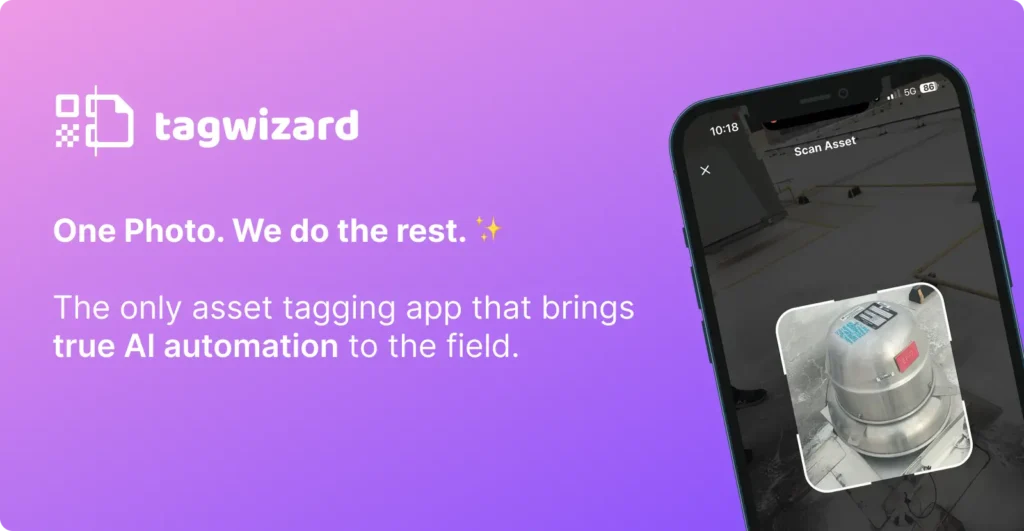
Here’s how Tag Wizard transforms your compliance efforts
Effortless Tagging & Recording
Finally, a simple, streamlined way to tag every piece of equipment and record critical data on the fly. No more handwritten notes, lost spreadsheets, or outdated databases.
Smart Label Sourcing, Anywhere
Need a compliant label for a new installation or a replacement for a faded one?
Tag Wizard gives you the ability to source the correct, EPA-compliant labels instantly, anywhere you are. Print on demand ensures every asset is perfectly identified.
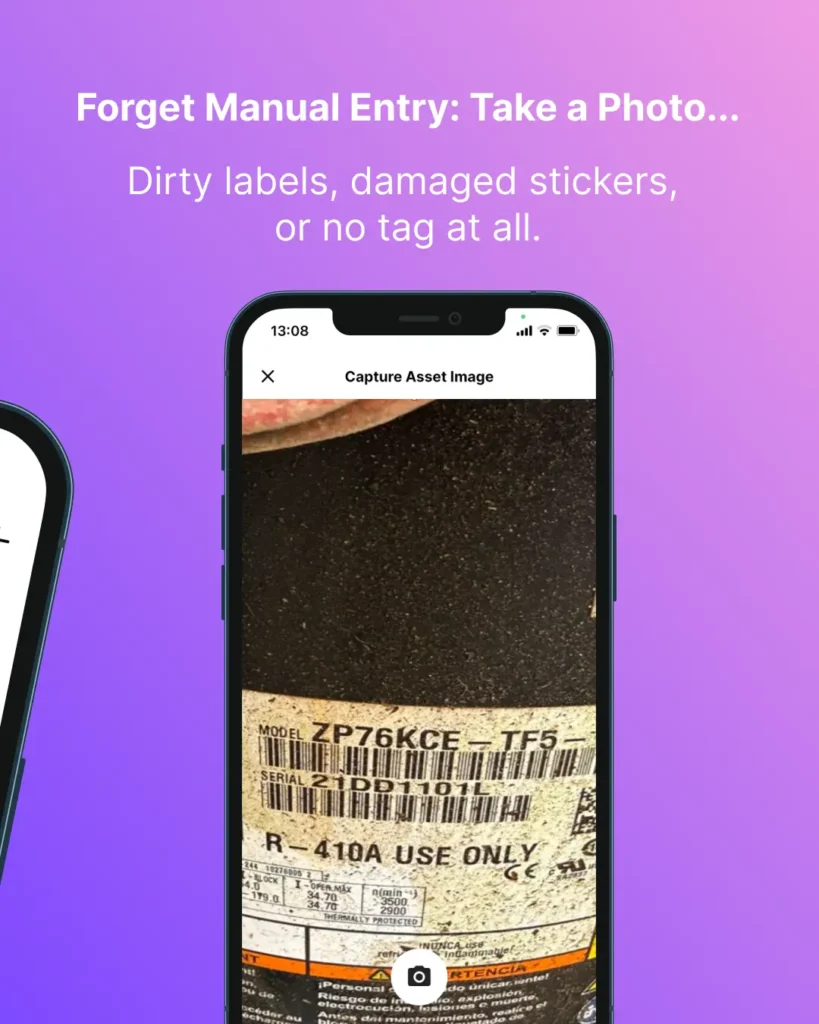
AI-Powered Tag Reading
That faded, illegible label that sent shivers down John’s spine? Tag Wizard uses advanced AI to help read and interpret old, damaged, or poorly printed tags and labels.
It’s like having a seasoned compliance expert with perfect vision on your team, deciphering the critical data that could otherwise lead to a violation.
Image Identification & Verification
Beyond text, Tag Wizard leverages image recognition to help identify equipment and verify refrigerant types.
Snap a photo, and let the app assist in cross-referencing against known specifications, adding another layer of accuracy to your records. It’s smart, it’s fast, and it’s built for the real world.
Tag Wizard is designed to close those administrative gaps, turn your due diligence into a competitive advantage, and ensure you’re not just running the race, but winning it.
In an era where every label is a legal document and every data point can trigger an audit, Tag Wizard is the essential tool for mastering the new skills of refrigerant lifecycle management.
You take the picture. Tag Wizard does the rest. ✨
📱 Download Tag Wizard