An ongoing tracking update to our earlier article on the Toxic Substances Control Act risk evaluation rollback.
This article delivers a 2026 status update on the EPA’s ongoing rollback of the Toxic Substances Control Act (TSCA) risk evaluation framework, focused on what has changed since we last wrote on this subject and what U.S. users, exporters, and chemical producers should be doing about it now. The scope of this guide includes:
- The current procedural status of the rollback — which deadlines have officially moved and which substantive changes are still in proposal form.
- The two active fronts: EPA rulemaking and Congressional legislation, plus the courts running underneath both.
- Comparisons with international standards (notably EU REACH) and the resulting compliance complexity, dual SDS regimes, and liability shifts.
- The equipment-labeling burden that a use-by-use TSCA regime places on facility operators, and the role of ASTM E3035-15(2025) in defining the documentation vocabulary.
- The detection and monitoring stack — PFAS, refrigerants, and CO2 — that operators now have to run themselves because EPA is documenting less.
This is for you if you are: U.S. users (grocers, retailers, cold storage, data centers, facility operators); exporters and importers handling chemicals internationally; chemical producers exceeding TRI thresholds.
Why understanding this matters now: EPA’s rollback fundamentally alters how chemical risks are evaluated and managed in the U.S. For users, exporters, and producers, understanding the current status is critical to:
- Maintaining compliance amid regulatory misalignment with global standards.
- Protecting public health and managing liability as risk management responsibilities shift downstream.
- Remaining competitive in global markets where stricter standards apply.
- Tracking a moving target — because the rollback is not finished, and the timeline keeps slipping.
Why Are We Publishing This Update?
When we first wrote about EPA’s proposed rollback of the TSCA risk evaluation framework, the rule was newly proposed, and the comment window was still open. A year later, the situation has not resolved — it has fractured.
The procedural mechanics of the rollback are moving forward at the EPA. The substantive scope of the rollback is being fought out in two places at once: at the agency and in Congress. And the public-health, labor, and state-government opposition has organized into a coordinated counter-campaign.
The rollback is actively unfolding, not enacted. That distinction matters operationally, and it is the reason we are issuing this update rather than letting the 2025 piece stand.
The conclusions still hold directionally (governance is shifting from the regulator to the market) but the specific compliance calendar has slipped, the legislative front has opened, and the documentation burden on facility operators is arriving sooner than the formal rulemaking timeline would suggest.
An operational vantage point
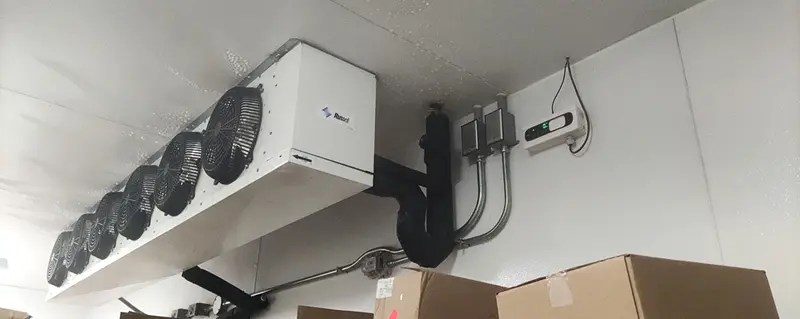
We are not writing this as a law-firm summary. We are writing it as practitioners with operational skin in the game on the two technologies the rollback makes load-bearing for facility operators, and which together represent the two ends of the documentation chain a use-by-use TSCA regime now demands of them:
- Refrigerant and chemical leak detection at the sensor.
Through AKO USA (the U.S. distribution partner for AKO.com, the Spanish mechanical controls and refrigerant (PFAS)gas-detection manufacturer) we work daily with NDIR and semiconductor leak detection across HFC, HFO, A2L, ammonia, and CO2 (R-744) systems. When EPA narrows what it documents about a chemical’s “condition of use,” the sensor record at the appliance is the ground truth that survives the narrowing. Leak detection is the first half of the chain: it tells you what is actually happening to the chemical in service. - Equipment tagging and labeling at the nameplate. Through Tag Wizard, we capture and classify refrigeration and HVAC assets photographically (nameplates, AIM Act § 84.58 labels, ANSI/ASHRAE 34 designations) into ASTM E3035-15(2025) FACTS-compliant asset records. Tagging is the second half of the chain: it tells you what is in service, where, and how it is identified.
📱 Download Tag Wizard
The two technologies are not separable in a 2026 compliance environment. A leak event without a tagged asset is a data point with no provenance; a tagged asset with no leak history is a static inventory without operational truth.
Together they form the per-equipment, time-stamped, attributable record that EPA’s narrowed framework, the AIM Act’s labeling deadlines, § 608’s leak-rate accounting, OSHA HazCom, state PFAS-in-equipment laws, and any plaintiff’s discovery request will eventually require operators to produce.
We are publishing this update because the rollback shifts the work of compliance onto the operator at exactly the layer these two technologies serve.
Readers will see both threads come back later in the article: leak detection in the Detection and Monitoring section, and tagging/labeling in the Equipment-Labeling Problem, ASTM E3035-15(2025), and Tag Wizard sections that follow.
The status needs to be reported. It also needs to be tracked. We will continue updating this piece as the EPA rules and Congressional bills move.
📌 Contact us to see how AI-first asset tracking can transform your operations.
TL;DR
EPA’s TSCA rollback narrows chemical risk reviews — but that does not erase risk. It shifts governance to the market.
- Status: Procedural deadlines are enacted; substantive rollbacks are still proposed.
- Trade: REACH remains the gold standard; exporters face dual compliance.
- Liability: Courts and insurers benchmark to stricter global norms, not EPA’s narrowed scope.
- Users: Grocers, data centers, and retailers inherit more handling risk as PPE assumptions shift responsibility downstream.
- Equipment: Asset-level labeling and identification — AIM Act § 84.58, ANSI/ASHRAE 34, § 608 records — becomes the operator’s primary compliance artifact.
- Detection: PFAS, refrigerant, and CO2 monitoring move from “best practice” to “evidentiary backbone.”
- Board-level: The regulator is stepping back. To stay competitive and defensible, companies must govern beyond EPA and align with global standards.
Background
The Lautenberg Chemical Safety Act of 2016 was a bipartisan reform designed to address EPA’s historic inability to regulate dangerous chemicals. It required EPA to evaluate all conditions of use of a chemical and to consider susceptible subpopulations.
The 2024 Biden-era Risk Evaluation Framework Rule built on those mandates — requiring a single “whole chemical” risk determination, prohibiting the exclusion of any condition of use or exposure pathway, removing the assumption of PPE effectiveness, and explicitly including overburdened communities in the definition of potentially exposed or susceptible subpopulations.
The 2025 proposed rollback reverses much of that.
Past Drift
- Trump EPA (2017–2020). Narrowed scopes, assumed PPE, excluded legacy uses. Courts intervened (notably Safer Chemicals, Healthy Families v. EPA, 9th Cir. 2019).
- Biden EPA (2021–2024). Broadened scopes, included legacy uses, removed PPE assumptions, added overburdened communities. Aligned more closely with Lautenberg’s intent.
- Second Trump EPA (2025–present). Reasserts agency discretion, restores narrower scopes, reemphasizes PPE assumptions, removes the inclusion of overburdened communities, and adds procedural flexibility to revise finalized risk evaluations.
📌 Result
Result Compliance now diverges more sharply from REACH and global hazard-disclosure norms. Some countries (particularly in Europe) have implemented stricter regulations restricting the use of certain chemicals. The U.S. is no longer the safety floor for global trade.
The Core 2026 Distinction: Enacted Procedure vs. Proposed Substance
The single most important thing to understand about the 2026 state of play is this:
EPA has officially enacted procedural delays. The substantive rollbacks are still in the proposal stage.
EPA has finalized rules that push back enforcement deadlines, giving the agency time to weaken the underlying regulations through separate substantive rulemakings. The deadline extensions are in effect today. The actual scope reductions, exemptions, and threshold changes are still on paper, still in comment-and-response cycles, and still potentially subject to litigation, Congressional override, or reversal under a future administration.
For compliance officers, the practical implication is that planning to the delayed deadline is safe, but planning to the proposed exemptions is not. The exemptions could shrink, expand, or disappear before they are final.
Key Implications of the 2026 Rollback for U.S. Users
The rollback introduces several changes that directly affect U.S. users, exporters, and producers — some already in effect, others pending:
- Reversal of 2024 Updates. The September 2025 EPA proposal returns the risk evaluation framework to a narrower, more discretionary approach.
- Use-by-Use Risk Determinations. Some uses may be deemed safe while others are not, creating gaps in protection across a single substance.
- Exclusion of Certain Uses and Exposure Pathways. Allowed under the proposed framework rule. May accelerate review but weaken oversight.
- PPE Assumed Effective. Restored at EPA; would be codified into statute by the House discussion draft.
- Reduced Protections for Overburdened Communities. The 2024 inclusion is removed.
- Revisions Without Re-Prioritization. EPA can revise finalized risk evaluations without re-running the full prioritization process.
- Procedural Delays Already Enacted. PFAS reporting delayed to Jan. 31, 2027; H&S data reporting delayed to May 21, 2027.
- Proposed PFAS Article-Importer Exemption. Would shift documentation responsibility downstream to operators of PFAS-containing equipment.
- Less Transparency. Reduced public information about chemical safety in products, creating disadvantages for users trying to assess product risk and compliance.
- Increased Regulatory Uncertainty. Manufacturers and users face more uncertainty about what compliance requires and when.
📌 Understanding these implications is essential for users, exporters, and producers to adapt compliance strategies, manage liability, and align with global standards.
Status Summary Table
The Two Active Fronts (Plus the Courts)
Front One: The EPA Rulemaking Track
EPA is moving on three parallel substantive rollbacks while using procedural rules to freeze the underlying compliance obligations in place.
1. The Risk Evaluation Framework Rule (the main rollback).
Proposed September 23, 2025, at 90 Fed. Reg. 45690. Public comment closed November 7, 2025. The Office of Information and Regulatory Affairs (OIRA) targets April 2026 for publication of the final rule. Substantively, the proposal restores use-by-use risk determinations, allows EPA to exclude conditions of use and exposure pathways, restores the PPE assumption, removes overburdened communities from the POSSPs definition, eliminates the 2024 requirement that EPA re-prioritize a chemical before revising a finalized risk evaluation, and gives EPA more discretion to focus on some uses while excluding others as a matter of strategy.
2. The PFAS Reporting Rule (TSCA § 8(a)(7)).
Enacted April 13, 2026: EPA published a final rule officially canceling the April 2026 reporting start date.
New timeline: Submission period begins January 31, 2027, or 60 days after EPA finalizes its substantive revisions — whichever comes first.
Still proposed: A November 13, 2025 proposed rule would add six exemptions. The most consequential cover PFAS imported in articles, PFAS at de minimis concentrations (0.1% or below in mixtures), byproducts and impurities, non-isolated intermediates, and PFAS manufactured or imported in small quantities solely for research and development. The proposal would also shorten the existing six-month submission window to three months.
3. The Health and Safety Data Reporting Rule (TSCA § 8(d)).
Enacted May 22, 2026: EPA issued a final rule extending the compliance deadline by one full year, effective immediately.
New timeline: Manufacturers (including importers) of 16 specified chemicals now have until May 21, 2027, to submit unpublished health and safety studies.
Still proposed: EPA stated explicitly that it is using the one-year pause to reconsider the rule’s scope, draft new manufacturer exemptions, and adjust reporting thresholds in response to industry cost concerns, including reporting burdens and related administrative expenses.
The pattern across all three is the same: freeze the clock procedurally, then weaken the substance through a separate rulemaking.
Front Two: The Congressional Track
While EPA narrows by regulation, Congress is being asked to narrow by statute.
1. House discussion draft (introduced January 15, 2026).
- Released by House Energy and Commerce Committee Chair Brett Guthrie (R-KY) and Environment Subcommittee Chair Gary Palmer (R-AL). The Environment Subcommittee held a legislative hearing January 22, 2026. The draft would, among other things:
- Require EPA to take federal occupational safety and health standards into account in chemical reviews (codifying the PPE assumption into statute).
- Soften language requiring chemical makers to ensure that substances “no longer present such risk,” changing it to minimize risk “to the extent reasonably feasible.”
- Prohibit EPA from restricting chemicals used in aerospace fire suppression that have been certified by the FAA or DoD — directly relevant to historical PFAS exposure pathways via AFFF firefighting foams.
- Restrict EPA authority to require companies to provide safety data, and require EPA to give greater weight to industry costs when choosing restrictions.
2. Senate EPW discussion draft. The Senate Committee on Environment and Public Works held a hearing on its own discussion draft March 4, 2026.
- Coordinated opposition. A coalition of more than 250 public-health, environmental, and labor organizations has urged Congress to reject the chemical-industry proposals, framing the House draft as a “chemical lobby wish list” and warning that the bill would undermine the bipartisan 2016 Lautenberg amendments. The AFL-CIO has flagged the occupational dimension specifically — that the legislative endorsement of PPE assumptions and softened risk-reduction language would shift workplace risk onto employees.
- A statutory deadline that focuses minds. TSCA’s fee authority expires September 30, 2026, unless Congress extends it. That creates a natural legislative vehicle, but also means any rollback bill competes for floor time against a hard reauthorization deadline.
Front Three: The Courts
1. Fifth Circuit — methylene chloride and chrysotile asbestos.
First appellate rulings on TSCA Section 6 risk management rules since the 2016 amendments. Decisions expected in 2026 will set precedent on EPA’s discretion in scoping a risk evaluation.
2. D.C. Circuit — United Steel Workers v. EPA, No. 24-1151.
Challenge to the 2024 framework rule, held in abeyance pending the new rulemaking.
3. Ninth Circuit — Safer Chemicals, Healthy Families v. EPA, 943 F.3d 397 (9th Cir. 2019).
Still on the books. Held that EPA must consider all conditions of use.
4. TCE risk management rule.
Effective date of TSCA § 6(g) exemption requirements postponed to February 17, 2026 to align with court-ordered stays in the Third Circuit.
Glossary: Acronyms and Terms You Need to Know
The TSCA debate sits at the intersection of statute, agency guidance, international trade law, and operational standards. Here is the working vocabulary for the rest of this article.
Statutes and Regulatory Frameworks
- TSCA — Toxic Substances Control Act (1976, amended 2016). The principal U.S. statute governing the manufacture, import, processing, and use of industrial chemicals. Administered by EPA.
- Lautenberg Act — The Frank R. Lautenberg Chemical Safety for the 21st Century Act of 2016. The bipartisan TSCA amendment required EPA to evaluate all conditions of use and consider susceptible subpopulations.
- REACH — Registration, Evaluation, Authorisation and Restriction of Chemicals. The EU’s principal chemical regulation, administered by ECHA. Widely considered the global gold standard for hazard disclosure.
- CLP — Classification, Labelling and Packaging Regulation. The EU’s chemical hazard communication regime, harmonized with the UN GHS.
- GHS — Globally Harmonized System of Classification and Labelling of Chemicals. The UN-backed framework most trading nations have adopted.
- AIM Act — American Innovation and Manufacturing Act of 2020. Authorizes EPA to phase down hydrofluorocarbons (HFCs) and regulate refrigerant management.
- CAA Section 608 — Clean Air Act Section 608. Governs the service, repair, and disposal of refrigeration and air-conditioning equipment containing ozone-depleting substances and their substitutes.
- EPCRA — Emergency Planning and Community Right-to-Know Act. Requires facilities to report hazardous chemical inventories (Tier II) and toxic releases (TRI).
- TRI — Toxics Release Inventory. Annual reporting program under EPCRA § 313.
- OSHA HazCom — Occupational Safety and Health Administration Hazard Communication Standard (29 CFR 1910.1200).
Process and Documentation Terms
- Risk Evaluation — Under TSCA § 6(b), the formal EPA process of determining whether a chemical presents an unreasonable risk.
- Risk Determination — The conclusion of a risk evaluation. The 2024 rule required a single determination; the 2025 proposal returns to use-by-use determinations.
- Conditions of Use — The circumstances under which a chemical is manufactured, processed, used, or disposed of.
- Whole Chemical Approach — The 2024 framework requiring one risk determination covering all conditions of use. The 2025 proposal abandons it.
- PPE — Personal Protective Equipment.
- POSSPs — Potentially Exposed or Susceptible Subpopulations.
- SDS — Safety Data Sheet. The 16-section document required under OSHA HazCom and REACH/CLP.
- NDIR — Non-Dispersive Infrared. A sensor technology used in fixed refrigerant leak detection systems.
- AFFF — Aqueous Film-Forming Foam. Firefighting foam historically containing PFAS.
- ANSI/ASHRAE Standard 34 — Designation and Safety Classification of Refrigerants. Assigns refrigerant numbers (R-410A, R-454B, R-32, R-1234yf, R-744 for CO2, etc.) and A1/A2L/B1 safety classifications stamped on nameplates.
- SNAP — Significant New Alternatives Policy program under Clean Air Act § 612.
- AIM Act § 84.58 labeling profiles — Product labeling requirements (Profiles 1–4) implementing the AIM Act technology transitions rule.
- § 608 (50-lb rule) — Clean Air Act § 608 leak repair and recordkeeping obligations attach to stationary refrigeration and air-conditioning appliances with a full charge of 50 pounds or more.
Chemicals and Categories (Including Semiconductor Materials)
- HFC — Hydrofluorocarbon. Refrigerant class with high global warming potential (GWP), being phased down under the AIM Act.
- HFO — Hydrofluoroolefin. Lower-GWP refrigerant class; many HFOs are also under PFAS scrutiny in the EU.
- PFAS — Per- and Polyfluoroalkyl Substances. The “forever chemicals.”
- TCE — Trichloroethylene.
- HBCD — Hexabromocyclododecane.
- NMP — N-Methylpyrrolidone.
- CO2 (R-744) — Carbon dioxide. A natural refrigerant with zero ozone depletion potential and a GWP of 1, increasingly used in transcritical commercial refrigeration as an HFC alternative, including commercial refrigeration and, in some cases, specialized semiconductor materials manufacturing environments that require controlled cooling.
Standards and Asset Management
- ASTM E3035-15(2025) — Standard Classification for Facility Asset Component Tracking System (FACTS). ASTM International, reapproved 2025.
- FACTS — Facility Asset Component Tracking System.
📌 Reduce compliance risk today.
TSCA Risk Evaluation Process
The TSCA risk evaluation process is central to chemical regulation in the U.S., shaping how industrial chemicals are assessed for safety in the domestic market.
Under TSCA, EPA reviews chemicals used across a wide range of industries to determine whether they present an unreasonable risk to human health or the environment.
Key Steps Under the 2025 Proposed Framework
- Data Collection. Firms submit detailed information about products, manufacturing processes, and market applications.
- Hazard Assessment. EPA analyzes chemical hazards, exposure scenarios, and environmental fate.
- Risk Determination. Use-by-use, rather than whole-chemical.
- Exclusion of Certain Uses. EPA may exclude low-risk or unlikely-exposure conditions of use entirely.
- PPE Assumptions. EPA may presume workers are using compliant PPE.
- Consideration of Subpopulations. Overburdened communities removed from the explicit definition.
Implications for Stakeholders
Producers and importers must continue to meet TSCA requirements but face increased uncertainty for business planning and dual compliance burdens.
Users must adapt to shifting risk management responsibilities and potential gaps in regulatory protection.
Tactical Impacts (Near-Term, Operational)
U.S. Users — Grocers, Cold Storage, Data Centers, Facility Operators
Not directly subject to TSCA risk evaluation as end users, but inheriting the consequences in four concrete ways:
1. PPE responsibility shifts to you.
When EPA assumes PPE works (and especially if the House draft passes and codifies that assumption) the employer must make the assumption real.
OSHA HazCom, state worker-safety standards, and tort law will measure you against the assumption, not the chemical.
2. Insurance underwriting moves to global standards.
Carriers underwriting environmental liability, product liability, and workers’ compensation increasingly benchmark against REACH and global hazard data, not the narrowed EPA scope, and many firms now treat stricter underwriting standards as part of normal operating reality.
3. Equipment labeling becomes the documentary spine.
A use-by-use TSCA regime makes the “condition of use” a question about specific equipment: which chemical, in which appliance, on which site, in what mode, on what date. AIM Act § 84.58 product labels, ANSI/ASHRAE 34 refrigerant designations, § 608 leak records, and state PFAS-in-equipment disclosures all attach to the asset itself.
If you cannot read the nameplate, you cannot prove the condition of use.
4. Documentation becomes the defense.
Where EPA narrows scope, the operator’s own asset records, leak histories, and handling logs become the primary evidentiary record in any dispute.
Operational Needs and Energy Consumption
- Reliable refrigeration for product quality, safety, and operational efficiency.
- Energy management as costs rise and environmental regulations drive adoption of efficient chemical use that helps reduce energy consumption.
Compliance Requirements
- Safety protocols for handling, storage, and disposal of chemicals.
- Training and correct use of PPE.
- Record-keeping of safety data sheets (SDS) and strict reporting.
- Regulatory alignment with EPA, OSHA, and state-level standards.
Exporters and Importers
- Dual documentation. Separate SDS and disclosures for U.S. vs. EU/Asia markets.
- Shipping compliance. International shipping documents must align with UN/IMDG/GHS classifications.
- Trade barriers. Chemicals allowed in the U.S. may be restricted in the EU under REACH, and similar divergence can arise when a product remains saleable domestically but faces tighter controls in China or South Korea, requiring reformulation or market exit.
- PFAS article-importer exemption (proposed). Would not relieve EU REACH obligations; widens the documentation gap between U.S. and EU markets for the same product.
Chemical Sales Producers (Above TRI Thresholds)
- Short-term relief. Narrower EPA evaluations may reduce immediate federal regulatory pressure.
- Long-term exposure. TRI reporting, NGO scrutiny, and litigation risks persist — especially where harm arises from exposures EPA excluded.
- Investor pressure. ESG frameworks and global standards drive expectations beyond EPA compliance, and weaker oversight does not necessarily improve profits if investors price in litigation and disclosure risk.
Shifting Governance From Regulator to Market
Implications for Producers and Importers
- TSCA compliance. Producers and importers must still meet TSCA requirements (§§ 4–6) — testing, reporting, and restrictions.
- SDS and labeling. Obligated to provide accurate SDS and compliant labeling, now potentially requiring a two-tier system (U.S. vs. global) and dedicated compliance workflows for separate documentation streams.
- Liability. Primary liability for misrepresentation or non-compliance under TSCA.
Implications for Processors and Distributors
- Risk communication. Ensure SDS and labels remain intact and risk information flows downstream.
- Shared liability. Responsible for communicating risks and enforcing proper handling standards.
Implications for Users (Grocers, Cold Storage, Data Centers)
- Regulatory coverage. Not directly subject to TSCA reporting unless importing refrigerants or other regulated substances.
- Other regulations. Governed by Clean Air Act § 608, OSHA HazCom, and EPCRA Tier II reporting.
- Increased internal risk. Must ensure PPE is provided and enforced, train staff, track leaks, and meet state or REACH-driven standards.
Board-Level Takeaway
The TSCA rollback does not eliminate chemical risk — it shifts governance from EPA to the marketplace. Insurers, courts, and global buyers now dictate liability, safety, and disclosure standards. EPA may narrow oversight, but companies cannot.
To remain competitive and defensible, we must govern beyond the regulator.
📌 Turn compliance into a competitive advantage.
Detection and Monitoring of Chemicals
If EPA is documenting less, the operator must document more — and that documentation has to start at the sensor.
Detection and monitoring used to be a best-practice overlay on top of regulatory compliance. In a 2026 environment of narrowed scope, presumed PPE effectiveness, and a proposed article-importer exemption for PFAS, monitoring data becomes the evidentiary backbone of any defensible compliance program.
Refrigerant Leak Detection (HFCs, HFOs, A2L Refrigerants)
- Technologies. Infrared (NDIR) and semiconductor refrigerant gas sensors for real-time monitoring and early warning.
- Advantages. High sensitivity, refrigerant-class selectivity, reliable performance, fast response times.
- Regulatory anchor. § 608 leak repair and recordkeeping for appliances ≥ 50 lb full charge; AIM Act technology transitions and § 84.58 labeling; state-level requirements (e.g., CARB RMP).
Why does it matter more in 2026?
A use-by-use TSCA framework, combined with AIM Act phase-down enforcement, makes per-asset leak history the primary evidence of whether a chemical’s “condition of use” actually presents an unreasonable risk in practice.
CO2 (R-744) Detection
The shift to natural refrigerants (driven by the AIM Act, GWP-based state regulations, and corporate sustainability commitments) has accelerated CO2 transcritical systems in supermarkets, cold storage, and increasingly in data center cooling. CO2 is not regulated under TSCA in the same way as HFCs, but it carries its own monitoring stack:
OSHA permissible exposure limits. 5,000 ppm 8-hour TWA; 30,000 ppm short-term exposure limit. These are workplace safety obligations independent of TSCA.
Sensor technology. NDIR sensors are the standard for CO2 because of their selectivity and stability.
Documentation obligations. CO2 may be a low-GWP refrigerant, but at concentrations above ~4 percent it is an asphyxiation hazard. Operators must demonstrate that detection is in place, calibrated, and tied to a documented response protocol.
PFAS Detection and Source Identification
PFAS detection is the hardest of the three because the substances are persistent, often at trace concentrations, and frequently embedded in equipment, gaskets, lubricants, and fluoropolymer-lined components that the operator did not knowingly purchase.
- The 2026 exposure. If EPA finalizes the article-importer exemption, downstream operators of PFAS-containing equipment lose the upstream reporting that would have told them what is in their installed base. They must identify it themselves.
- Identification approaches. Equipment-level audits using ASTM E3035-classified asset inventories; supplier disclosures (even if not required, may be obtainable contractually); third-party analytical testing for total fluorine or targeted PFAS species; review of historical AFFF use on the site.
- State-law triggers. California, Washington, Maine, Vermont, New York, Colorado, and Minnesota each have PFAS disclosure or restriction laws that may apply to articles and equipment regardless of federal exemption status.
How TSCA Rollbacks Undercut Global SDS Harmonization
The Safety Data Sheet is the single document that spans all chemical-handling jurisdictions. The rollback puts the U.S. version of that document increasingly out of step with the rest of the world.
- Global SDS framework (GHS). OSHA (U.S.), REACH/CLP (EU), and most trading nations require SDSs to disclose hazards based on inherent chemical properties.
- EPA narrowing = data gaps. Excluding uses or assuming PPE effectiveness creates misalignment between U.S. and EU SDS versions.
- Practical impacts. U.S. suppliers may issue “leaner” SDSs while EU/REACH requires fuller disclosure.
- Downstream confusion. Users may receive conflicting SDSs from different suppliers for the same substance, undermining trust and consistency.
- Liability and trade exposure. Stricter global SDSs become the real benchmark in litigation, insurance underwriting, and procurement due diligence.
Aspect-by-Aspect Comparison
Record-Keeping and Reporting
- Requirements. Maintain detailed records of production, sales, annual sales, and environmental releases, and better records also help companies track chemical sales tied to regulated product lines. Annual sales tracking is important for compliance and provides insight into company performance and industry trends.
- Purpose. Transparency, accountability, and regulatory compliance.
- Risks. Non-compliance can result in penalties and reputational damage.
Supply Chain Management
- Coordination. Work closely with suppliers, distributors, and customers.
- Best practices. Quality control, advanced logistics, traceability systems.
- Benefits. Reduced operational costs, improved compliance, stakeholder trust, and saving money through fewer errors, better traceability, and lower compliance friction.
Safety Protocols
- Guidelines. Follow EPA and OSHA protocols for safe use, storage, and disposal.
- PPE. Ensure proper use and training. The 2026 PPE-assumption posture at EPA does not reduce OSHA obligations; it raises evidentiary expectations on the employer.
- Maintenance. Regular inspections and leak detection across refrigerant, CO2, and PFAS exposure pathways.
The Equipment-Labeling Problem TSCA Actually Creates
Before we get to ASTM E3035-15(2025) and Tag Wizard, we have to be explicit about what kind of compliance artifact a use-by-use TSCA regime (combined with the AIM Act, Clean Air Act § 608, EPCRA, OSHA HazCom, and state PFAS-in-equipment laws) actually demands.
The shorthand for it is the labeled, identified, traceable piece of equipment. Most facility operators do not have a clean record of it.
📱 Download Tag Wizard
TSCA’s “Condition of Use” Is Almost Always an Equipment Question
Under the 2025 proposed framework rule, EPA returns to evaluating risk per condition of use. The “condition of use” is not an abstraction. For refrigerants, foams, solvents, flame retardants, lubricants, and most of the chemicals that grocers, cold-storage operators, data centers, and industrial sites actually handle, the condition of use is:
A specific chemical, at a specific concentration or charge, in a specific piece of equipment, operating in a specific mode, on a specific site, on a specific date.
You cannot defend against a use-by-use risk determination — or comply with one — without being able to answer all six of those at the asset level. The asset record is the condition-of-use record.
The Stack of Labeling and Identification Obligations Already on the Books
TSCA does not sit alone. The chemicals it regulates are also regulated under a stack of statutes and standards that each demand equipment-level identification:
- Clean Air Act § 608. Stationary refrigeration and air-conditioning appliances with a full charge of 50 pounds or more are subject to leak repair, recordkeeping, and reporting obligations tied to the specific appliance — by location, refrigerant type, full charge, leak rate, and service history.
- AIM Act technology transitions and labeling (40 C.F.R. Part 84). Implemented through product- and equipment-level controls, including the labeling profiles under § 84.58. Profiles 1 through 4 prescribe what must appear on products containing or designed to contain regulated HFCs — refrigerant identity, GWP, date of manufacture, and the regulatory basis for the chemical’s presence. Each labeling profile has compliance deployment dates tied to specific equipment classes; once the deployment date passes, the absence of a compliant label is itself a violation.
- ANSI/ASHRAE Standard 34. Provides the refrigerant designation system (R-410A, R-454B, R-32, R-1234yf, R-744 for CO2, etc.) and the safety classification stamped on nameplates and referenced in service records.
- SNAP listings (Clean Air Act § 612). Identifies which substitutes are acceptable for which end uses — another per-equipment, per-use determination.
- EPCRA Tier II and § 313 TRI. Inventory and release reporting tied to specific chemicals at specific facilities, with thresholds that require knowing what is in each piece of equipment.
- OSHA HazCom (29 CFR 1910.1200). Workplace labeling for containers and systems carrying hazardous chemicals; SDS access for every chemical workers may be exposed to.
- State PFAS-in-equipment and disclosure laws. California, Washington, Maine, Vermont, New York, Colorado, and Minnesota have layered disclosure requirements on articles and equipment containing PFAS, flame retardants, or other chemicals of great concern.
Each of these regimes asks the operator the same operational question in slightly different language: Show me, for this piece of equipment, on this site, what substance is in it, how much, when it was installed, what has been done to it, and how you know.
The Nameplate Is the Primary Evidentiary Artifact
The piece of physical equipment carries (almost always) the answer. The nameplate is the manufacturer’s record of model, serial number, refrigerant type, factory charge, manufacture date, voltage and capacity ratings, and applicable safety certifications. The AIM Act § 84.58 labels add the regulatory overlay. ANSI/ASHRAE 34 codes the refrigerant. The site record adds installation date, service history, and leak history.
The compliance problem is not that the information does not exist. It is that the information exists on the equipment, and gathering it across large operations is the real challenge: scattered across thousands of assets on hundreds of sites, in dozens of label formats, often partially obscured, sometimes mislabeled at install, and almost never aggregated into a structured record that an EPA inspector, an OSHA investigator, an insurer’s adjuster, a plaintiff’s expert, or a state PFAS-enforcement agent can read.
This is the gap that the rollback widens (because EPA itself is documenting less) and it is the gap that ASTM E3035-15(2025) defines a vocabulary for closing.
ASTM E3035-15(2025): The Classification Standard for Equipment-Level Compliance
ASTM E3035, Standard Classification for Facility Asset Component Tracking System (FACTS), was originally published in 2015, reapproved in 2020, and reapproved again in 2025 (the “(2025)” designation). It is a classification standard — not a software product, not a methodology — that defines how facility assets, their components, sub-components, and attributes are identified, structured, and tracked across the asset lifecycle.
For chemical and refrigerant compliance, the relevant thing about E3035 is what it standardizes:
- The asset itself as a major assembly (a parallel rack refrigeration system, an air-cooled chiller, a packaged rooftop unit, a CO2 transcritical booster system).
- The components and sub-components within that asset (compressors, condensers, evaporators, expansion valves, controls, sensors).
- The attributes of each — including the attributes the AIM Act, § 608, and SNAP all care about: refrigerant identity, refrigerant charge, GWP, manufacture date, model and serial, capacity, leak history, service actions, disposal status.
- The lifecycle activities associated with each — preventive maintenance, leak repair, retrofit, replacement, end-of-life disposal — each of which generates its own compliance artifact.
What E3035 does that an ad-hoc service ticket does not is give every operator and every regulator the same vocabulary for describing the same asset. A condenser is classified the same way at a grocer in Selbyville as it is at one in Phoenix as it is at a data center in Northern Virginia. Refrigerant charge is an attribute in the same field with the same units. Leak history attaches to the same component with the same data structure.
In a use-by-use TSCA regime, that consistency is not cosmetic. It is what makes the condition-of-use record auditable, comparable across sites, and defensible in any of the proceedings the rollback makes more likely: EPA audits, OSHA inquiries, workers’ comp claims, insurance subrogations, plaintiff discovery, state enforcement actions.
How Tag Wizard Operationalizes E3035 at the Equipment Level
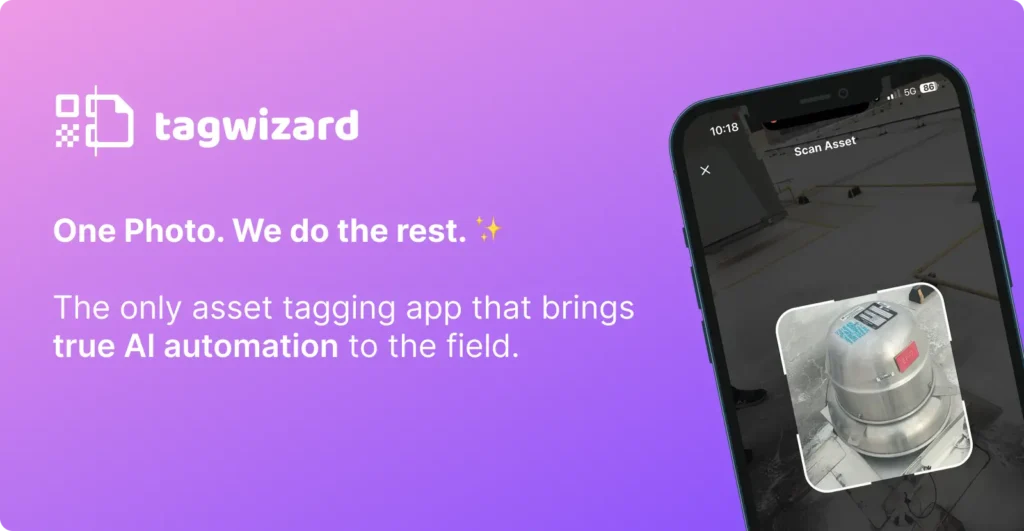
Tag Wizard is built around a deliberately simple premise: the technician takes the picture, and the system does the rest, for teams that specialize in turning field images into structured compliance records.
A photograph of a nameplate, a compressor, an evaporator, a control panel, or an AIM Act § 84.58 label becomes a classified asset record with the manufacturer, model, serial number, refrigerant type and charge, GWP, capacity, manufacture date, and lifecycle attributes populated automatically.
The product loop closes the labeling-to-compliance gap in four steps:
- Capture.
The technician photographs the nameplate and the AIM Act label. No typing, no clipboard, no transcription error. - Classify.
Tag Wizard’s interrogation layer reads the nameplate, parses the model and serial, identifies the refrigerant by its ANSI/ASHRAE 34 designation, extracts the factory charge, and slots the asset into its ASTM E3035 classification — assembly, component, sub-component, and attribute set. - Connect.
The asset is linked to its parent system (a condenser to its evaporator and receiver; a circuit to its rack; an appliance to its site). This relationship modeling is what makes § 608 leak-rate calculations, AIM Act allocation accounting, and SNAP-acceptability checks possible at the system level, not just the asset level. - Carry.
The classified record carries forward through every service event, leak test, retrofit, and disposal action — building the time-stamped, attributable, equipment-level compliance history that a use-by-use TSCA regime, a § 608 audit, a state PFAS enforcement action, or an insurance dispute will eventually demand.
Where FACTS specifies what attributes a regulated piece of equipment should carry, Tag Wizard handles how those attributes get into the record from the field — the part that has historically broken every refrigerant compliance program at scale: the moment the technician has to either type a 14-character model number into a clipboard form or skip it and hope no one asks later.
📱 Download Tag Wizard
What This Means in the 2026 Rollback Environment
In a year when:
- EPA has frozen reporting deadlines but is narrowing what gets reported,
- The proposed PFAS article-importer exemption would shift documentation responsibility downstream to operators,
- PPE is presumed effective whether or not it is,
- The AIM Act § 84.58 labeling deployment dates are arriving on a fixed schedule regardless of TSCA’s rollback,
- States are filling federal gaps with their own disclosure regimes, and
- Insurers and courts are benchmarking to REACH and global norms,
the operator who walks into an audit, a renewal meeting, or a deposition with a complete, ASTM E3035-compliant, photographically-captured asset inventory — every nameplate read, every AIM Act label verified, every refrigerant identity tied to ANSI/ASHRAE 34, every charge recorded against the § 608 threshold, every leak event time-stamped against the responsible component — has a defense the operator with a binder of inconsistent service tickets does not have and cannot reconstruct.
That is the practical link. The rollback narrows what EPA documents. The AIM Act, § 608, EPCRA, OSHA HazCom, ANSI/ASHRAE 34, SNAP, and state PFAS laws still require the operator to document — at the equipment level, by label, with traceable provenance. ASTM E3035-15(2025) is the classification vocabulary for that record. Tag Wizard is the field-capture layer that makes the documentation work happen one photo at a time.
Strategic Impacts (Longer-Term, Market/Global)
Domestic Market Users
- Insurance underwriting. Carriers will underwrite to REACH/global norms, not TSCA’s narrowed lens.
- Reputation risk. Retailers relying on weaker U.S. standards risk reputational damage.
Exporters/Importers
- Global compliance. REACH sets the gold standard; exporters must “over-comply.”
- Supply chain complexity. Dual compliance increases costs and delays.
Chemical Producers
- Litigation risk. Narrow TSCA findings provide no shield against toxic tort suits.
- Regulatory divergence. Two-tier market — freer U.S. market with higher liability vs. restricted EU/global market with higher compliance costs.
- Capital markets. Investors benchmark against global ESG norms; divergence raises cost of capital, and they look for a clear strategy and disciplined investment in compliance resilience.
States with REACH-Like Approaches
With EPA stepping back, states are importing REACH-like governance tools into U.S. law, forcing national-scale producers to comply with the most stringent state-level regulations.
- California. Proposition 65; Safer Consumer Products Program; CARB refrigerant management program (RMP) with stricter disclosure, labeling, and phase-down rules.
- Washington. Safer Products for Washington — reporting or restrictions on priority chemicals.
- Maine. Toxics in Children’s Products Law; one of the most expansive PFAS-in-products laws in the country.
- Vermont. Chemicals of High Concern to Children Law; mirrors Maine’s framework.
- New York. Household Cleansing Product Information Disclosure; expanding PFAS bans in food packaging, textiles, and other products.
- Colorado & Minnesota. PFAS phase-out laws on disclosure-first models.
Recommendations
For Domestic Users
- Do not treat the May 2027 H&S data reporting delay as a reason to wait. The underlying obligation to know what is on your floor has not moved.
- Review insurance and OSHA compliance to ensure PPE assumptions are operationally true, not aspirational.
- Build the asset inventory now to ASTM E3035-15(2025).
- Align spending on refrigerant, CO2, and PFAS detection coverage to the risk profile of your installed base.
For Exporters and Importers
- Default to REACH-compliant SDS and shipping documents.
- Budget for dual compliance and communicate regulatory gaps to global buyers.
- Track the PFAS reporting rule revisions through final action — the exemptions list is the single most important variable for the next 18 months.
For Chemical Producers (TRI)
- Treat procedural delays as time to invest in data quality, not time to disengage.
- Align with REACH/GHS even where TSCA does not require it.
- Build capacity for dual regulatory expectations and prepare for litigation.
- Engage investors and insurers early; demonstrate proactive global alignment.
Beyond Environmental Compliance: TSCA as Private Governance
EPA’s rollback marks a transfer of responsibility from government to the private sector. Companies, insurers, and global buyers must now govern risks that regulators minimize or ignore. Compliance is no longer enough; the operative benchmark is set by international frameworks, insurance models, and investor expectations.
An EPA rollback may sound satisfying, but it makes things more complicated since private environmental governance plays out in civil and state courts and through insurance premiums, forcing owners and operators to develop airtight policies without guidance from the government. You’re on your own.
📌 Stay ahead of regulatory changes.
Sources and References
- 90 Fed. Reg. 45690 (Sept. 23, 2025) — Procedures for Chemical Risk Evaluation Under the Toxic Substances Control Act (proposed rule).
- 89 Fed. Reg. 37028 (May 3, 2024) — 2024 Risk Evaluation Framework Rule.
- 82 Fed. Reg. 33726 (July 20, 2017) — 2017 Risk Evaluation Framework Rule.
- 40 C.F.R. Part 702, Subpart B; 40 C.F.R. Part 705 (PFAS reporting); 40 C.F.R. Part 716 (§ 8(d) reporting); 40 C.F.R. Part 84 (AIM Act).
- EPA, “Update on the Status of TSCA Risk Management Rule for TCE” (Nov. 13, 2025).
- EPA Final Rule, Perfluoroalkyl and Polyfluoroalkyl Substances (PFAS) Data Reporting and Recordkeeping Under TSCA; Change to Submission Period (April 13, 2026).
- EPA Final Rule, Reporting Deadline Extension for the Health and Safety Data Reporting Rule Under TSCA § 8(d) (May 22, 2026).
- House Energy and Commerce Committee, TSCA Discussion Draft (Guthrie/Palmer, Jan. 15, 2026); Environment Subcommittee hearing (Jan. 22, 2026).
- Senate Committee on Environment and Public Works, TSCA Discussion Draft hearing (March 4, 2026).
- Safer Chemicals, Healthy Families v. EPA, 943 F.3d 397 (9th Cir. 2019).
- United Steel, Paper and Forestry, Rubber, Manufacturing, Energy, Allied Industrial and Service Workers International Union, AFL-CIO v. EPA, No. 24-1151 (D.C. Cir.).
- ASTM E3035-15(2025), Standard Classification for Facility Asset Component Tracking System (FACTS), ASTM International.
- ANSI/ASHRAE Standard 34, Designation and Safety Classification of Refrigerants.
- TSCA, 15 U.S.C. §§ 2601 et seq.; Lautenberg Chemical Safety Act of 2016, Pub. L. 114-182.
- AIM Act, Pub. L. 116-260, Div. S, Title I; Clean Air Act § 608, 42 U.S.C. § 7671g; EPCRA, 42 U.S.C. §§ 11001 et seq.
- EU Regulation (EC) No 1907/2006 (REACH); EU Regulation (EC) No 1272/2008 (CLP); UN GHS, 10th rev. ed. (2023).