Let’s start with the question nobody in this industry likes to answer directly:
If your leak detector has been firing alarms for two years, how many of those alarms did a technician actually believe?
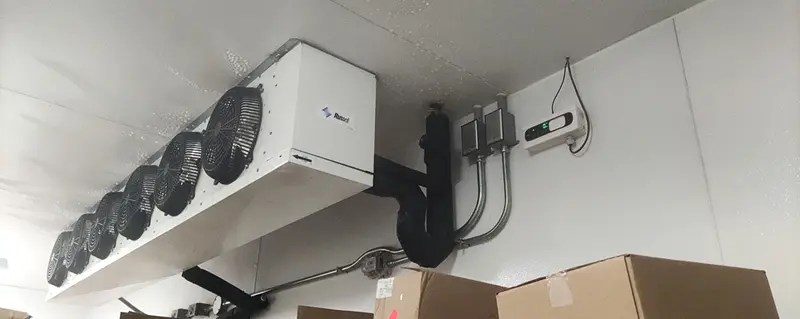
Reliable facility protection doesn’t come from AKO refrigerant leak detectors alone, but from a system that combines continuous monitoring, fault detection and diagnostics, pattern recognition, and context so technicians get actionable alerts instead of raw sensor alarms.
Not “how many alarms fired.” Anyone can show you that number. It looks impressive on a dashboard and means almost nothing.
The real question is how many were acted on with confidence:
How many led to early alerts that helped detect leaks early, and how many were quietly waved off because the last five turned out to be false alarms.
That’s not a detection metric.
It’s a trust metric, and it’s the only one that predicts whether refrigerant leak detectors actually protect facilities the way they were installed to.
That’s the uncomfortable fact sitting underneath most refrigerant management programs in commercial and industrial refrigeration systems, HVAC systems, mechanical equipment rooms, and other critical environments.
For facilities managers, technicians, and compliance teams responsible for operations, equipment, and safety regulations, the hardware is no longer the main problem.
Advanced sensor technologies and other detection technologies can measure gas concentration with high precision.
The bottleneck is what happens in the six inches between the sensor and the person deciding whether to send a truck, shut down equipment, or escalate a possible refrigeration failure.
A reading, alone, with no context and no memory, is not a decision. It’s a demand that someone else supply the trust the detection system never earned.
📌 Get leak alerts with the context to act on them the first time.
So why did leak detection stay broken for so long?
Because the industry sold the sensor as the product, and a sensor cannot build trust on its own. Install it, connect it to a control system, wait for gas, alarm fires, technician drives out.
That’s the whole pitch.
It’s also the whole problem, because a raw alarm carries no history and asks to be trusted anyway. It doesn’t know this is the third event on this device this month.
It doesn’t know whether this is a defrost cycle behaving exactly as designed or a compressor fitting slowly failing.
It doesn’t know the difference between an inspection visit disturbing ambient air and an actual leak.
The sensor sees a number. It does not see a pattern, and a technician cannot trust a number that has no pattern behind it.
Ask any facilities manager who’s lived through this, and they’ll tell you the same story without prompting: the alarm went off, the tech drove out, found nothing, and next month it happened again.
Enough of those and the alarm stops meaning anything. That’s not just a nuisance. It drives unnecessary technician visits, higher maintenance costs, wasted labor, excess energy consumption, and missed leaks that increase refrigerant emissions and greenhouse gas emissions.
In a compliance-driven environment shaped by the AIM Act, broader environmental regulations, and global pressure from the Montreal Protocol and F-Gas rules, that kind of noise turns into operational and regulatory risk.
What actually rebuilds it?
The recognition that fault detection and diagnostics, FDD, is a trust discipline before it’s a technical one.
Gas detection asks, “Is there refrigerant in the air?” FDD asks the question that trust is actually built on: “Given everything this device has done over the last thirty days, does this signal mean something, and can I tell you why?”
That second question cannot be answered by a sensor sitting in a mechanical room.
It requires a monitoring layer, integrated with building management systems, remote monitoring solutions, and the communication protocols already in place, that interprets the signal before it ever reaches a technician.
Then the person showing up at the site gets a profiled event they can evaluate, not a raw number they have to take on faith. Rising trend or stable. Chronic low-level baseline or acute escalation. Six hours old or six days old.
$That is the difference between chasing leaks blind and working from data that supports early leak detection, remote diagnostics, predictive maintenance, operational efficiency, and real cost savings.
When basic alarms fall short, can a combination of advanced detection technology, FDD, and people at the helm behind the scenes improve trust where automation ends, and human judgment still matters, and how that all connects to compliance under the EPA AIM Act?
It is not about market growth or regional analysis.
It is about what makes refrigerant leak detection systems credible enough to use, document, and defend when a facility needs reliable protection.
📌 Let’s make refrigerant compliance easier together
Where does the human fit into an automated system?
This is the part vendors tend to skip past, because it complicates the pitch and it’s also where trust actually lives.
The honest answer is that automation should carry the vast majority of the load, screening, profiling, and triaging every signal continuously, at a scale and consistency no human team could sustain.
But the last stretch, where a number becomes a decision someone is willing to stand behind, still runs through a person.
Field confirmation. Downgrade authority. The judgment call on whether a recurring signal is one continuous case or five unrelated ones.
That final layer is not overhead. It is the mechanism by which trust gets made, one confirmed call at a time.
Nothing is a false alarm until it’s been confirmed on site. That sounds like a small distinction. It isn’t.
It’s the difference between a system that quietly trains people to stop trusting it, and one that earns the right to be believed a little more with every event it correctly explains.
🚨 Don’t leave compliance to chance
Get in touch to learn how we can support your HVAC operations
So what’s the actual test of a leak detection program?
Not detection accuracy. Precision alone has never been what determines whether a program works.
The real test is whether, six months in, a technician trusts the real-time alerts enough to walk in and start looking in the right place instead of wandering a rack for two hours hoping to get lucky.
That trust doesn’t come from the detector by itself.
It comes from a system that can provide continuous monitoring, show its work, support predictive maintenance capabilities, and help the facility catch leaks before they become downtime, compliance failures, or avoidable costs.
That’s the pivot. Not away from detection hardware, which remains necessary, but away from the idea that detection hardware was ever going to be sufficient to earn trust on its own.
The sensor tells you something is there. Pattern recognition tells you what it means.
And a person who’s been right before, backed by a system that can show its work, is the only thing that turns “an alarm fired” into “someone acted, because they trusted what they were being told.”