How to Plan the Year Like a Refrigerant Regulations Pro?
What It Means to Be a “Pro” Here?
Not a job title — an operating posture.
Four things separate it from the store-by-store, spreadsheet-and-binder default:
- Proactive, not reactive.
You catch the $38 leak in week one, not the $38,000 compressor failure in month six. The equipment tells you it’s failing before it fails. - Leaks are treated as emissions, on the record.
Every pound lost is dated, logged, and attributable to a specific system — not folded into general maintenance spend where regulators (and your own P&L) can’t see it. - You know which clock is running.
Federal Subpart C, New York Part 494, and Washington WAC 173-443 are three separate sets of thresholds and deadlines on the same piece of equipment — a pro doesn’t assume federal compliance covers the state obligation. - You budget for the deadline before it’s urgent.
The 2032 GWP step-down is on the calendar now. A pro schedules the retrofit wave; everyone else discovers it in 2031.
What Changed in This Update
- EPA finalized the Technology Transitions Reconsideration Rule on May 26, 2026 (effective July 27, 2026), raising interim GWP limits for supermarket, retail food, and cold storage sectors and pushing several compliance cliffs to January 1, 2032. This replaces the outdated “0–50 Rule” reference and the general 2027 ALDS framing in the prior draft.
- New York (6 NYCRR Part 494) and Washington (WAC 173-443) sections have been corrected with current thresholds, GWP metrics, and registration/inspection deadlines — several of the prior figures were imprecise or already superseded.
- California’s SB 253 / SB 219 / SB 261 section now reflects the Ninth Circuit injunction on SB 261 and CARB’s February 26, 2026 Initial Regulation, rather than treating all three statutes as settled and equally enforceable.
- All regulatory citations below link to primary sources (Federal Register, eCFR, state agency pages) per your standard traceability requirement.
Prologue: The Compressor Isn’t the Problem
It always starts like a store goes down on a Sunday night.
The walk-in is warm, the service contractor is unavailable, thousands of items of inventory are at risk, and when the dust settles, someone gets approval for a new compressor.
Problem solved, right? Wrong.
What caused the failure? A $38 leak left undetected for weeks. It drained performance, stressed the system, and burned out a unit that should’ve lasted another six years.
Refrigerant regulations are EPA and state rules that increasingly require companies to detect, document, report, and repair leaks (not replace equipment before the end of its useful life) so this loss was entirely preventable. Multiply that by 1,000 stores, and you’ve got a budget problem that isn’t HVAC — it’s systemic.
This playbook isn’t about what broke. It’s about how executives, facilities managers, service contractors, and compliance teams build a system that knows what’s breaking (before it does) and how to use that information strategically.
Inside, that means leak detection, changing federal and state requirements, compliance and disclosure risk, budget planning, and the technology and operating steps needed to build a proactive refrigerant compliance program.
📌 Stop Refrigerant Loss Today.
The Fork in the Road: Patchwork or Platform
In 2011, we worked with a national retailer who called us in to review their refrigerant records. Their team was good. The paperwork was thick.
They had binders full of logbooks, color-coded tags, and even a custom spreadsheet template printed out and laminated for techs.
But when California came knocking with new rulemaking, none of that was enough.
Why? Because regulators didn’t ask what was fixed — they asked what had leaked, when it leaked, how much leaked, and what was done about it.
Today, the companies that get this right have centralized digital records, asset-level tagging down to the individual system, and cross-departmental reviews on a regular cadence.
That’s the road you want to take, and it’s the road that federal and state rulemaking in 2026 is actively rewarding — not because enforcement has softened, but because documentation is now the thing regulators check first.
Why This Matters Now: The Silent Budget Killer
Let’s put this in financial terms. A 200-lb. system leaking at 25% annually loses 50 lbs. of refrigerant a year. At current market prices for common HFC blends, that’s a real, recurring dollar loss per asset — before you count food loss, labor, emergency callouts, or system degradation.
Multiply that across a multi-site portfolio and “invisible” leaks become a seven-figure line item hiding inside routine maintenance spend.
Leaks also spike after hours (nights, holidays, long weekends) which is exactly when systems fail and overtime kicks in. That’s the cost of a reactive budget.
The Turning Point: Leaks Are Now Emissions
This used to be an internal matter, but refrigerant management rules grew out of concerns about ozone and climate impacts, because older CFCs and HCFCs degrade the ozone layer.
Under EPA’s Subpart C emissions-reduction-and-reclamation requirements and a growing set of state disclosure regimes, every pound of refrigerant lost is treated as a Scope 1 emission — and in California, New York, and Washington that increasingly intersects with financial and climate-risk disclosure obligations, not just leak-repair rules.
It’s no longer just “How fast can we fix this?” It’s “Can we show, with dated records, that this wasn’t preventable?” That’s the standard your 2026–2027 compliance program needs to be built around.
The 2026 Reconsideration: Longer Runways, Higher Interim GWP Limits
This is the single biggest AIM Act development since the original 2023 Technology Transitions Rule, and it changes the shape of near-term capital planning for retail food, cold storage, and industrial refrigeration operators.
On May 26, 2026, EPA published a final rule amending the Technology Transitions provisions of the AIM Act, a late-2020 U.S. law (the “Reconsideration Rule”), effective July 27, 2026.
The rule does not change the ultimate GWP limits set in 2023 — it extends the compliance timelines, adjusts the current phase of compliance, and raises the interim GWP ceilings that apply until those final deadlines arrive, affecting refrigerant production and consumption planning.
The HFC phasedown also sits within the broader Kigali Amendment transition, now ratified by 111 countries.
What actually changed
Sector-by-Sector: Old Deadline → New Deadline
- Supermarket systems / retail food remote condensing units (40 CFR 84.54(c)(11)–(12)): 150/300 GWP → interim 1,400 GWP until Jan 1, 2032, then back to 150/300.
- Cold storage warehouses: 150/300 GWP → interim 700 GWP until Jan 1, 2032, then back to 150/300.
- IPR chillers & semiconductor IPR (≤100 lb.): Jan 1, 2026/2028 → Jan 1, 2030.
- Refrigerated lab centrifuges & shakers: Jan 1, 2026 → Jan 1, 2028.
- Residential / light-commercial AC-HP (pre-2025 inventory): installation deadline removed entirely; for new air conditioning and heat-pump equipment, EPA rules generally shifted this category toward refrigerants with a GWP of 750 or less.
- Intermodal refrigerated transport: low-temp exclusion threshold moves from –50°C to –35°C (narrower exemption, not an extension). Also: increasing a supermarket system’s cooling capacity by 15% or less (Btu/hour) is not an “installation” — it doesn’t trigger a new compliance deadline.
EPA frames this as cost relief (it projects roughly $976 million in engineering-cost savings, concentrated in the supermarket sector) and situates it within the administration’s broader deregulatory posture toward the 2023 rule.
Many replacement options are A2L refrigerants, classified as mildly flammable under current standards.
The IEC increased charge limits for A2L and A3 refrigerants in 2019, and local building and fire codes now incorporate A2L safety rules.
Petitions for judicial review of the rule are due at the D.C. Circuit by July 27, 2026, so this is not necessarily the final word; a companion proposal would separately exempt Transportation Refrigeration Units from ER&R leak-repair requirements, and EPA has signaled it intends to revisit the Leak Management Rule next.
What this means for budget conversations
The 2032 date is now the real planning horizon for supermarket and cold-storage retrofit capital, not 2026 or 2027.
That’s real relief on near-term capex, but it is a deferral, not a repeal — the 150/300 GWP limits still apply from 2032 forward, and equipment installed now under the 1,400/700 interim ceilings will still need to be dealt with on that timeline.
Clients who over-correct and treat this as “the phasedown is cancelled” are setting up a 2031 capital crunch.
The disciplined move is to keep tagging and documenting installations against the interim limits now, so the 2032 transition is a scheduled retrofit wave instead of a surprise.

California’s Layered Risk: Refrigerant Rules Meet Climate Disclosure Law
California’s refrigerant-specific requirements (part of a broader effort to cut F-gas emissions 40% by 2030), including CARB’s HFC prohibitions and its facility-level GWP-weighted refrigerant charge limits, now sit underneath a separate, and currently unsettled, layer of corporate climate disclosure law, while the state’s environmental protection agency landscape can still complicate compliance.
It’s worth keeping the two apart.
- SB 253 (Climate Corporate Data Accountability Act) requires Scope 1–3 GHG emissions reporting — refrigerant leaks are a Scope 1 item.
CARB approved its Initial Regulation on February 26, 2026, and the first reporting deadline is August 10, 2026. This deadline is currently unaffected by litigation. - SB 261 (Climate-Related Financial Risk Act) would require biennial climate-risk reports, but the Ninth Circuit has enjoined SB 261 enforcement pending appeal (oral argument was held January 9, 2026, with no ruling yet as of this writing); reporting to CARB’s docket remains voluntary until that stay lifts.
- SB 219 is a 2024 amendment bill, not a third disclosure statute — it adjusted CARB’s rulemaking timeline and administrative flexibility for SB 253/261 rather than creating an independent board-governance requirement.
Bottom line for clients: SB 253 is live and moving; SB 261 is paused but not dead.
Refrigerant leak data feeds the Scope 1 number either way, so the underlying discipline (accurate, dated leak and repair records) doesn’t change based on which statute is currently enforceable.
See CARB’s SB 253/SB 261 program page for the current docket and reporting guidance.

New York: The Strictest GWP Metric in the Country
New York regulates under 6 NYCRR Part 494, and the detail that trips people up is the metric: New York uses 20-year GWP (GWP20), not the 100-year GWP (GWP100) that EPA and most other frameworks use.
A 20-year horizon weights short-lived, high-potency gases more heavily, so a refrigerant that looks acceptable under a federal GWP100 limit can fail New York’s GWP20 test.
Part 494 at a Glance
- ≥ 50 lbs.: GWP20 ≤ 580 (effective Jan 1, 2026). Under 50 lbs.: GWP20 ≤ 943.
- By Jan 1, 2034: GWP20 ≤ 10 across nearly all new supermarket, remote-condensing, cold-storage, and stand-alone equipment — effectively CO2, propane, or pure HFOs.
- ALDS: required ≥ 1,500 lbs. of a regulated substance (GWP > 10); installation deadline was June 1, 2025 — already past.
- Inspections: regular for equipment > 50 lbs.; monthly above 1,500 lbs.
- Retrofits: treated as existing equipment (not “new”) through Jan 1, 2029, if flammability class doesn’t change. After that, a retrofit = new installation.
New York’s virgin-refrigerant sales bans (R-404A, R-507A, and others) and its bulk-sale prohibitions layer on top of the equipment rules, and its 120-day variance process is available for impossibility, force majeure, or economic-hardship cases — worth flagging for clients facing genuine reclaim shortages rather than assuming a blanket exemption exists.

Washington: Faster Leak Repair, Its Own Leak-Rate Math
Washington’s program under Chapter 173-443 WAC applies to systems ≥ 50 lbs. with a refrigerant GWP ≥ 150, and it diverges from the federal Subpart C program in two operationally important ways: repair timing and leak-rate calculation.
WAC 173-443 at a Glance
- Registration tiers
- ≥ 1,500 lbs. — registered by March 15, 2024 (past);
- 200–1,499 lbs. — by March 15, 2026;
- 50–199 lbs. — by March 15, 2028.
- Repair window
- 14 days from detection — half the federal 30-day standard.
- Leak-rate method
- rolling average only; the federal annualizing method isn’t accepted here.
- Annual reporting
- required ≥ 200 lbs. of full charge.
- Watch this docket
- active HB 1462 rulemaking on low/ultra-low-GWP transitions and data-center cooling equipment — relevant to any client with server-room cooling assets in-state.
Net effect: a client compliant with EPA Subpart C in Washington is not automatically compliant with WAC 173-443 — the repair window and leak-rate math are genuinely different obligations layered on the same equipment, not a state restatement of the federal rule.
📌 Refrigerant Leaks Don’t Wait. Neither Do We.
A New Kind of Leak Detection: Intelligence, Not Just Alerts
Advanced fault detection and diagnostics (FDD) platforms now let you anticipate leaks using data from BMS systems, temperature sensors, and pressure trends, rather than waiting for a canister-style sniffer to trip.
Stationary refrigeration equipment (supermarket racks and remote condensing units especially) benefits most from this layer, because it’s exactly the equipment now subject to interim 1,400 GWP ceilings and a 2032 compliance cliff.
Budgeting for the sensor and the software that interprets it, together, is what turns a leak detector from a compliance checkbox into an actual cost-avoidance tool.
Leak Detectors Are Your Compliance Sentries
Most serious refrigerant losses occur when staff is offline (overnight, weekends, holidays) which is exactly when a cracked valve or worn seal goes undetected the longest.
A leak detector buys response time, not just alarm time: time to contain cost, protect uptime, and avoid an emergency callout.
For systems already carrying ALDS obligations under Subpart C, New York, or Washington thresholds, the detector isn’t optional hardware — it’s the record that proves you caught the leak when you say you did.
These platforms are also a practical answer to a documented workforce shortage in HVACR: they don’t replace a technician’s judgment, but they extend how much equipment a limited headcount can credibly monitor, and technicians handling refrigerants must be certified under EPA Section 608.
Section 608 also still governs key servicing obligations for HFCs and HFOs, including refrigerant recovery.
That includes recordkeeping for refrigerant recovered from systems with 5–50 lbs. of charge. Sales restrictions also apply to HFCs, except for small cans under 2 lbs.
Where the Tools Cluster: Tag Wizard + AKO
Everything above is a documentation and detection problem. Two tools solve those two halves, and the value is in how tightly they close the loop between them.
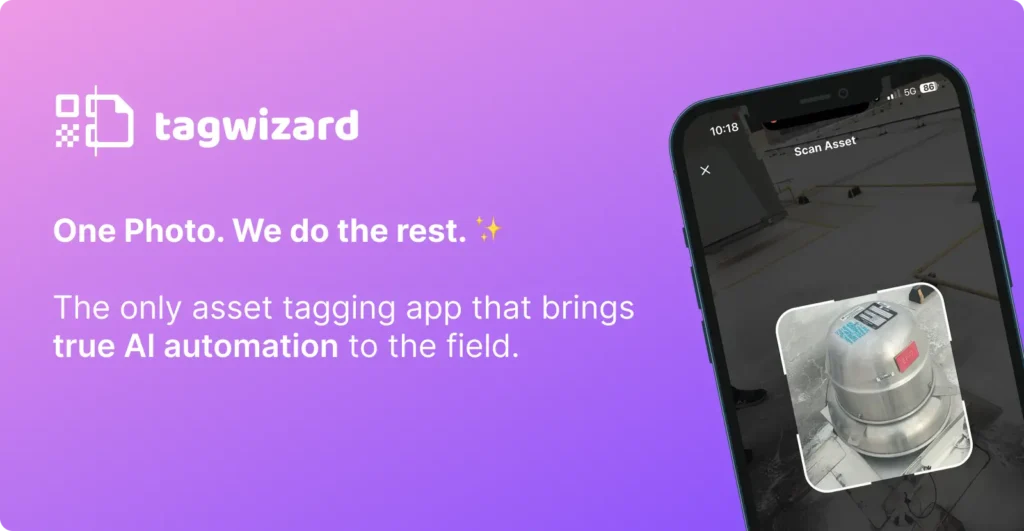
Tag Wizard → the record
- Tags every asset at the point of service — charge size, refrigerant type, GWP — the exact data points that determine which threshold applies (Subpart C’s 15/1,500 lb. lines, New York’s 50/1,500 lb. lines, Washington’s 50/200/1,500 lb. tiers).
- Turns “if it’s not documented, it didn’t happen” from a slogan into a per-asset audit trail regulators and auditors can pull on demand.
- Because it’s asset-level, it’s what lets a multi-site operator run one federal clock and two or three state clocks against the same equipment without cross-referencing spreadsheets by hand.
Tag Wizard ✨ You take one picture. We do the rest.
AKO → the detection
- Meets the ≥ 1,500 lb. ALDS mandate (federal Subpart C and New York Part 494 both trigger at this threshold) with a plug-and-play, cloud-based device rather than a hard-wired sensor-and-controller install.
- No central controller per location; monitoring covers multiple devices per site under one flat fee, which matters for portfolios where charge size (and therefore device count) varies store to store.
- Feeds real-time alerts back into the same asset record Tag Wizard created, so a detected leak is timestamped against a specific tagged system — not a general “store 214 had an issue” note.
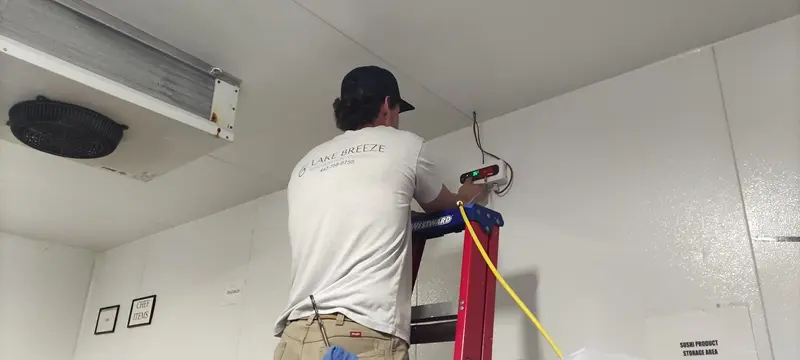
The cluster is the point: tagging without detection still leaves you finding out about a leak from a warm walk-in on a Sunday night; detection without asset-level tagging gives you an alert with no compliance context attached to it.
Together, they’re the difference between a leak detector that trips an alarm and one that produces the dated, asset-specific record an inspector (or a Scope 1 report) actually needs.
📌 Get a free site assessment and see how AKO covers your entire facility.
The Final Questions Every Executive Must Ask Before Q4 2026
Five Questions for the Boardroom
Summary of the decisions executives should resolve before Q4 2026:
- Do we know our corporate leak rate, and can we defend it with dated, signed repair records?
- Are we tracking installations against the interim 1,400/700 GWP ceilings, with a plan for the 2032 step-down — or are we treating the Reconsideration Rule as a repeal?
- In New York and Washington specifically, are our repair timelines and leak-rate calculations built to each state’s actual rule, not a generalized federal assumption?
- Is our SB 253 Scope 1 reporting pulling real refrigerant-loss data, and are we prepared to report under SB 261 if the Ninth Circuit lifts the stay?
- What’s our average time to repair after a leak, and how many systems have re-leaked within 12 months of repair?
You Don’t Need a Bigger Budget — You Need a Better Strategy
If your 2026 plan still starts with replacing another compressor, you’re solving the wrong problem. Leaks are emissions.
Emissions are disclosures, in California at least for now. Disclosures are financial liabilities.
- Budget for leak detection and the intelligence layer behind it, not just replacement parts, because regulatory changes affect operations across the HVACR industry and increasingly matter to customers.
- Budget for a documented, state-specific compliance calendar — EPA Subpart C, New York Part 494, and Washington WAC 173-443 are three different clocks, not one; while the EPA’s 2016 rule extended refrigerant management to HFCs, it rescinded HFC leak repair requirements on April 10, 2020, so at the federal level leak repair provisions now apply only to ozone-depleting refrigerants, which is why state rules matter so much.
- Budget for the 2032 transition now, using the interim GWP window the Reconsideration Rule bought you, rather than waiting for it to become an emergency.
Because when the next audit comes (or the next system fails on a Sunday night), you won’t be judged on what broke. You’ll be judged on what you knew, when, and what you did about it.
Glossary
- AIM Act
American Innovation and Manufacturing Act (2020); authorizes EPA’s HFC phasedown, Technology Transitions restrictions, and the emissions reduction and reclamation (leak management) program, and is administered by the Environmental Protection Agency (EPA), the United States Environmental Protection Agency overseeing these refrigerants rules. - ALDS
Automatic Leak Detection System; mandatory under Subpart C at ≥ 1,500 lbs. of a regulated substance, and separately under New York Part 494 at the same threshold. - GWP20 vs. GWP100
Global Warming Potential measured over a 20-year vs. 100-year horizon. New York uses GWP20 (stricter for short-lived, high-potency gases); EPA and most other frameworks use GWP100. - Reconsideration Rule
The May 26, 2026 EPA final rule amending the 2023 Technology Transitions Rule raises interim GWP limits and extends several sector deadlines to January 1, 2032, without changing the ultimate GWP limits. - SB 253 / SB 261 / SB 219
California climate-disclosure statutes (GHG reporting, financial-risk reporting, and a 2024 amendment bill, respectively) — distinct from CARB’s refrigerant-specific HFC rules. - Subpart C
40 CFR Part 84, Subpart C; substance-based (HFC) federal leak management framework, distinct from the equipment-type-organized, ODS-focused Section 608 (40 CFR Part 82, Subpart F), which remains central to refrigeration and air conditioning service compliance, including commercial refrigeration. - WAC 173-443
Washington’s HFC and Other Fluorinated Greenhouse Gases rule; state program with its own registration tiers, 14-day repair window, and rolling-average leak-rate method.
Primary sources
For compliance support, contact us to connect; manufacturers, contractors, and owners should track regulatory news, dates, and primary-source updates for added resources, and we welcome comments.
- EPA Reconsideration Rule, Federal Register (May 26, 2026)
- EPA Regulatory Actions for Technology Transitions
- NY DEC Part 494 FAQ (updated May 2026)
- WA Department of Ecology, WAC 173-443 rulemaking docket
- CARB SB 253 / SB 261 program page
📱 Download Tag Wizard